Lockouts · Ballantrae
Break-In Damage Lock Repair in Ballantrae
The back door looks closed until you touch it.
In plain words
A failed break-in is still a repair. When a lock holds against a pry bar or a kick, the force goes somewhere: a strike plate bends, screws loosen, the door edge takes a gouge, the deadbolt binds where the bolt met the strike under load. Left alone, that door locks a little worse each week and the next attempt starts from where the first one finished. The visit checks every part that took the strain, replaces what bent, reinforces the strike and hinges with long screws and confirms the bolt throws cleanly again. It is also the moment to add what would have made the attempt pointless from the start.
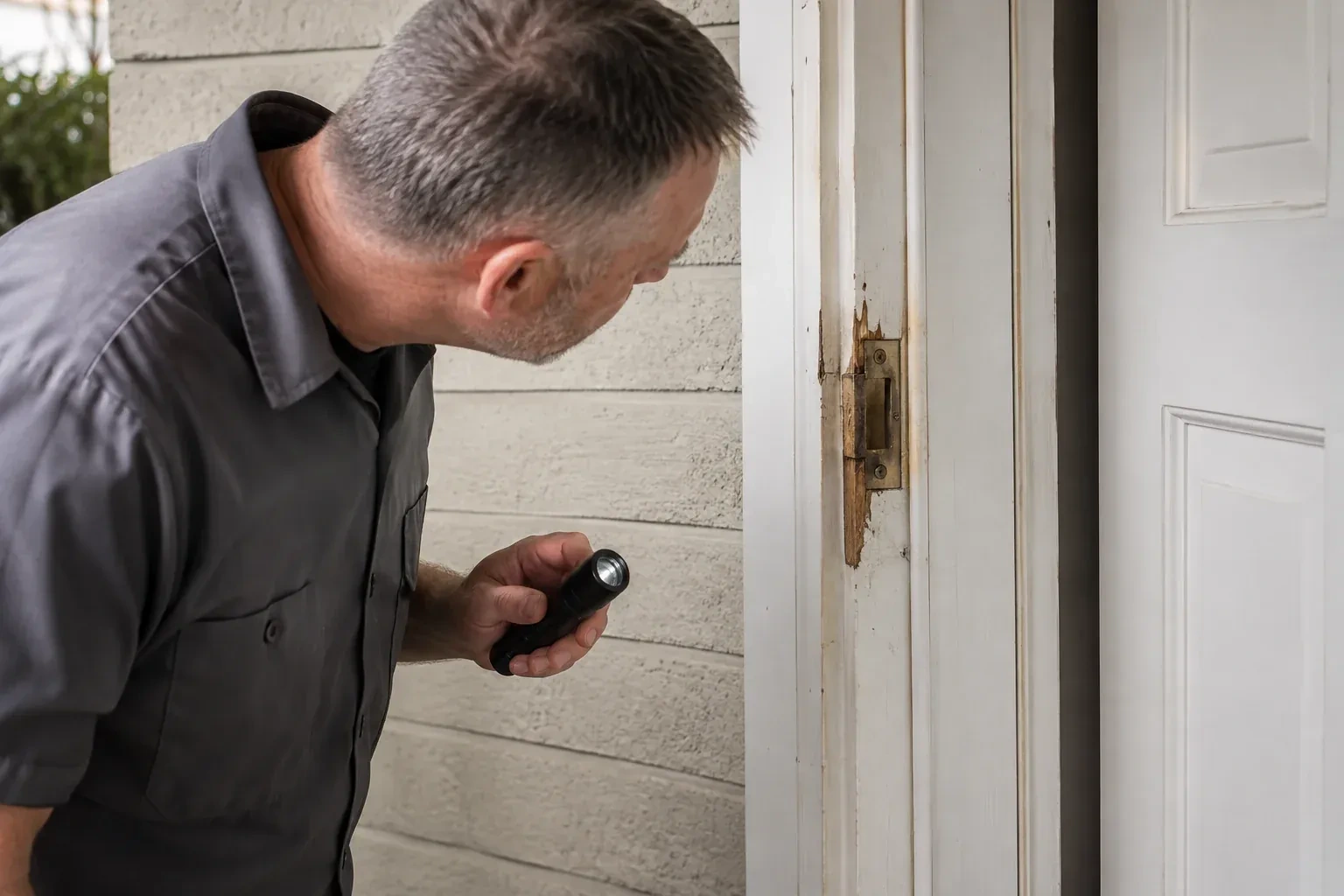
How the visit goesThey did not get in. The attempt left a screwdriver gouge in the door edge, a strike plate bent outward and a deadbolt that now needs a shove to throw. The lock held, but the door is telling you it was tested.
Break-In Damage Lock Repair
How the visit goes
Does the door still hang true
An impact hard enough to break a strike usually moves the door as well. The locksmith checks that the door sits square in its opening, closes on its weatherstrip without force, and that the bolt lines up with its pocket rather than dragging on the strike lip. Hinge screws are tested for grip, since a kick can pull them from the jamb even on the side that was not attacked, and the hinge leaves are checked for bending. Manufacturers treat strike position, pocket depth and door alignment as working parts of the lock, and a repair that ignores them produces a door that locks badly the day after it was fixed.
Securing the opening for the night
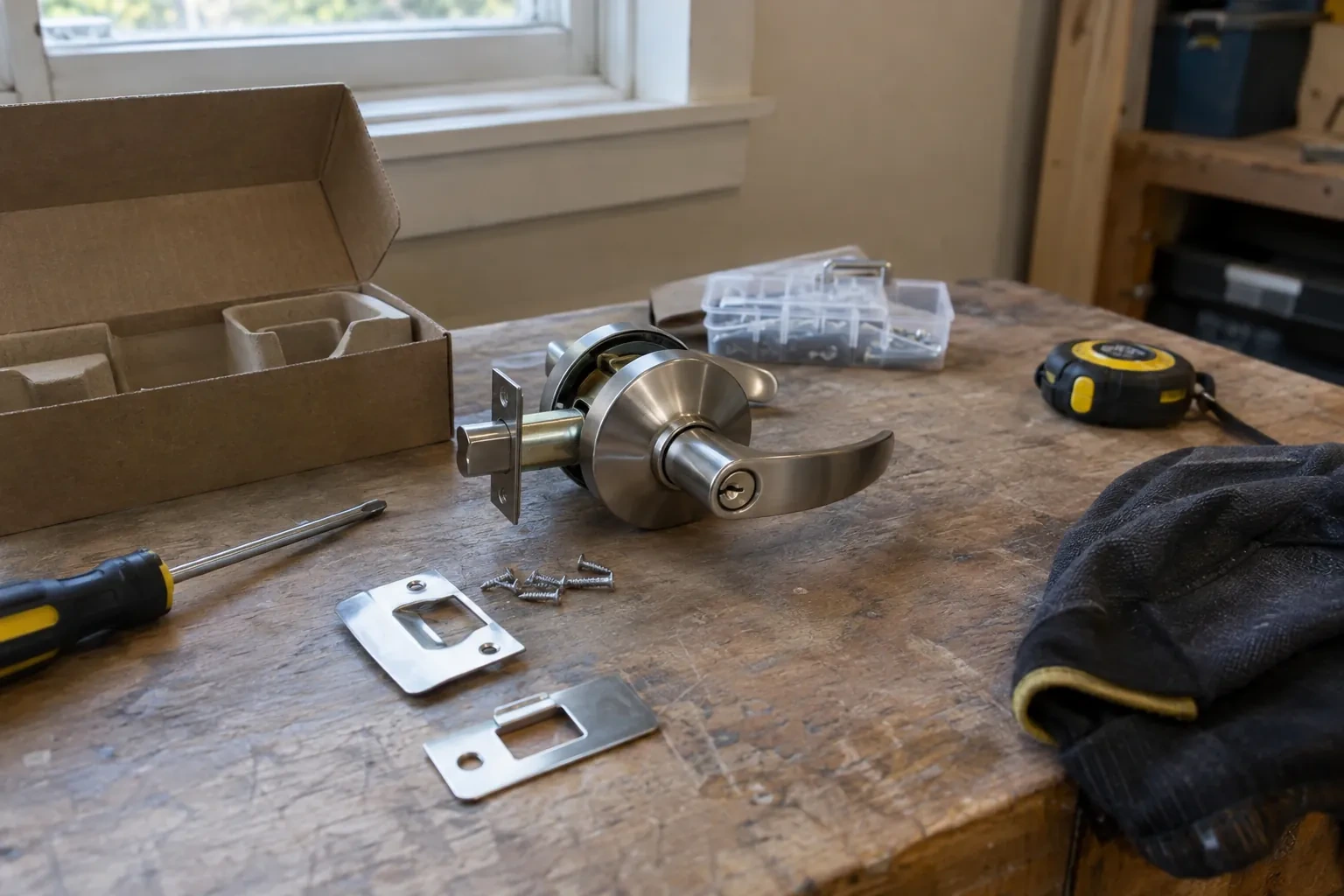
Before anything permanent, the door has to close and lock. Where the slab and frame are sound, a new deadbolt or cylinder goes straight in and the job moves on to reinforcement. Where the jamb is split, a steel repair plate is screwed over the break to hold the wood together and give the strike something to bite, or the strike is boxed and screwed into the stud behind the damage. Where the frame or door is too broken for hardware, plywood is fitted across the opening with cleats from inside, arranged so the household can still get out without a key. You know before the locksmith leaves exactly how the door is being held.
New keys and a clean slate
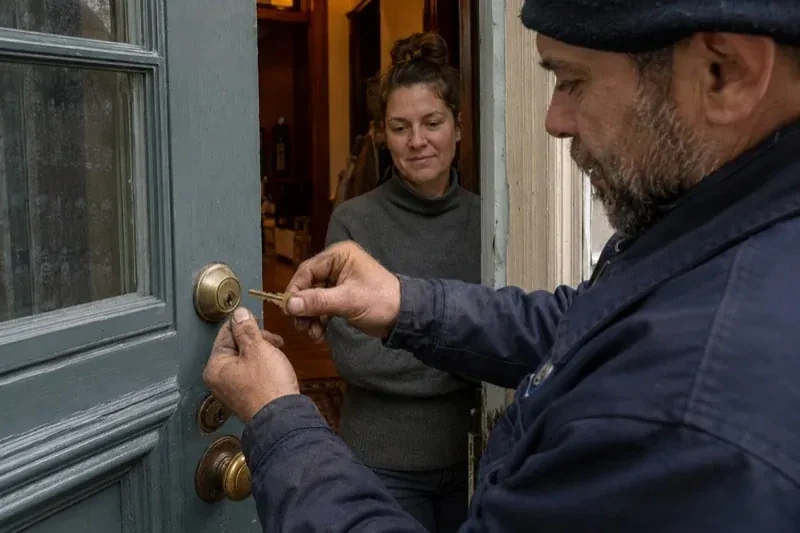
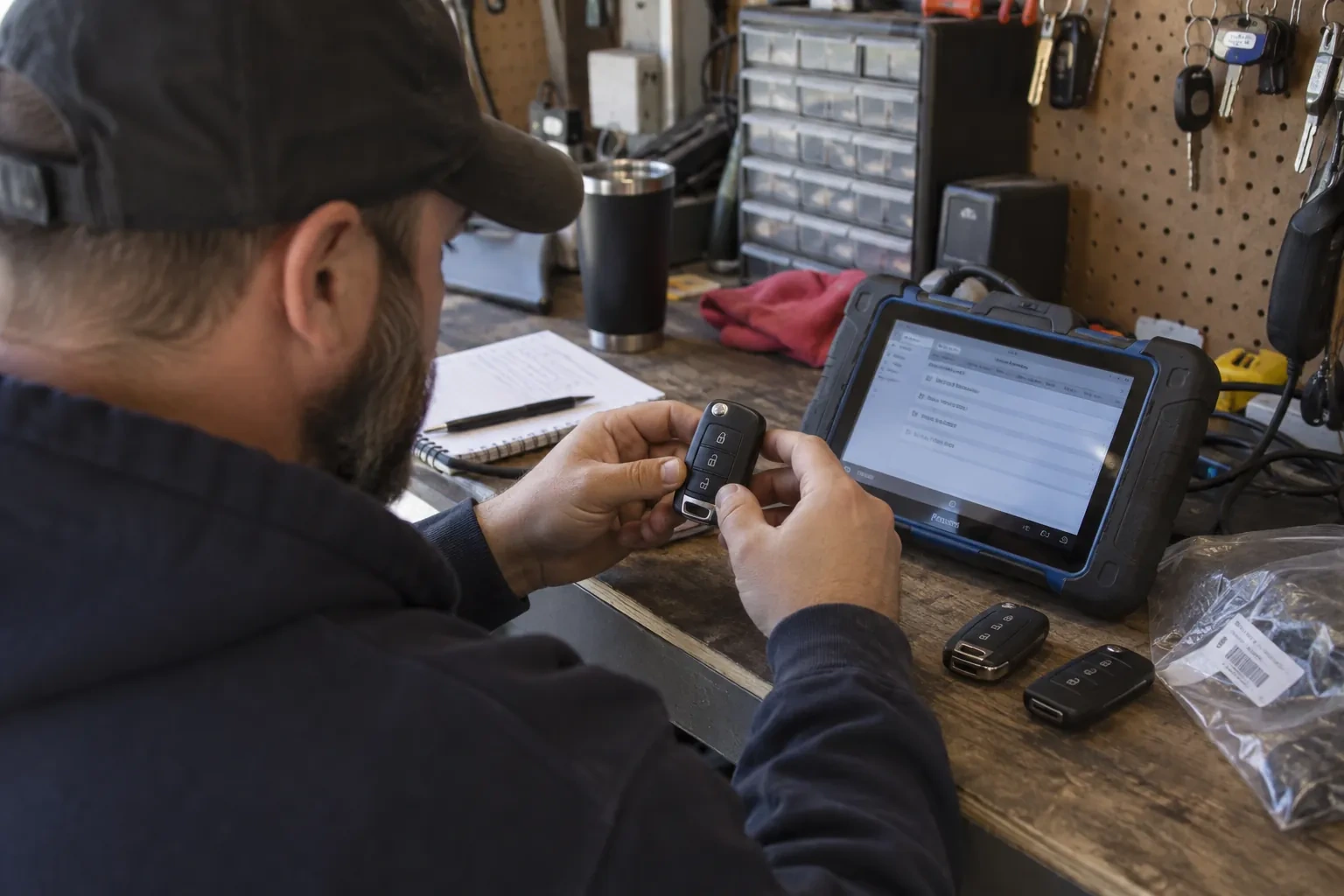
If keys were taken, you now hold a set that fits locks nobody else can open. The cylinders were pinned to a fresh combination and the new keys were cut from that pinning, tested in each door and counted into your hand. It is worth deciding on the spot who gets one and where the spare lives, which is no longer a hook by the door. Garage remotes have been erased and re-paired, and you have been reminded to change alarm codes and any code written on paper that was disturbed. The stolen ring is now a handful of metal that turns nothing.
Break-In Damage Lock Repair
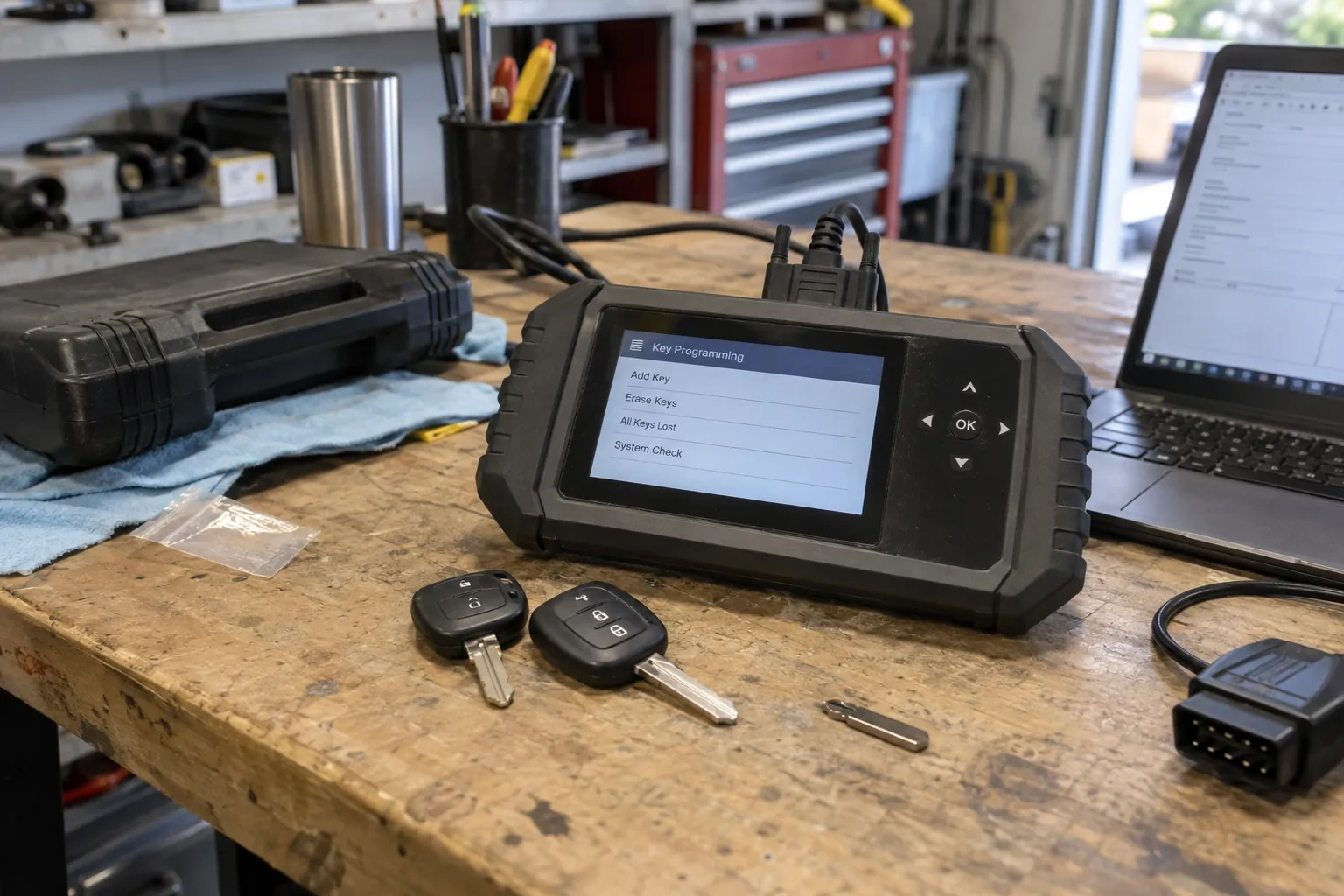
In the van
Plywood and cleats for boarding
Grade 1 deadbolt with one-inch throw
Security strike box
Hinge reinforcement plate
Three-inch strike and hinge screws
Break-In Damage Lock Repair
What affects the quote
Commercial and storefront hardware
Narrow-stile deadbolts, hookbolts, latch guards, anti-pry astragals and interchangeable cores are commercial parts with commercial fitting time, and a shop's quote reflects them.
How many parts were damaged
One broken cylinder on a sound frame is a small repair. A torn strike, a split jamb, a crushed door edge and bent hinges together are a longer visit with more hardware, and the quote follows the count.
Method of jamb repair
Bonding a split with epoxy and a repair plate is one line; fitting a new section of wood is another; a full jamb leg through a carpenter is quoted by that trade.
What to have ready
- Are there other doors or a garage entry on the same key?
- Have you photographed the damage as you found it?
- Is the damage to the lock, the frame, the door edge or the glass, or several?
Break-In Damage Lock Repair: questions
QuestionsShould I keep the broken lock and strike?
Yes, unless the insurer has already said they are not needed. Insurers generally ask policyholders to retain damaged property until the claim is settled, and a bag holding the twisted cylinder, torn strike and split wood answers an adjuster's questions more clearly than any description. The locksmith hands them over at the end of the visit along with a written note of what was replaced. Photographs of the parts in place, before removal, complete the record.
Will my insurer want to see the damage before it is repaired?
Insurers ask policyholders to document the loss, keep damaged property and hold on to receipts, and a securing visit is expected rather than discouraged, because an open door invites more loss. Photograph everything as found, keep the broken hardware in a bag, keep the invoice, and call your insurer as soon as the house is safe. The adjuster can see the old parts and the photos; the door itself need not stay open.
Can the locksmith start before the police have finished?
The door is left as found until the police have seen it or said they will not attend. What can happen in the meantime is planning: the locksmith can look at the damage, photograph it, measure for hardware and prepare the temporary securing so that the moment the scene is released the work begins. Nothing is removed or moved before then, because the marks on the door are part of the report.
Related services
- Business Lockout ServiceA cook stepped into the alley with the recycling and the rear door swung shut behind him.
- Broken Key ExtractionThe key went in like any other morning, you turned it, and something gave with a small metallic click.
- Seized & Jammed Lock OpeningThe key turns a full circle without any resistance and the deadbolt stays exactly where it is.