Car keys · Whitchurch-Stouffville
Transponder Key Programming
The new key slides into the ignition and turns exactly the way the old one did, but the engine only cranks.
In plain words
Not every transponder chip is built the same way. Early systems used a fixed code that repeated every time, while current vehicles increasingly use encrypted challenge-response chips that answer a different, unpredictable exchange with the immobilizer on every start. Identifying which generation a given vehicle uses tells the locksmith which programming approach and which chip family the new key needs, since a chip from the wrong family will not answer that system at all.
How the visit goesThe remote fob has gone silent, the doors won't unlock with a button press, and the little emergency blade tucked inside it has not been used since the day the car was bought. Nobody remembers exactly where the metal edge is supposed to go once it's out.
Transponder Key Programming
How the visit goes
Anything already added to the vehicle
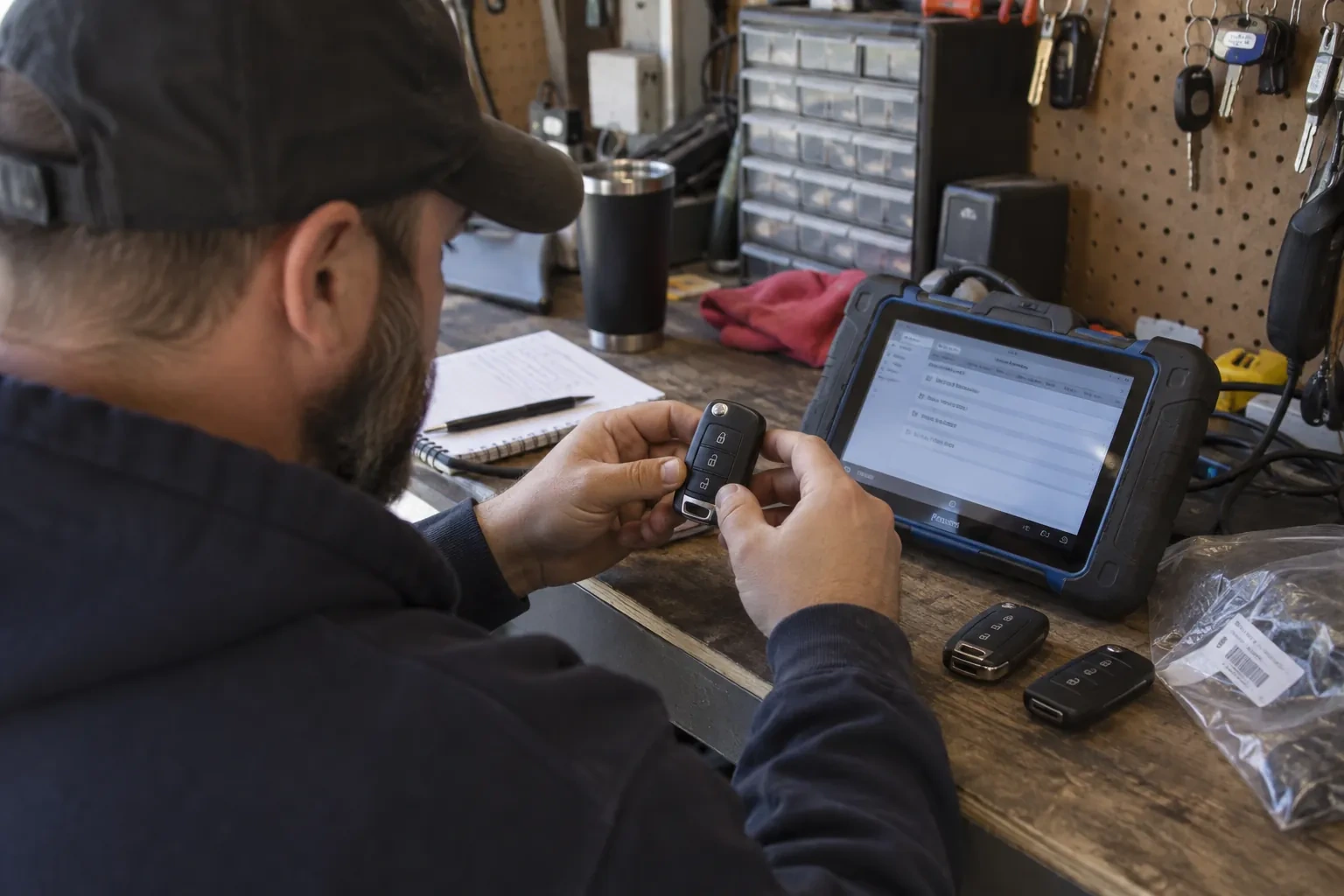
Aftermarket remote starters, alarms, and a used ignition or control module carried over from another vehicle can all leave their own entries in a key list, sitting alongside the factory ones. Before programming anything new, the locksmith asks what has been added or swapped, since a module transplanted from elsewhere sometimes brings a stranger's old key identities with it. Sorting out what belongs to this vehicle and what arrived with a part keeps the finished key list honest rather than cluttered with entries nobody can explain.
Starting over when every key is gone
All-keys-lost work follows a different path, because there is no working key left to prove the vehicle's trust to a new one. The locksmith first re-establishes secure access to the immobilizer's own module, sometimes through the vehicle's manufacturer network, before a fresh key list can be written at all. Once that access is confirmed, the new key or keys are added the same way any other key would be, and the process finishes with the same start-up test as a routine replacement.
A spare that already exists, not one for later
A spare key made before it is needed sits in a drawer doing nothing until the day the only other key is lost, and on that day it is worth more than any amount of good intention would have been. Households that arrange this while it is convenient rarely regret it, and the visit that adds a driver's key or a genuine spare is no more involved than the one that replaces something already missing. The difference is only in when it happens.
Transponder Key Programming
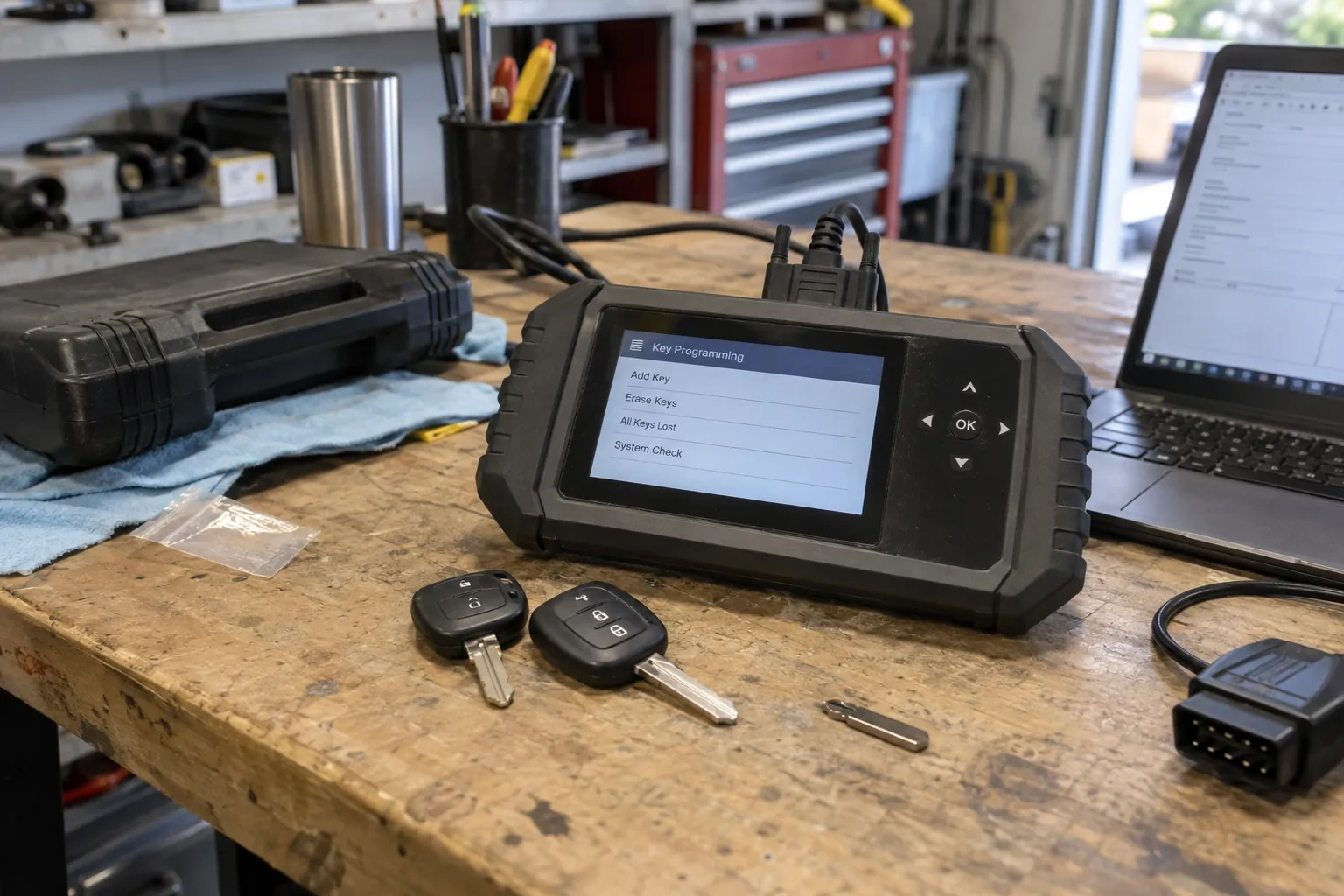
In the van
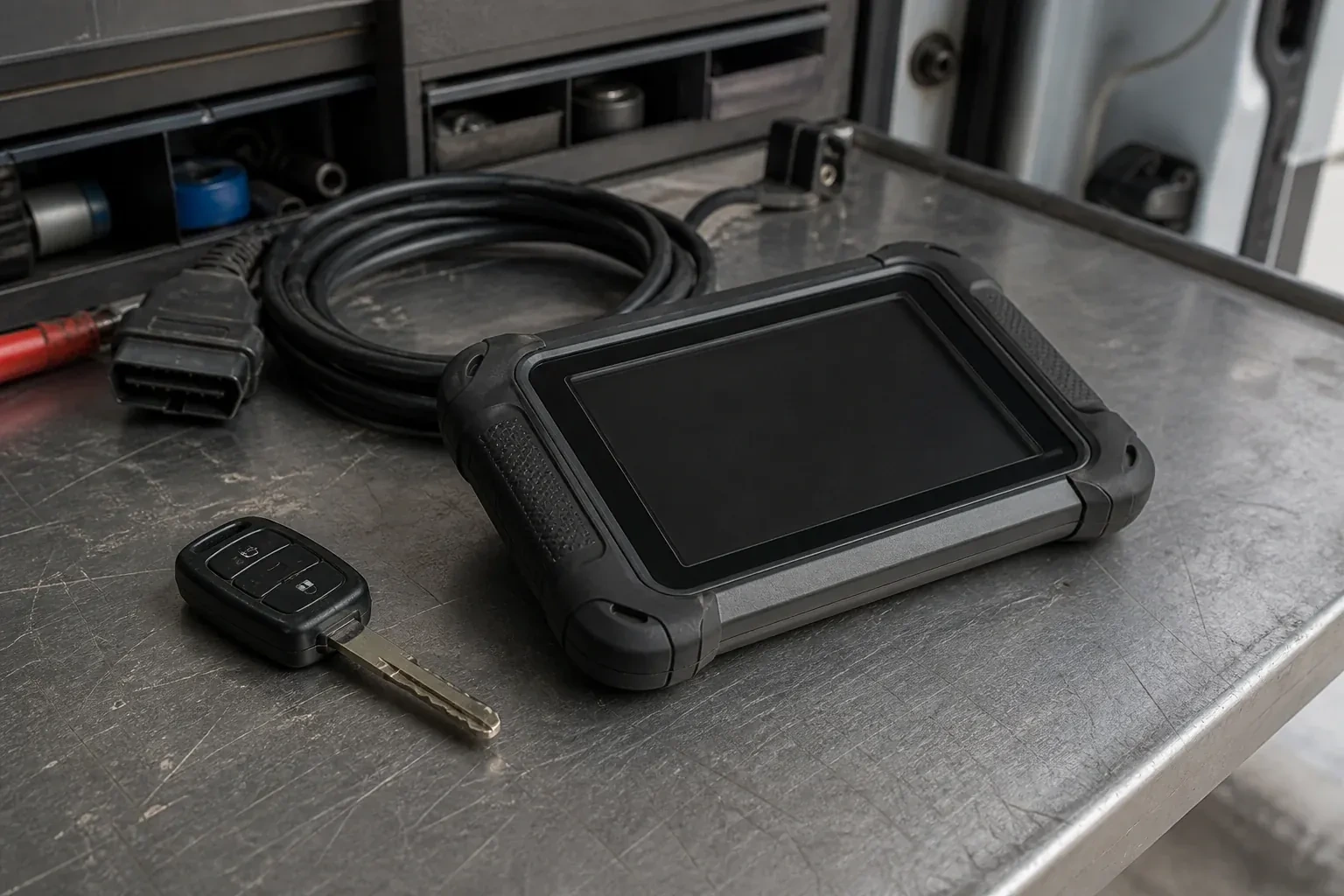
Diagnostic laptop or tablet
Chipped key blank
Emergency insert blade
Fob battery
Key cutting machine
Transponder Key Programming
What affects the quote
Any extra function added to the new key
Pairing remote entry, trunk release, or proximity walk-up functions onto a new key is additional work beyond the immobilizer chip alone, and each function is confirmed working before the visit is considered finished.
Cutting method: by code or by duplication
Cutting from a manufacturer code tends to be more direct than duplicating from a worn or damaged working key, where extra care is needed to read the original cuts accurately before a blank is shaped to match.
Whether any working key remains
Adding a spare or a driver's key with an existing key on hand is a more contained job than an all-keys-lost situation, which needs its own extended process to re-establish trust with the vehicle before anything new can be written.
What to have ready
- Where is the vehicle parked right now?
- Do you have photo identification available?
- Was a spare ever cut without being programmed?
Transponder Key Programming: questions
QuestionsMy key turns and the engine cranks, but it won't start. Is that this?
That pattern, the starter turning the engine over without it catching, often points to the key or immobilizer rather than a fuel or ignition-timing fault. A flashing security light on the dashboard while this happens adds to that picture. A diagnosis, checking whether the vehicle actually recognizes the key's chip, is what confirms which one it is before any programming begins.
Does cold weather affect a key or its fob?
The metal blade and the passive chip inside it are not affected by cold. The fob's battery is a different story: cold weather reduces a battery's effective output, which can turn a marginally weak battery into one that suddenly stops responding on a cold morning. Testing a fob's battery before winter sets in catches this early.
Are some vehicles only able to have keys programmed by a dealer?
Many recent models, particularly ones with additional security layers, require a manufacturer-level session that only certain equipment can reach. Older and simpler systems more often allow direct programming without that extra step. The locksmith can usually confirm which situation applies to a specific vehicle from its year, make and model before the visit.
Related services
- Car Key ReplacementThe only key to the car went into the lake with the kayak.
- Spare Car Key DuplicationOne key opens the car, starts the car, and rides in one pocket every day.
- Key Fob ProgrammingThe remote clicks the way it always has, but the vehicle no longer locks, unlocks or answers with its usual chirp.