Car keys · Whitchurch-Stouffville
Vehicle Lock Repair
Your key turns smoothly in the driver's door, the same as it always has, but the button underneath stays down and the latch never releases.
In plain words
Vehicle Lock Repair addresses a single locking point, a door, the trunk or hatch, or a storage compartment, that has stopped behaving like the rest of the vehicle. After confirming the customer's connection to the vehicle against its registration, the locksmith opens the affected panel, tests the cylinder, the linkage and, where fitted, the power actuator, and traces the fault as far as it goes. Repair or replacement usually targets that part alone, though freeing a stuck mechanism can sometimes need a carrier plate, glass run guide or latch replaced alongside it; either way, the finish and the rest of the locking set carry on as they were.
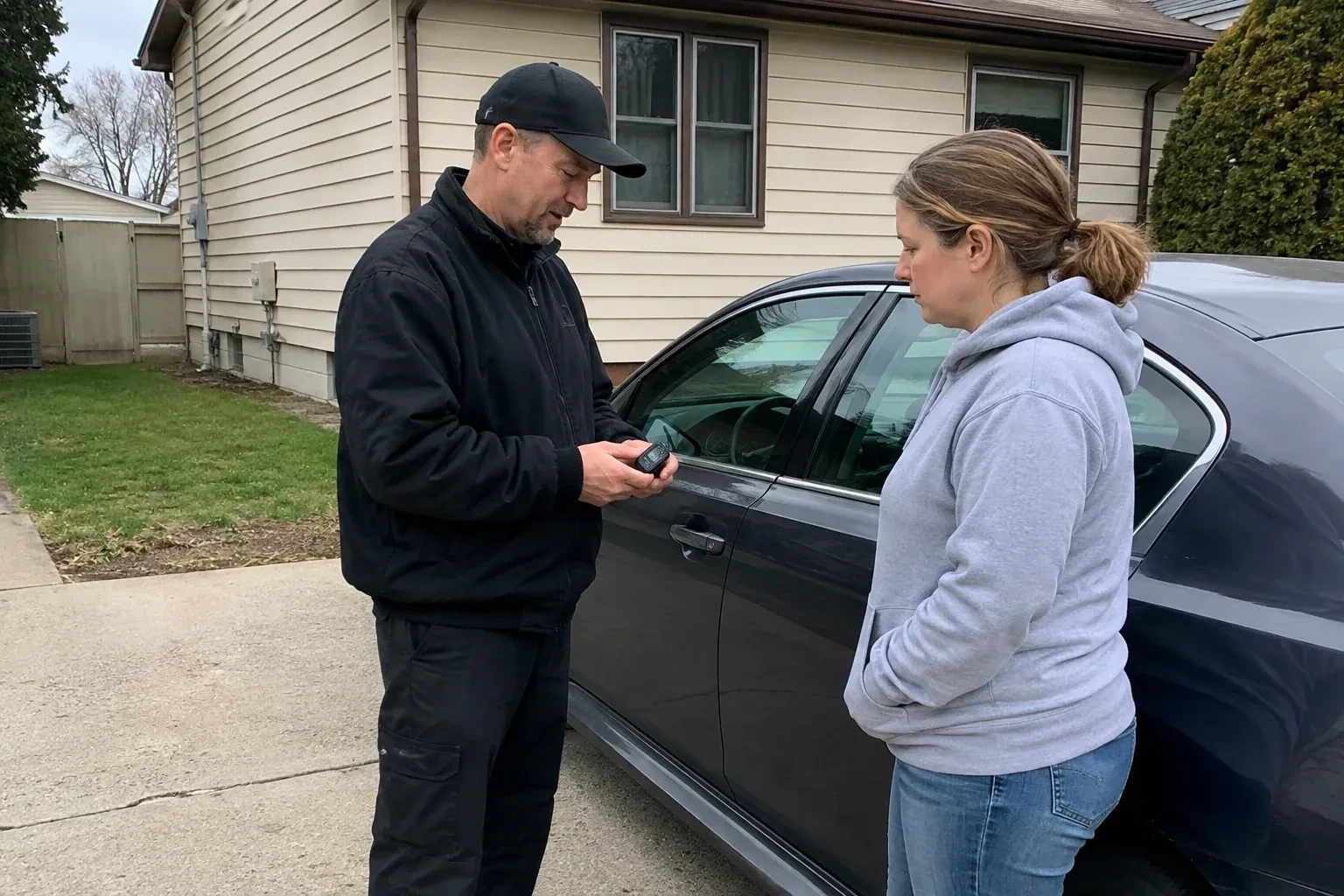
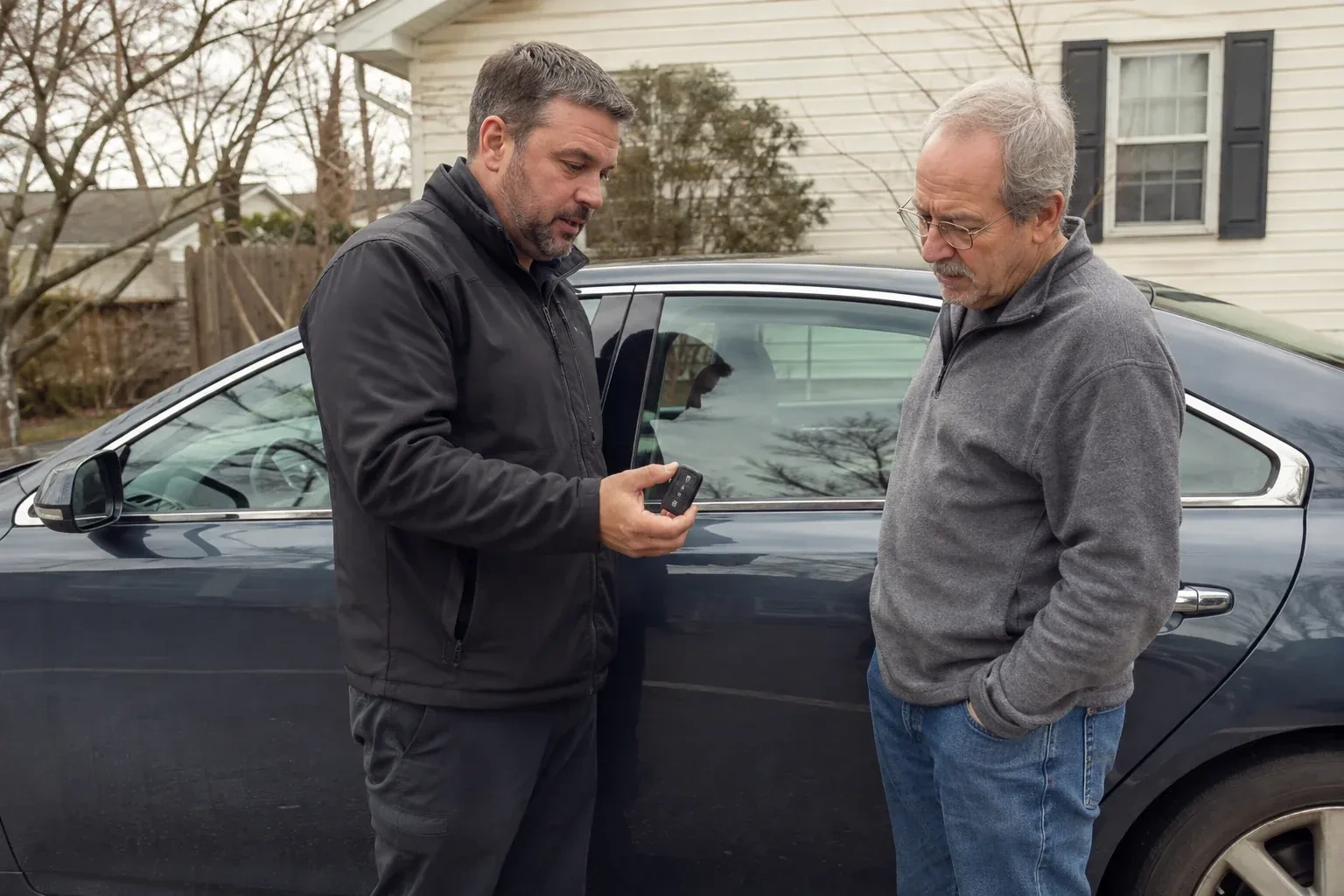
How the visit goesPressing the remote locks three doors with a solid clunk and leaves the rear passenger door untouched, every single time. A twist of the key still opens that door by hand, so the fault is sitting somewhere between the remote and that one lock.
Vehicle Lock Repair
How the visit goes
Checking the seal and the door's overall fit
Weatherstripping around the affected opening gets a look before the panel goes back on, because a perished or torn seal is often how moisture reached the parts that just failed. The locksmith also checks how the door or hatch sits in its frame, since a panel that has sagged slightly can put pressure on the latch and mimic a lock problem that is really a fit problem.
Bringing central locking back into line
When one door lags behind or ignores the fob while the rest of the set responds together, the repair focuses on that single point, the actuator, its wiring or its connection to the vehicle's locking module, rather than disturbing doors that already work. Once the failed link is repaired, the locksmith cycles the fob repeatedly and watches every door, confirming the whole set locks and unlocks as one action again.
Keeping moisture out of a freshly repaired lock
A lock that has just been serviced benefits from a dry start. Worn weatherstripping near the repaired point is worth attending to soon, since it is the most common way moisture reaches a cylinder, a linkage or an actuator a second time. Wiping down the door sill and keeping the seal clean through the wetter months goes a long way toward keeping today's repair from repeating itself.
Vehicle Lock Repair
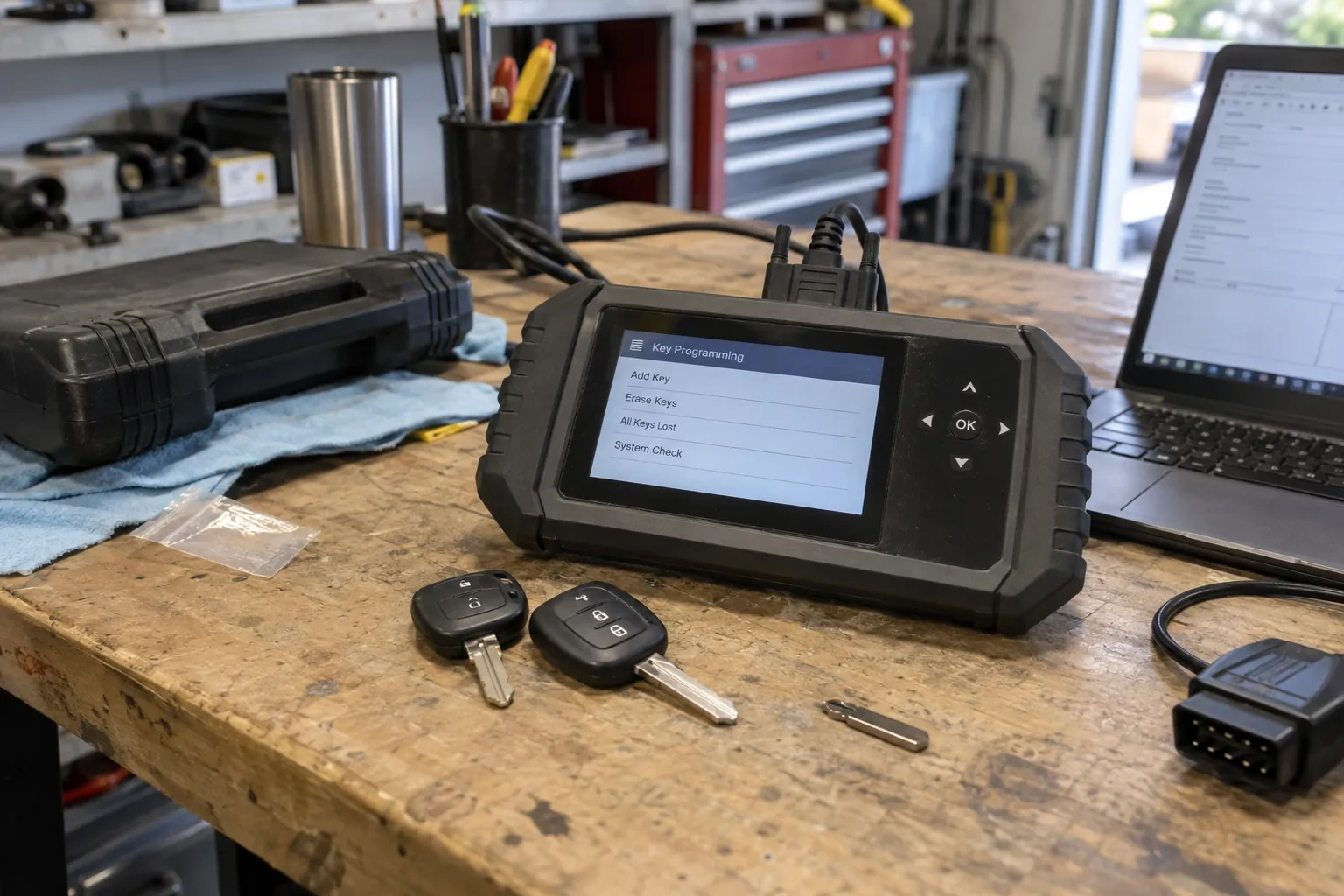
In the van
Weatherstripping and seal sections
Key blanks cut to code
Trim panel removal tools
Dry lock lubricant
Transponder chips
Vehicle Lock Repair
What affects the quote
Age and make of the vehicle
Some vehicles use widely available hardware, while others need parts sourced specifically for that make and model. Availability of the matching cylinder, actuator or key blank affects the timeline and the quote.
Number of locks needing attention
One door behaving oddly is the simplest case. A vehicle with a driver's door, a trunk and a storage compartment all showing symptoms is a longer visit with more hardware to open and test.
Corrosion from weather and road salt
A cylinder or actuator that has taken on winter brine or years of moisture through worn weatherstripping often needs more cleaning, drying or part replacement than one that has stayed dry, and the quote reflects that condition.
What to have ready
- Has the key fob's battery been replaced recently, or not that you recall?
- Is there a spare key or fob you could compare against the affected one?
- Which lock is affected: a door, the trunk or hatch, or a storage compartment?
Vehicle Lock Repair: questions
QuestionsIs it normal for only the trunk or hatch lock to fail while the doors are fine?
Yes, this happens fairly often because a trunk or hatch lock gets used far less than the door locks and can seize from disuse, dust or corrosion, or spin freely if its own linkage has come loose over time.
How does a locksmith reach the actuator or linkage inside my door?
The interior trim panel is removed using tools shaped to release its retaining clips without marking the panel. On many doors that exposes the cylinder, the linkage rod and the power actuator for individual testing and repair, though some doors keep a carrier plate, water shield or window guide in the way, or use an integrated latch and actuator assembly, and are worked on accordingly.
Does a repaired vehicle lock still use my original key?
Wherever possible, yes. The point of repairing rather than replacing a lock outright is to keep it working with the key and fob you already carry, so the whole vehicle continues to answer to one set rather than needing a second key for one door.
Related services
- Car Key ReplacementThe only key to the car went into the lake with the kayak.
- Spare Car Key DuplicationOne key opens the car, starts the car, and rides in one pocket every day.
- Key Fob ProgrammingThe remote clicks the way it always has, but the vehicle no longer locks, unlocks or answers with its usual chirp.