Locksmith
Help yourself first
Questions we hear most
What if my wallet and every document are locked inside?
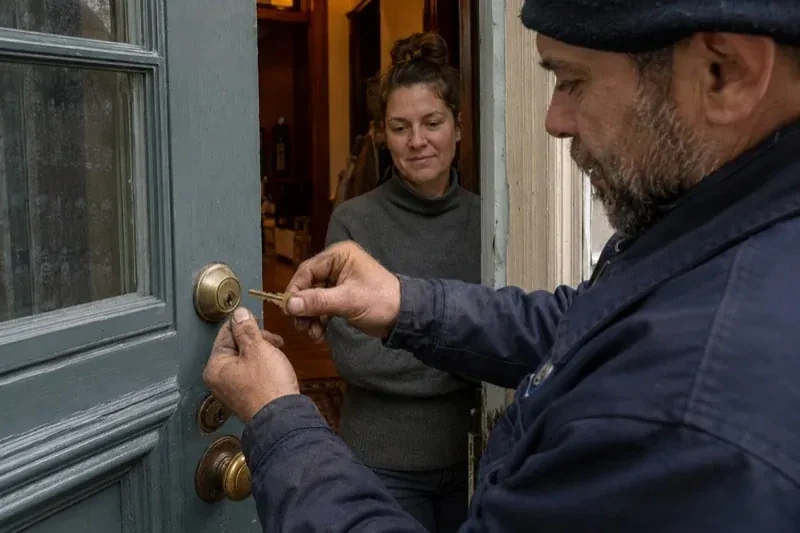
That is the most common version of a lockout, and there is a routine for it. Tell the locksmith on the phone so the plan is agreed before arrival. Often a neighbour can confirm you live there, a digital copy of a lease or bill is on your phone, or a property manager can vouch for you. Where none of that is available, the locksmith opens the door and completes the identification check with the documents inside before leaving.
Our door uses fobs and the reader is dead. Can you get us in?
Yes, and usually without disturbing the access system. Many readers and electric strikes go dark because a power supply, breaker or backup battery has failed, and restoring power reopens the door. Where a mechanical override cylinder is fitted, it opens like any other lock; not every system includes one. An ordinary magnetic lock releases on its own once its power is actually removed, so a genuine power loss opens that door without waiting on a remote release. Afterwards, credentials and schedules are confirmed with whoever manages the system.
What lubricant should I use on the lock afterwards?
Whatever the lock's own maker specifies, since cylinders differ: many call for a dry graphite or PTFE spray blown into the keyway and worked in with the key, once or twice a year, while others prohibit graphite and specify their own product instead. General-purpose oils, grease and sprays feel smooth at first but on most cylinders collect dust and clog the pins, which leads back to the sticking that breaks keys. A little goes a long way; too much of any lubricant can also hold moisture.
Should I keep the broken lock and strike?
Yes, unless the insurer has already said they are not needed. Insurers generally ask policyholders to retain damaged property until the claim is settled, and a bag holding the twisted cylinder, torn strike and split wood answers an adjuster's questions more clearly than any description. The locksmith hands them over at the end of the visit along with a written note of what was replaced. Photographs of the parts in place, before removal, complete the record.
My key is worn. Would a new copy have prevented this?
Possibly, if the key was part of the cause. A worn or bent key lifts the pins short of the shear line, so the plug binds even in a healthy cylinder, and a copy made from that key repeats the wear. A key cut from the code or from a crisp original is the fix. If the lock was also gritty or the door had moved, the new key would have eased things without settling them, which is why the locksmith checks all three.
A garage door remote was on the ring. What happens with that?
The opener on the garage ceiling holds a memory of every remote paired to it, and it can be erased in one step so the lost remote is forgotten. The remotes still in the household are paired again afterwards, and a keypad on the outside of the garage gets a new code if you have one. The locksmith can do this during the visit, and it takes only a few minutes at the opener.
What exactly does rekeying a lock change?
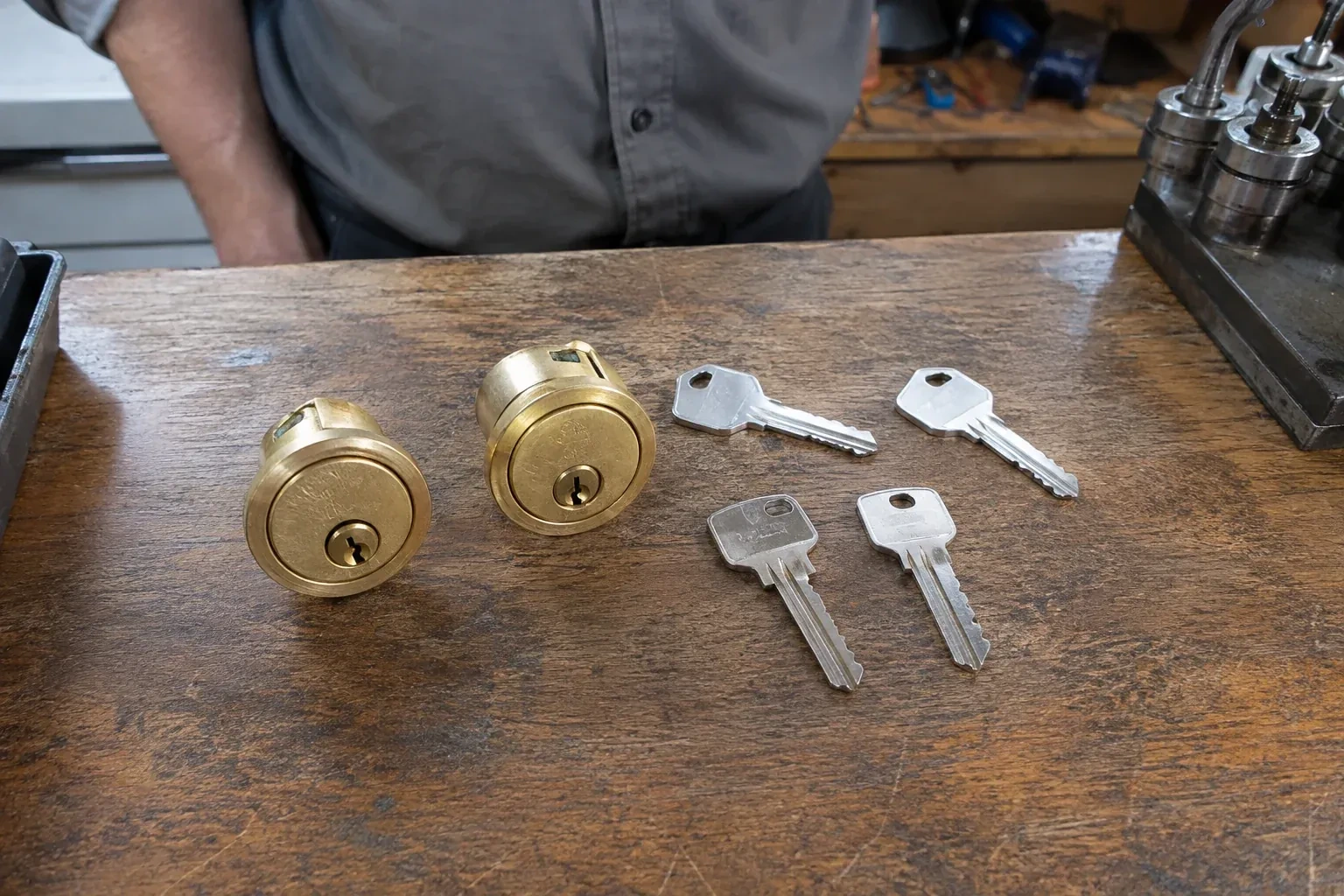
What changes depends on the cylinder. Many locks turn when a row of small bottom pins lines up at a precise level, set by the cuts on your key, and during a rekey the locksmith tips those pins out and loads a set that lines up with a different key, cut new for you; some residential cylinders instead reset a side-locking bar without removing any pins. From then on the new key operates the lock and older keys do not, and the hardware on the door stays as it was.
What should I have ready before the locksmith arrives?
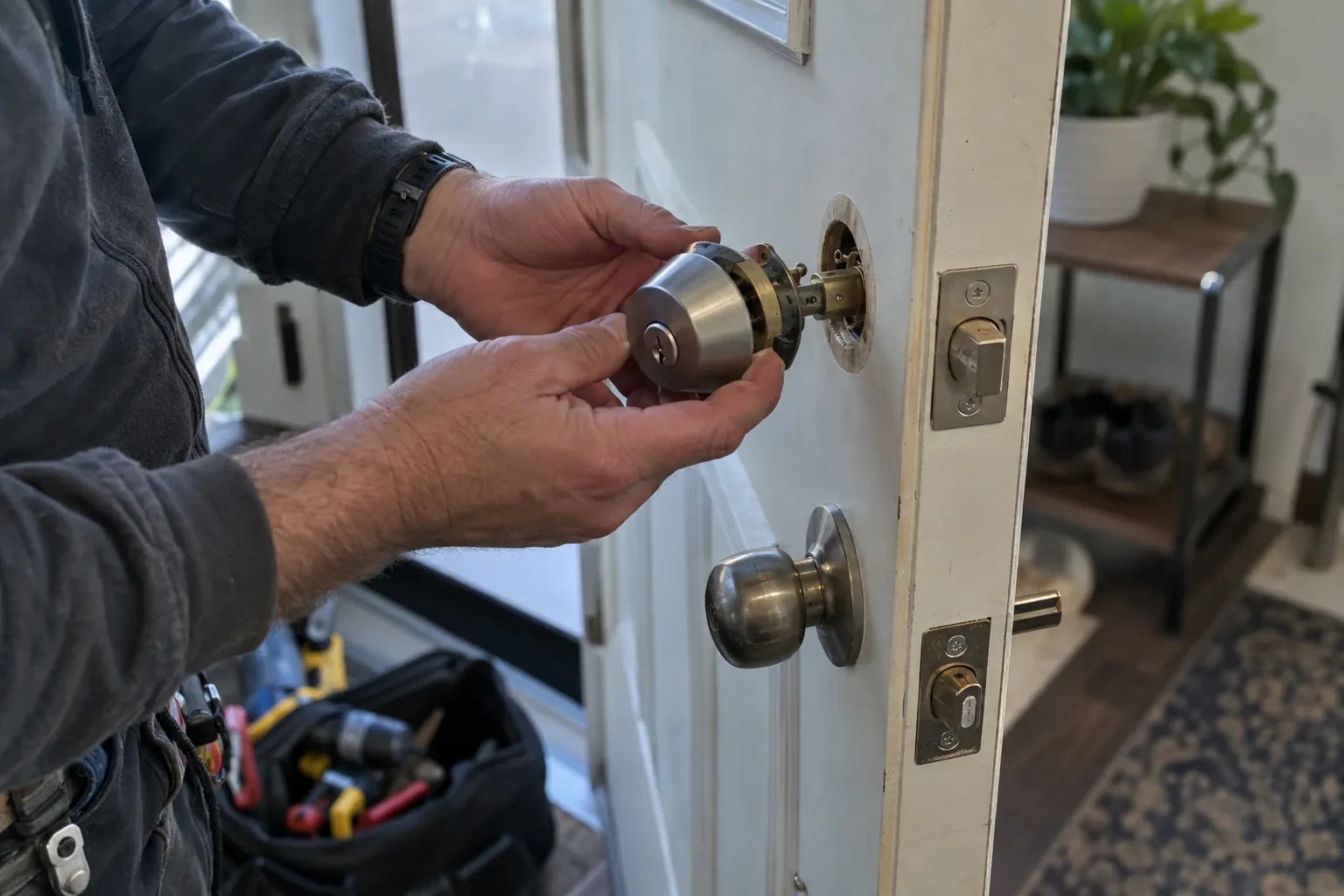
Know which doors you want bolted, what they are made of, and whether each already has a deadbolt or only a knob. A photo of the door face and edge helps. Have any existing keys to hand, decide whether you want everything on one key, and mention glass near the lock, a storm door in the same opening, or a rental agreement. If you have already bought hardware, keep the box and template together.
My deadbolt only locks if I push the door. Will a new lock cure that?
The push is a sign the bolt and the strike pocket are out of line, which is a door and frame matter more than a lock fault. A new deadbolt is welcome if the old one is worn, but the visit also adjusts the strike, deepens the pocket or tightens hinges so the bolt throws freely with the door simply closed. Done together, the door locks with a fingertip and the new hardware works as designed.
What information helps before you come out?
Whether the door takes a skeleton-style bit key or a flat key in a round cylinder, roughly when the house was built, what the knob and bolt are doing, and whether the trouble is worse with the door closed. A photo of the faceplate in the door edge and one of the keyhole side is worth a great deal. Mention how many doors are involved and how many keys you would like afterwards.
Can the lock be set to lock itself?
Most models offer auto-lock, and it is one of the settings the locksmith configures with you. You choose the delay, from a few seconds to several minutes, and the lock throws the bolt on its own once the door has been closed that long. Models with a door sensor wait until the door is actually shut, which avoids the bolt extending into thin air. Families who have ever wondered whether the back door got locked tend to value this most.
How should I look after a gate lock so it keeps working?
Twice a year, work the lubricant the cylinder maker specifies into the keyway and cycle the key a few times; the wrong product for that model can collect grit or gum up the mechanism instead of helping it. Check that the closer still settles the gate into the latch without slamming, and look at hinges or post hardware for movement, especially after a hard winter. A cylinder that starts needing a wiggle, or a gate that has begun to drag, is worth addressing while it is still a small adjustment.
What is the difference between a private mailbox and a building's mailbox panel?
A private mailbox, whether a standalone box at the curb or a slot in a house door, belongs entirely to that home. A building's mailbox panel groups many small locking compartments in one frame, usually in a lobby, with each compartment assigned to a unit. The lock itself works the same way in both cases; what differs is who confirms the change and how many other doors sit nearby.
Can a safe be repaired instead of replaced after drilling?
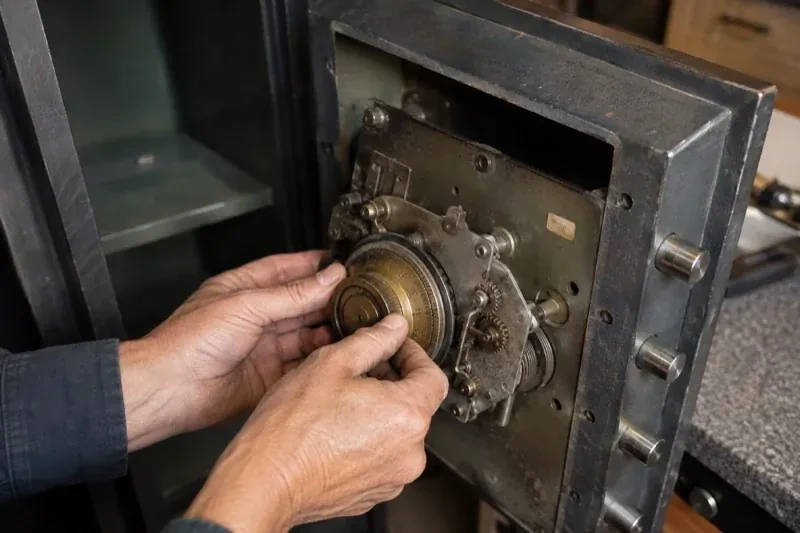
Often, yes, particularly for a mechanical lock, where a worn wheel pack, drive cam or spindle can be replaced individually within the existing lock body. An electronic lock's circuit board and keypad are less often repairable in place and are more commonly swapped for a comparable or higher-rated replacement unit that fits the same cutout.
Can more than one person have their own code?
Yes, on an electronic keypad that supports multiple users, each person can be given a separate code rather than everyone sharing one, which also makes it simple to remove a single code later without resetting the whole lock. A mechanical dial lock, by contrast, has one combination for everyone who needs it, so a change in who has access there means changing that one combination.
Do I need to replace my whole deadbolt or just the cylinder?
It depends on what you have. If the deadbolt is a good heavy unit that throws a full inch into a proper strike, a high security cylinder can replace the ordinary one and the rest stays. If the deadbolt is light, worn or throws a short bolt, a new graded deadbolt with a hardened bolt is the sensible base and the high security cylinder goes into that. The assessment tells you which, door by door.
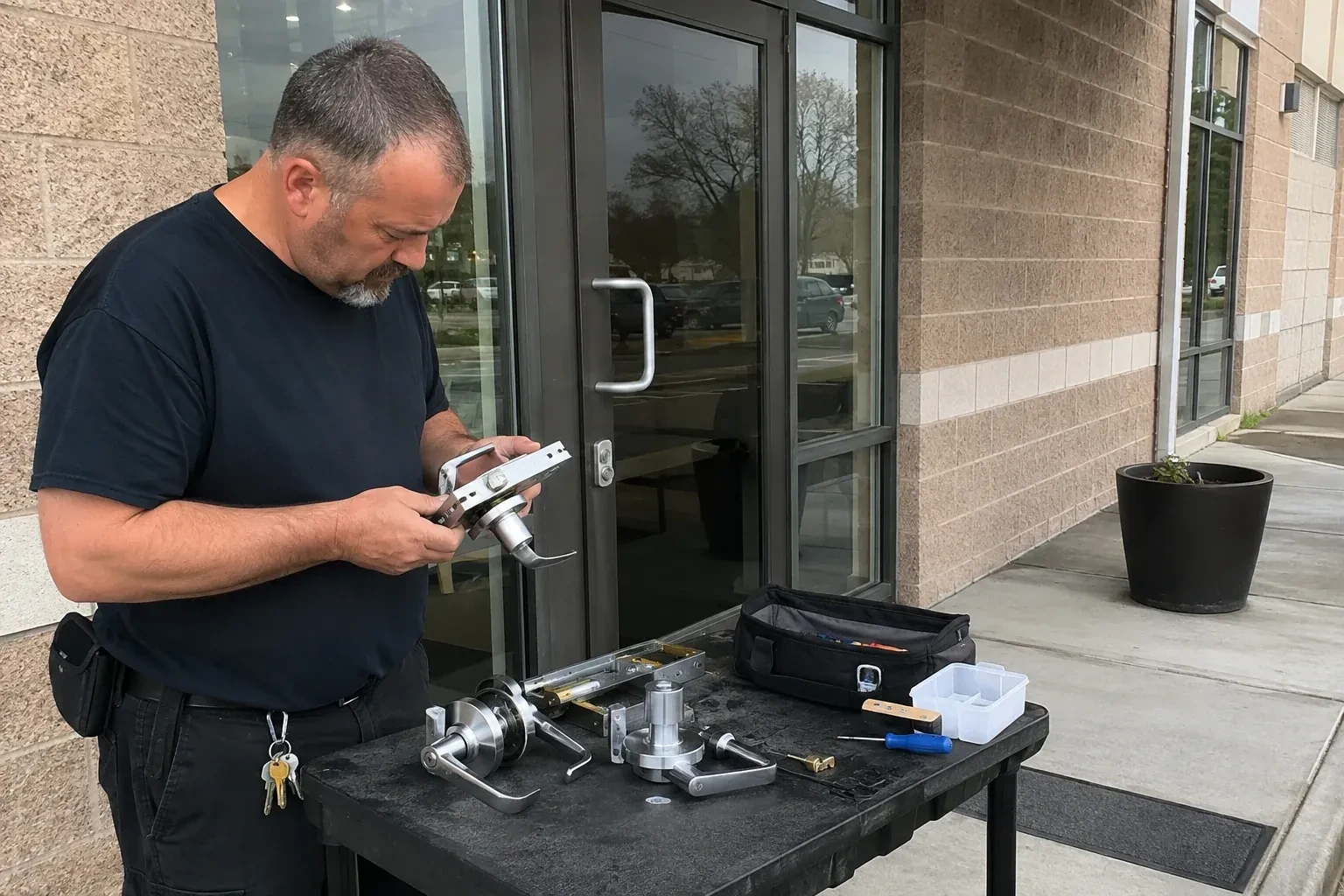
How do you confirm I am allowed to have the locks changed?
For a business the locksmith looks for someone with standing: the owner, a director, or a manager who can show written authority from one of them. A lease, a business registration or a letter on company paper usually settles it, along with photo identification. Where doors belong to a landlord, the property manager's approval is asked for as well. This is a short step and it protects the business from having its own locks changed by the wrong person.
What happens if a master-level key goes missing?
The current chart shows exactly which doors that level was designed to reach, which for a lost top-level master can mean the whole property rather than one group. Depending on how the key was lost and who else already holds that level, the usual options are repinning the affected cylinders and reissuing keys to the remaining holders; a restricted keyway lowers the odds of an unauthorized copy being cut but is not proof that one has not been made. Without a current chart, the first task is reconstructing that scope.
Can a landlord and several tenants share one system?
Yes. In a multi-tenant building, a shared entrance can run on the landlord's controller while each tenant's suite runs its own credentials, so a tenant's staff can reach their own space without gaining access to another business's door. The property manager and each tenant work out together which doors belong on which list before the system is programmed.
Who is responsible for keeping the hardware compliant?
The building owner or the party the owner assigns, often a facilities manager, is responsible for keeping exit hardware in working order and for the fire door assembly testing that goes with it. A locksmith installs and services the hardware and can keep records on the owner's behalf, but the ongoing duty to maintain the assembly sits with whoever holds the building.
What is a grand-master key system, and does a small business need one?
A grand-master system adds a layer above a standard master key, useful for a business with several buildings or departments where one senior key should open everything and mid-level keys should open only their own area. A single-location business with a handful of doors usually only needs a straightforward master and change-key structure, without the extra layer.
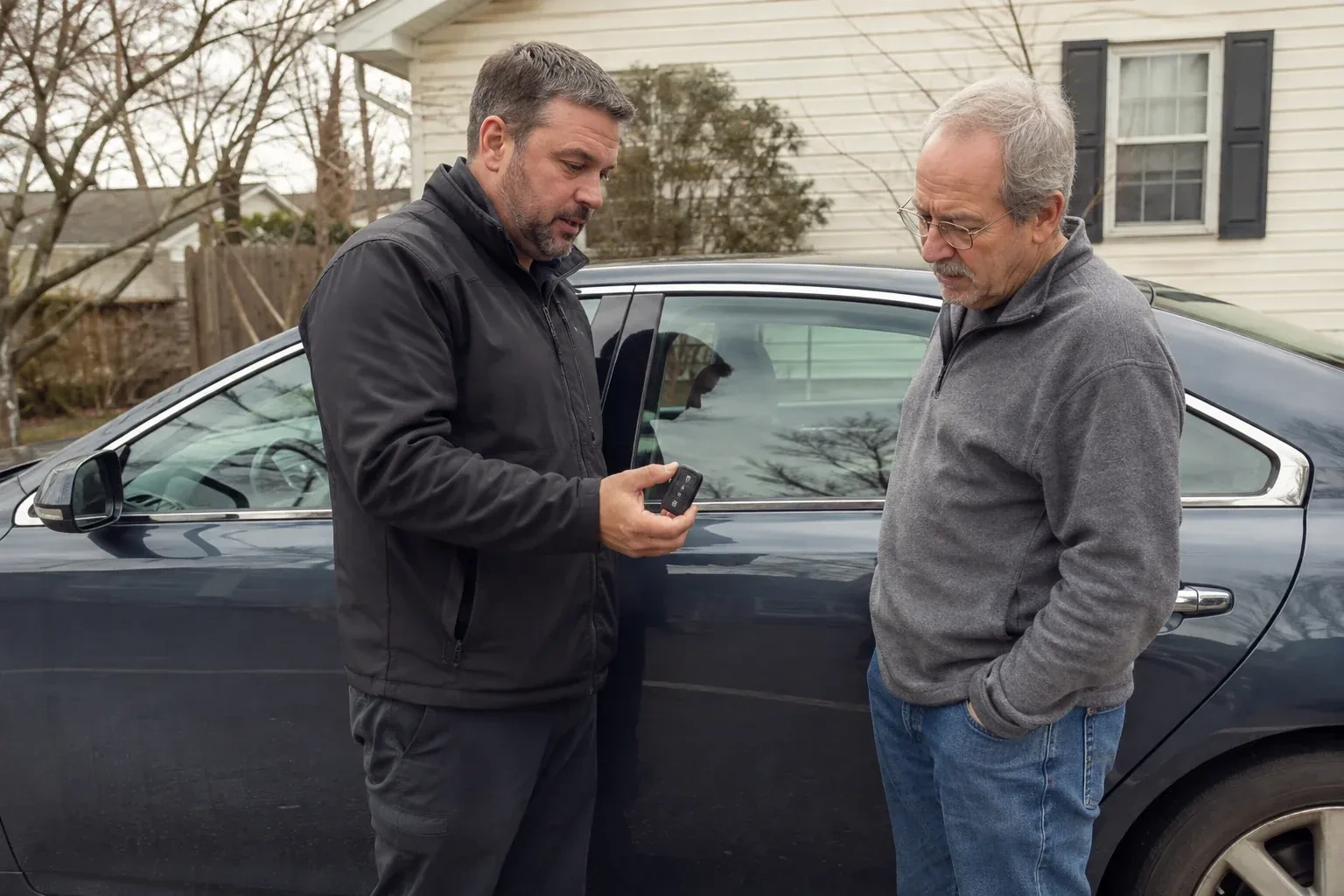
Should I call a tow truck or a locksmith?
For keys locked in, lost or broken, a locksmith opens the car where it stands and can usually make a key on the spot, so the car drives away. A tow moves the car to a shop but leaves the key problem unsolved. Roadside clubs send a locksmith for lockouts and reserve towing for cars that cannot be made drivable. If the shoulder is unsafe to work on, a short tow first may be sensible.
After a break-in the doors and ignition are on different keys. Can that be fixed?
Yes. When a door lock is forced and replaced, or an ignition is swapped, the car can end up needing two blades. A locksmith can rekey the replacement cylinder to match the surviving one, so a single key operates every lock again, and cut new keys to that combination. The transponder side is unchanged by the lock work, so your existing programmed keys carry on starting the car once the blades match.
What is the difference between a transponder key and a smart key?
A transponder key still has a blade you insert into the ignition, with a chip in the head that the immobilizer checks once it is turned. A smart or proximity key usually stays in a pocket or bag; the vehicle senses it nearby, unlocks the doors, and starts with a push button rather than a turned key. Both rely on the same underlying idea, an electronic identity the vehicle recognizes, delivered in different ways.
How many fobs can be registered to one vehicle?
This depends on the manufacturer, since each vehicle's memory has a set limit built in, commonly enough for several drivers plus a spare. The visit checks how many the specific vehicle allows and how many are already registered, so a household adding another driver knows whether there is room before a new fob is ordered.
My key turns and the engine cranks, but it won't start. Is that this?
That pattern, the starter turning the engine over without it catching, often points to the key or immobilizer rather than a fuel or ignition-timing fault. A flashing security light on the dashboard while this happens adds to that picture. A diagnosis, checking whether the vehicle actually recognizes the key's chip, is what confirms which one it is before any programming begins.
Will the same key still open my doors and trunk after this repair?
If the doors and trunk already shared a key with the ignition, that arrangement is kept in mind throughout the repair and preserved wherever the vehicle's hardware allows it. Where a new cylinder or new pinning is involved, the other locks are tested against the new key before the visit ends, so nothing is left running on two different keys by accident.
Is it normal for only the trunk or hatch lock to fail while the doors are fine?
Yes, this happens fairly often because a trunk or hatch lock gets used far less than the door locks and can seize from disuse, dust or corrosion, or spin freely if its own linkage has come loose over time.
My steering lock seized up over winter storage. Can that be fixed without a whole new lock?
Usually, yes. The cleaning method the lock's own maker directs, along with gentle, repeated working of the mechanism, frees many steering locks that have simply seized from disuse or corrosion, without needing to force the key or replace the lock. Only a lock that is cracked, badly rusted internally, or damaged by an earlier forced attempt tends to need full replacement rather than freeing and lubricating.