Car keys · Whitchurch-Stouffville
Spare Car Key Duplication
One key opens the car, starts the car, and rides in one pocket every day.
In plain words
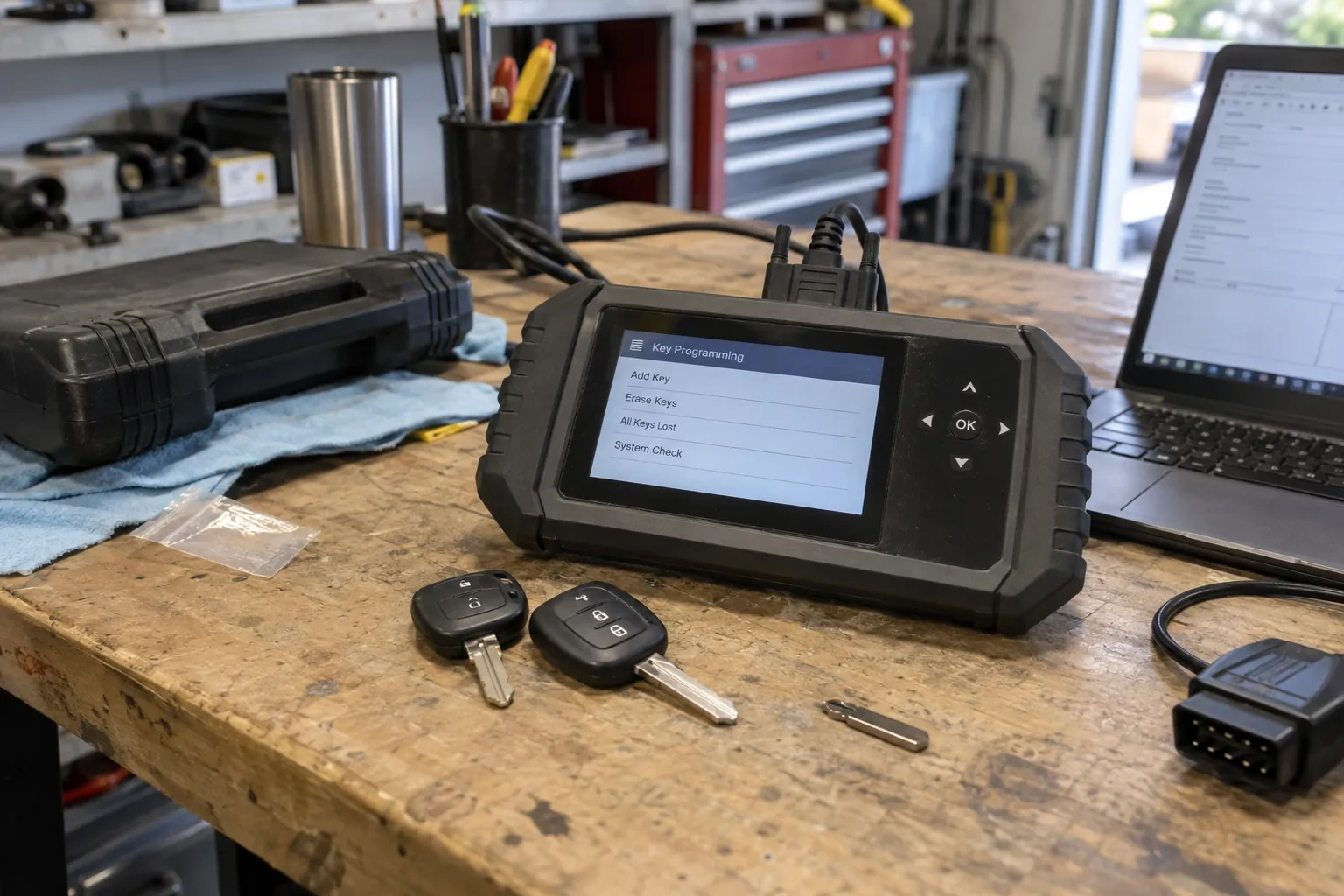
Most vehicles on the road pair a cut metal blade with an invisible electronic layer, a chip in the head that the immobilizer checks before the engine is allowed to start. Duplicating a spare means reproducing both halves, not just the shape of the blade, so the process depends on what year and system the car actually uses. An older mechanical key copies directly from the blade on a duplicating machine. Transponder and remote-head keys add a chip that is copied or freshly coded through the vehicle's diagnostic connection. Proximity fobs add pairing over radio, and every path ends with a second key that starts the car.
How the visit goesThe blade on the everyday key has gone shiny and thin along one edge, and lately it needs a wiggle before the ignition catches. Nobody wants to be holding a failing original with nothing waiting in reserve if it finally gives out.
Spare Car Key Duplication
How the visit goes
Locating the right blank
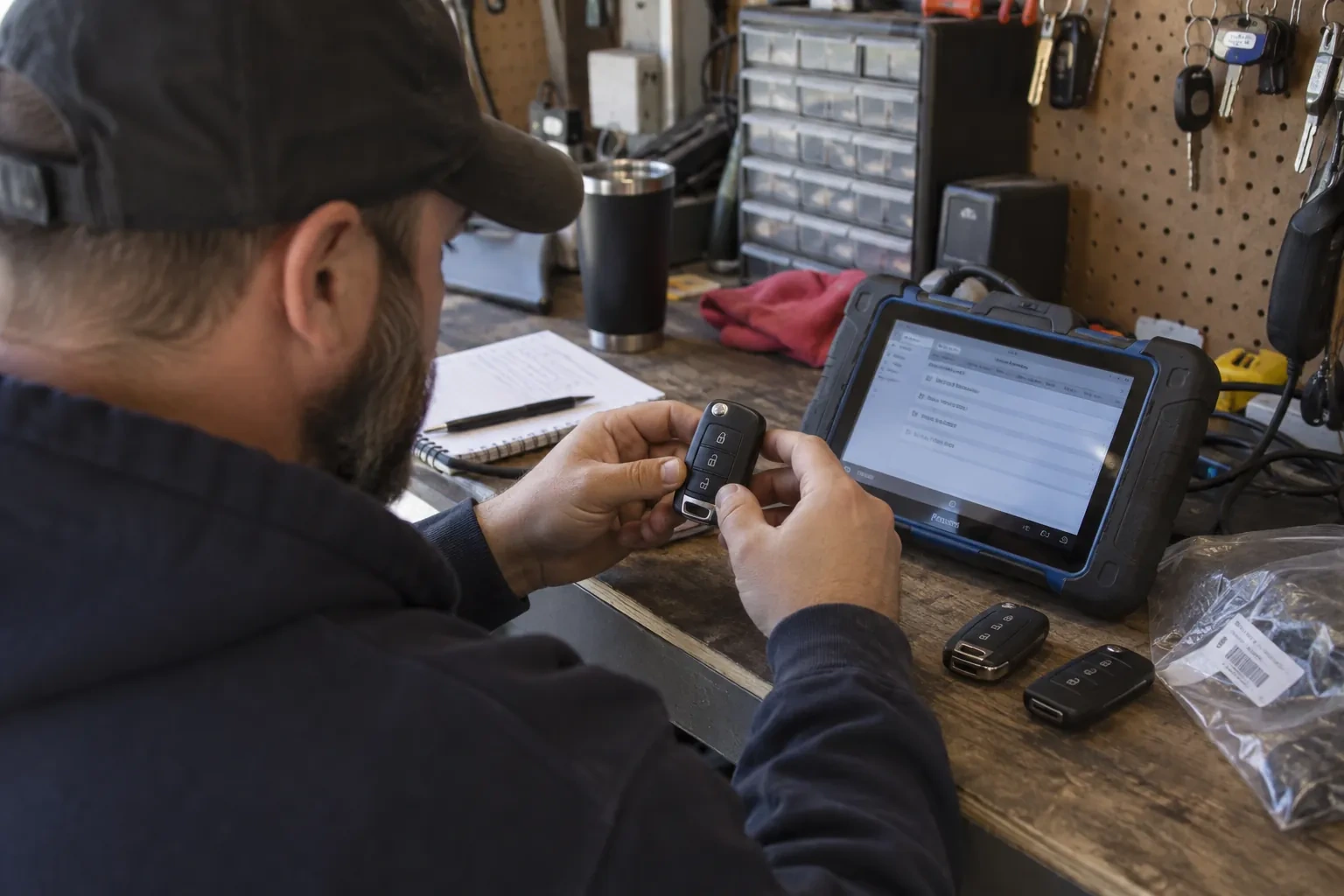
A correct spare starts with the correct blank: the same blade profile as the original, and where relevant the same shell shape for a remote head or proximity fob so the buttons and battery compartment line up. Aftermarket blanks exist for most common platforms, while a less common or very recent model sometimes calls for a shell sourced specifically for that vehicle. Getting this step right avoids a mismatch discovered only after cutting has begun, and it is one of the reasons the vehicle's year, make and model are confirmed early rather than assumed from the look of the current key.
Setting up a limited valet or family spare
A spare intended for a valet, a young driver or occasional use is sometimes built without the remote functions the primary key carries, using a plain blade-and-chip key that starts the car and opens the driver's door without the trunk release, remote start or other features the household prefers to keep on one key. This is a programming choice made deliberately rather than a lesser copy: the chip is still fully recognized by the immobilizer, and the key performs exactly the functions agreed on at the start of the visit, no more and no less.
Fewer surprises through the seasons
A tested spare carries a household through the situations that tend to arrive without warning: a fob battery finally dying in the cold, a blade thinning out after years on the same ring, or a key simply not being where it was left that morning. None of those moments needs to become a locksmith call anymore, because the second key was already proven capable of everything the first one does, sitting wherever it was agreed to live, ready for the day it is actually needed.
Spare Car Key Duplication
In the van
Coin-cell fob battery
Code-cutting machine
Chip cloning tool
Key duplicating machine
VIN and key-system reference
Spare Car Key Duplication
What affects the quote
Timing around the day's other calls
A visit that fits between other scheduled stops is generally simpler to arrange than one needing a dedicated block of time set aside on its own.
Which key system the vehicle uses
A plain mechanical blade, a transponder key, a remote-head key and a proximity fob each call for different tools and different amounts of time, so identifying the system early shapes the whole quote before any cutting or programming starts.
Scheduling more than one vehicle together
Two vehicles booked into the same visit, such as a household's pair of cars, are generally more efficient to handle together than arranging two separate appointments on different days.
What to have ready
- What year, make and model is the vehicle?
- Is the vehicle registered to you, or to someone else?
- Does the key have buttons, a chip, or neither?
Spare Car Key Duplication: questions
QuestionsWhat is the difference between a transponder key and a smart key?
A transponder key still has a blade you insert into the ignition, with a chip in the head that the immobilizer checks once it is turned. A smart or proximity key usually stays in a pocket or bag; the vehicle senses it nearby, unlocks the doors, and starts with a push button rather than a turned key. Both rely on the same underlying idea, an electronic identity the vehicle recognizes, delivered in different ways.
What testing happens before I leave with the new key?
Every door lock, the trunk or hatch, the ignition or start button, and any remote functions are checked with the new key on its own, apart from the original, so neither key is quietly helped along by the other's signal. The vehicle is started more than once to rule out an intermittent issue, and only once both keys pass independently is the visit considered finished.
What is a relay attack, and does it matter for my spare?
A relay attack is when nearby equipment picks up a proximity fob's signal from inside a house and relays it to a vehicle parked outside, tricking the car into thinking the key is close enough to unlock or start. It matters for every fob in the household, spare included, which is why storing any proximity key in a signal-blocking pouch when it is not being carried is worth doing for all of them.
Related services
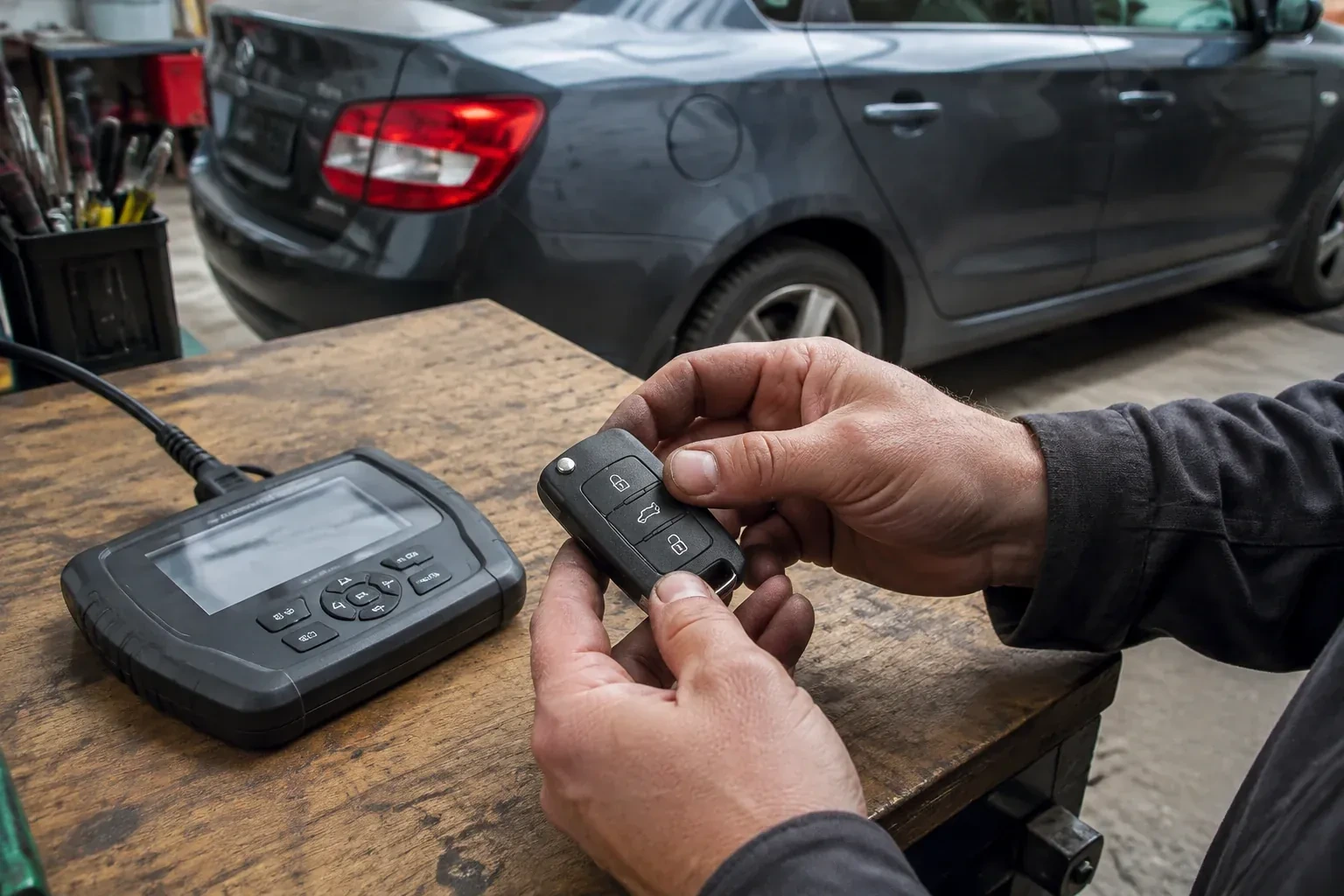
- Car Key ReplacementThe only key to the car went into the lake with the kayak.
- Key Fob ProgrammingThe remote clicks the way it always has, but the vehicle no longer locks, unlocks or answers with its usual chirp.
- Transponder Key ProgrammingThe new key slides into the ignition and turns exactly the way the old one did, but the engine only cranks.