Locksmith in Stouffville, OntarioRekeying forhomes and businesses in Stouffville
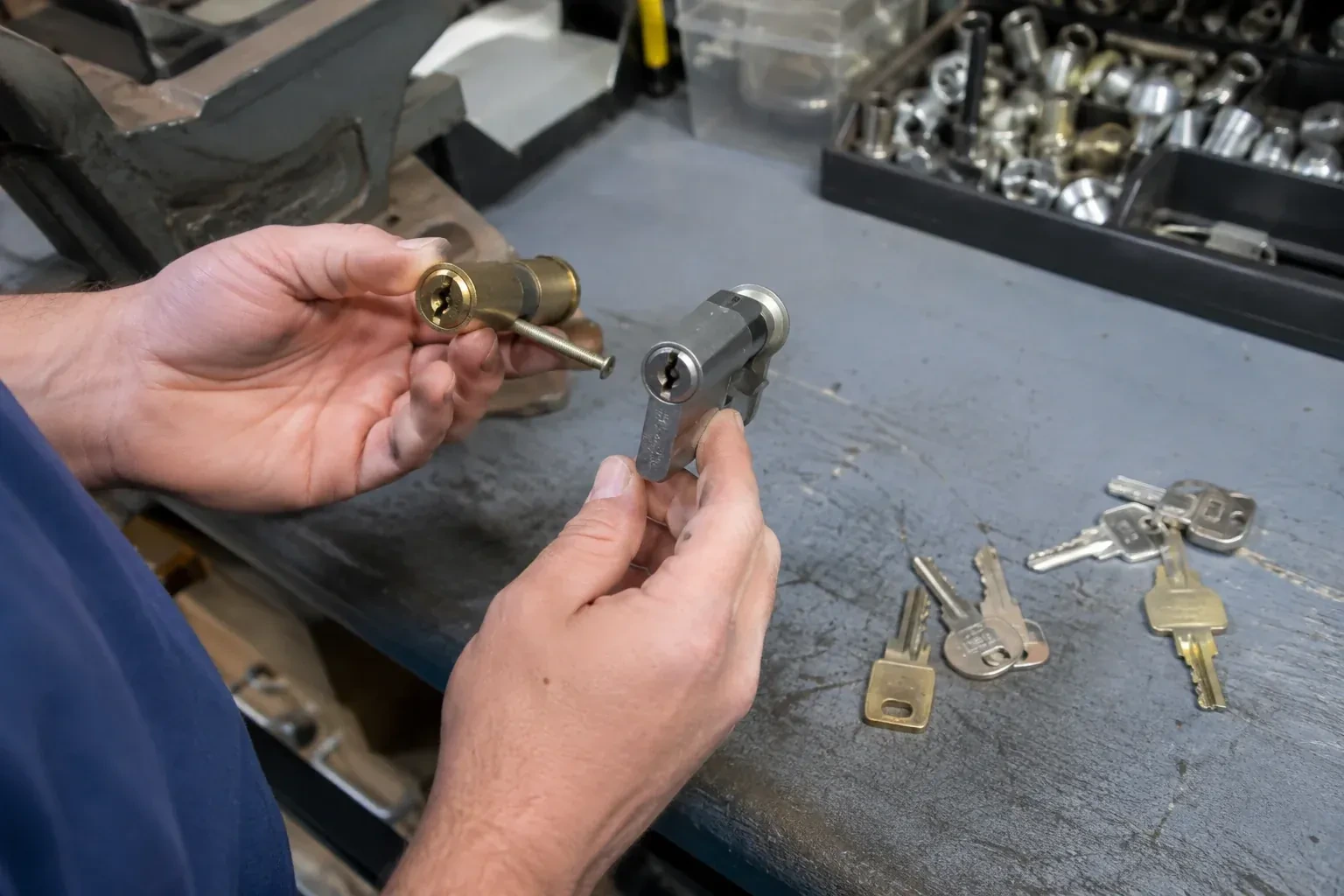
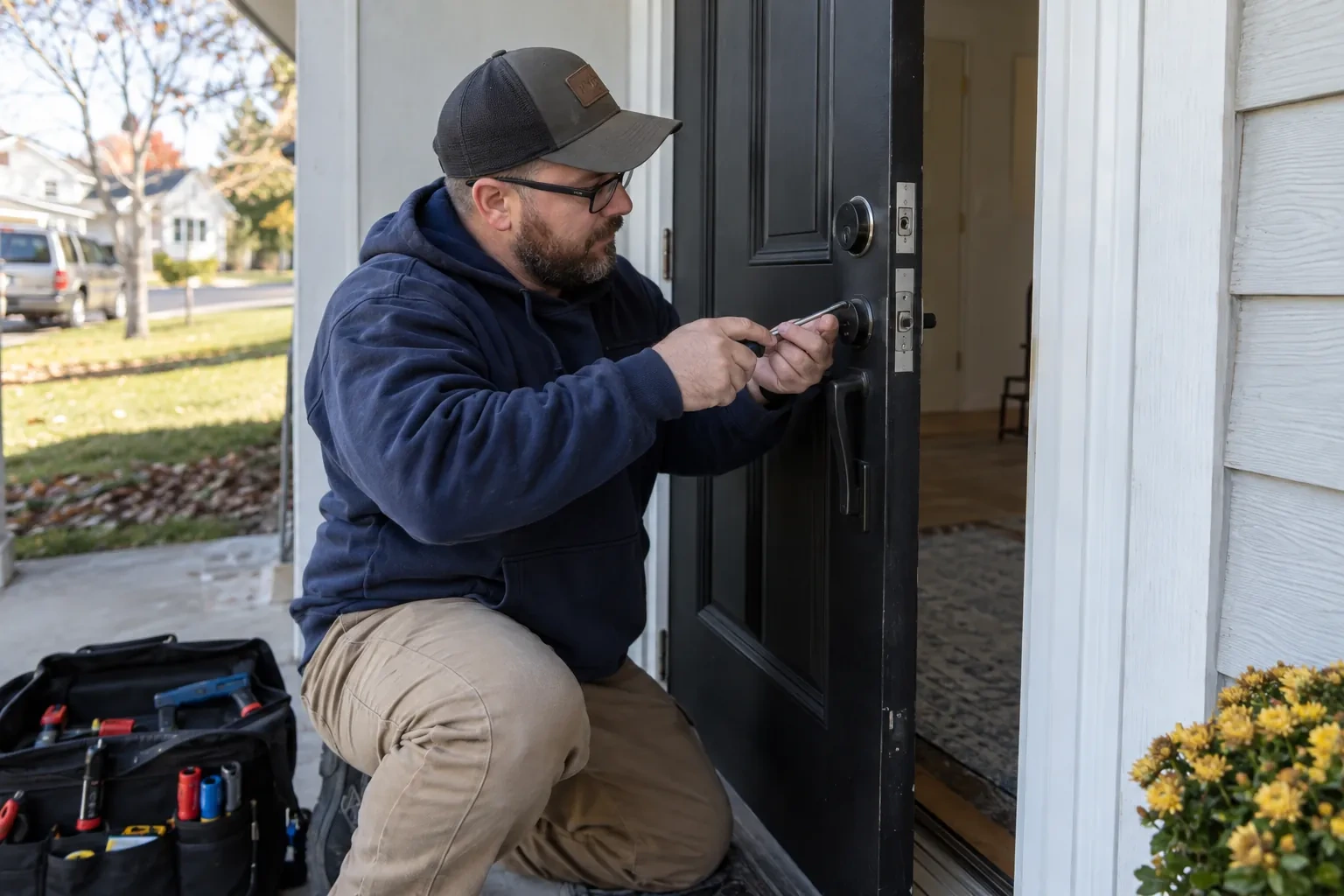
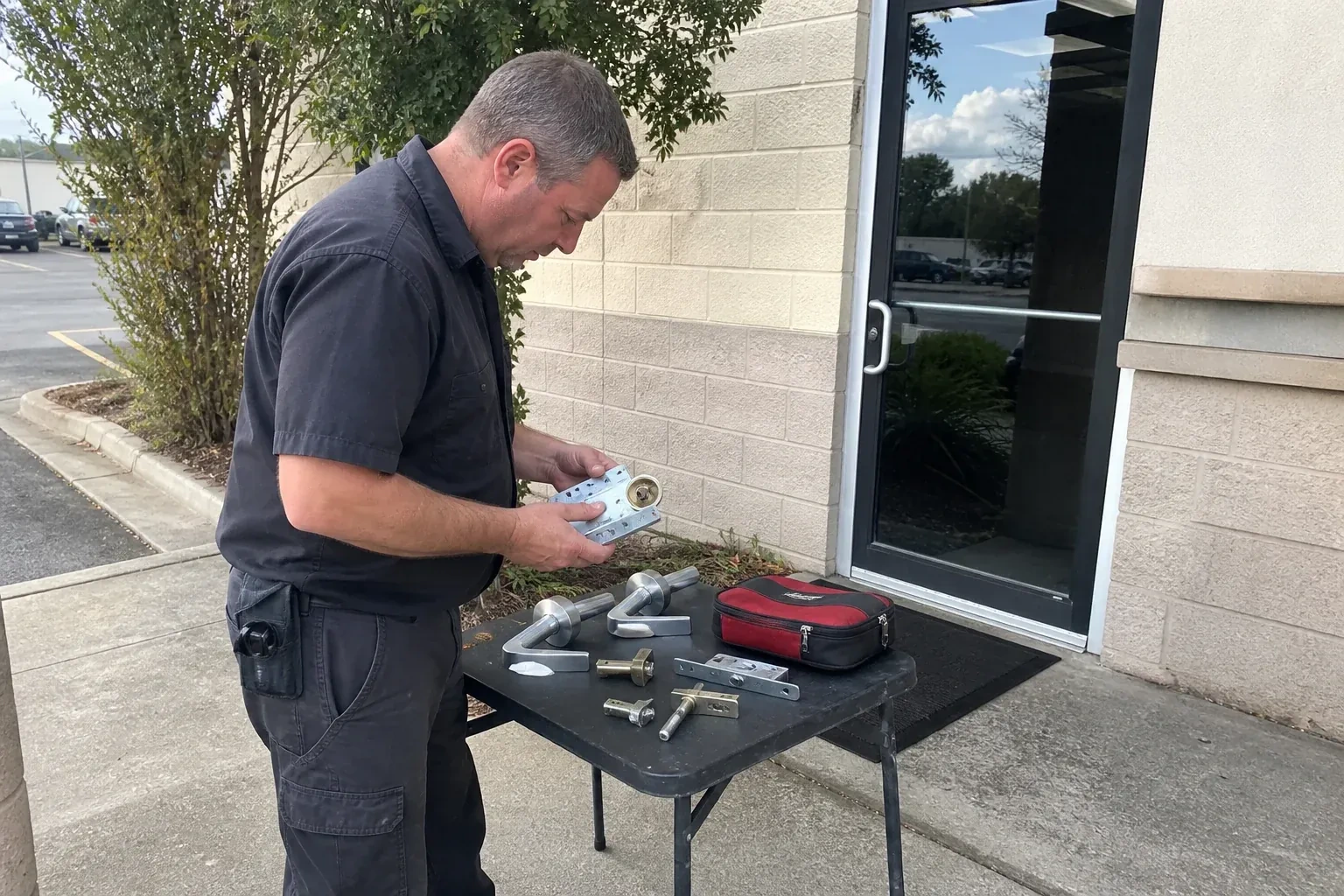
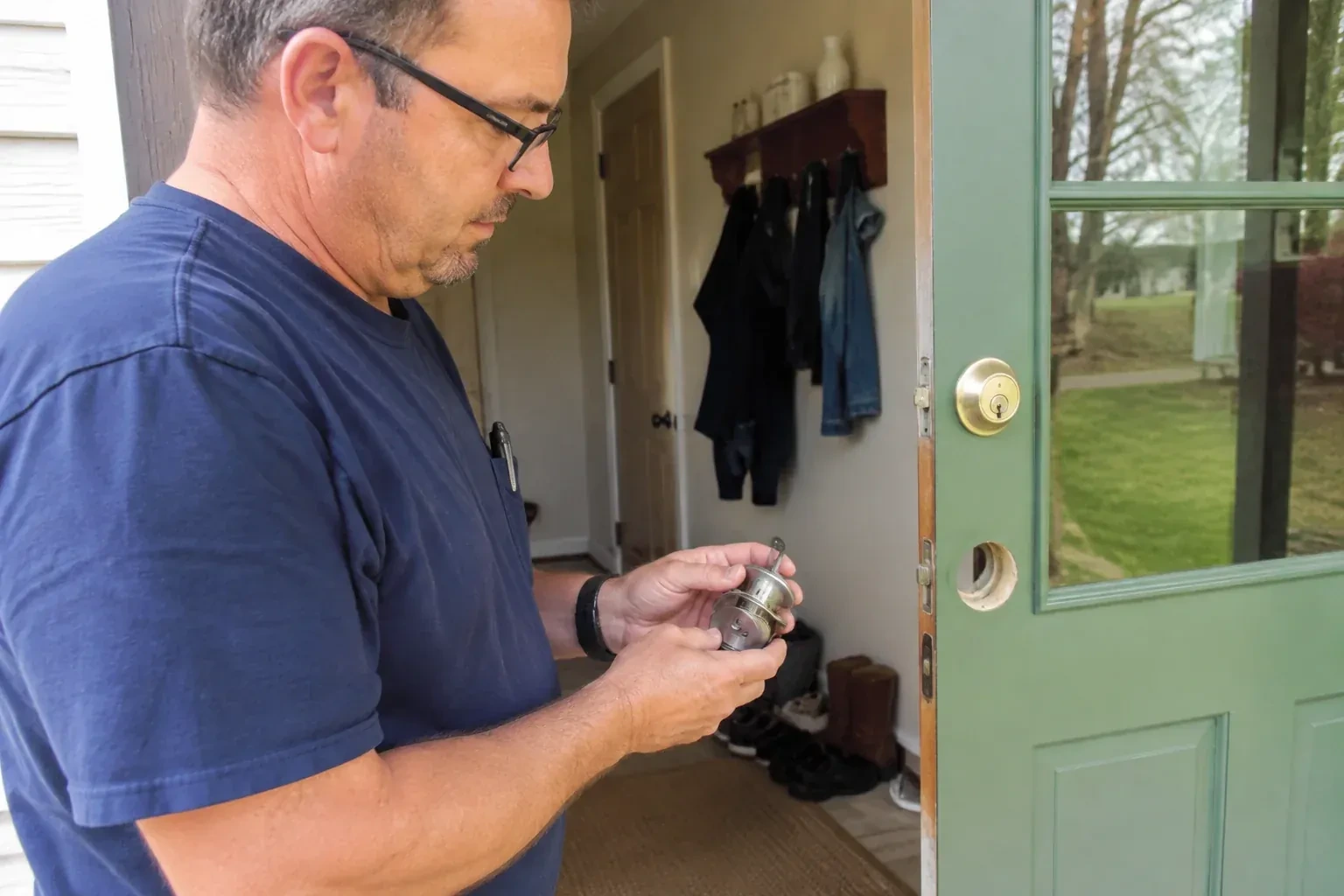
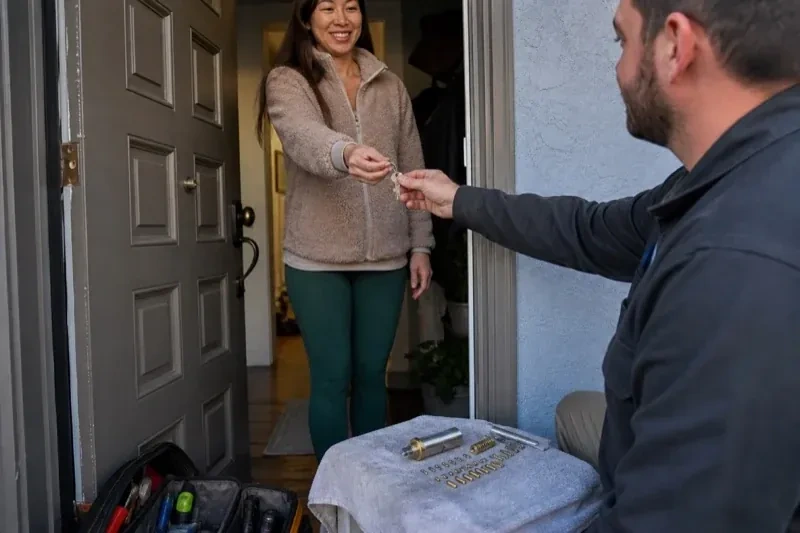
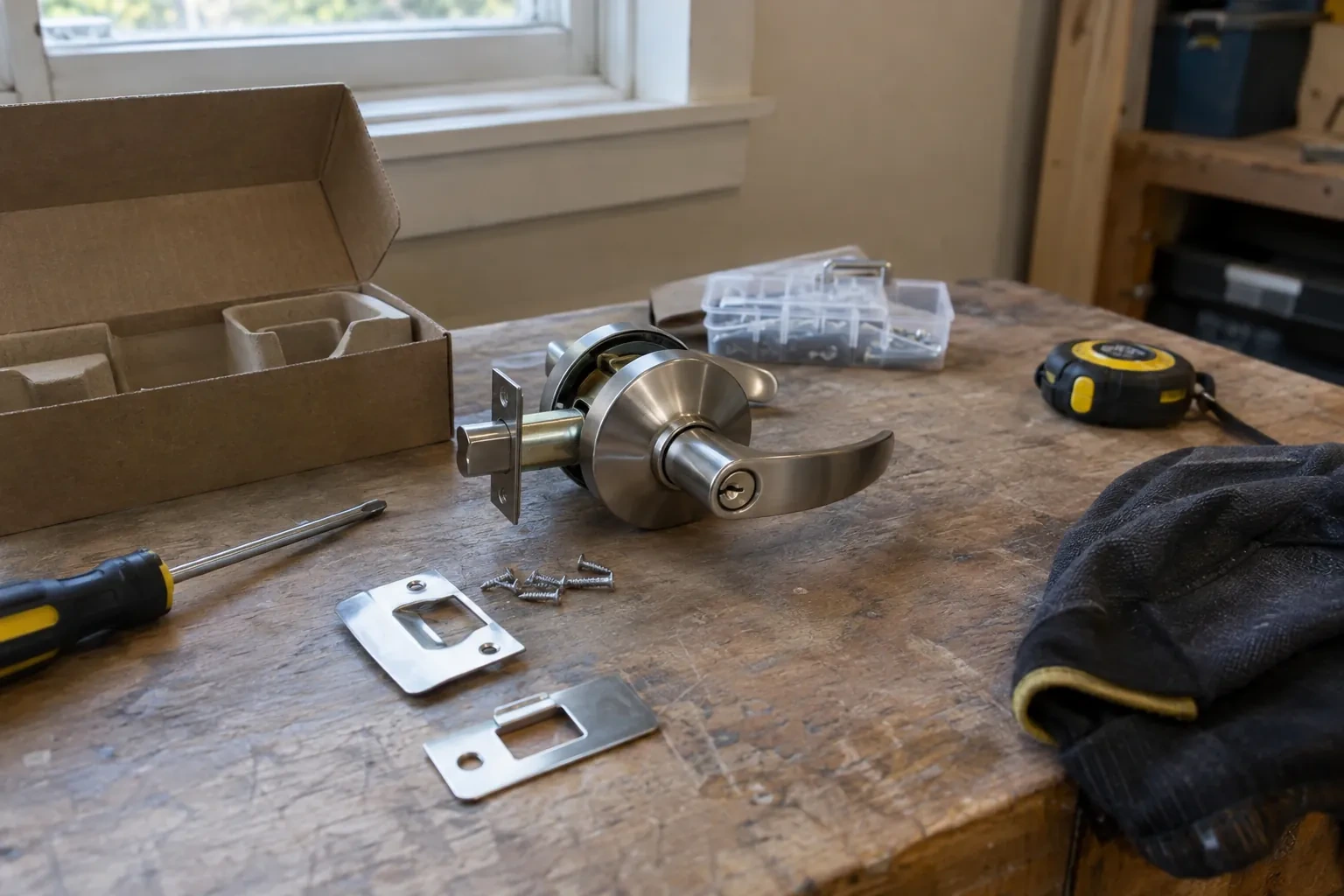
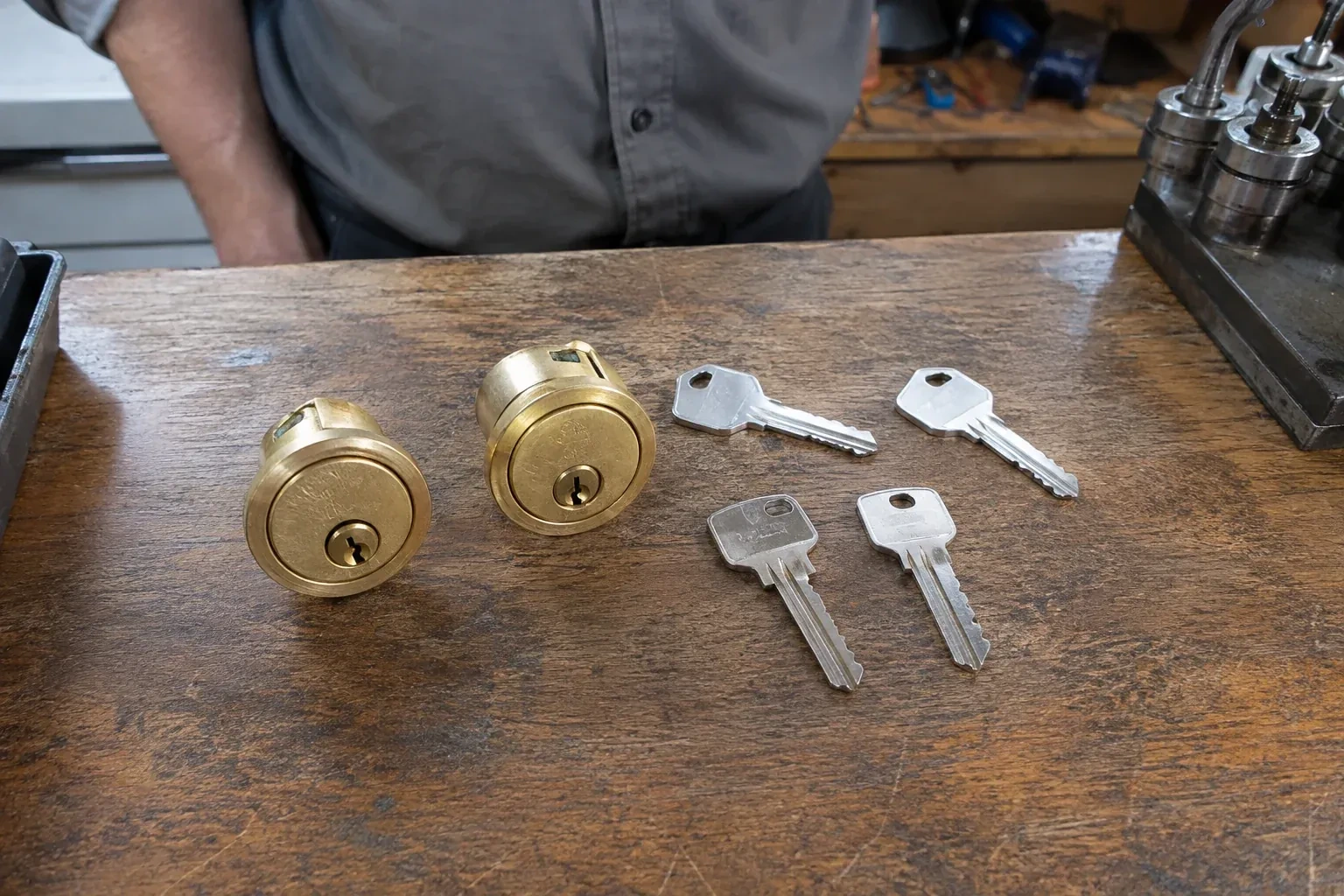
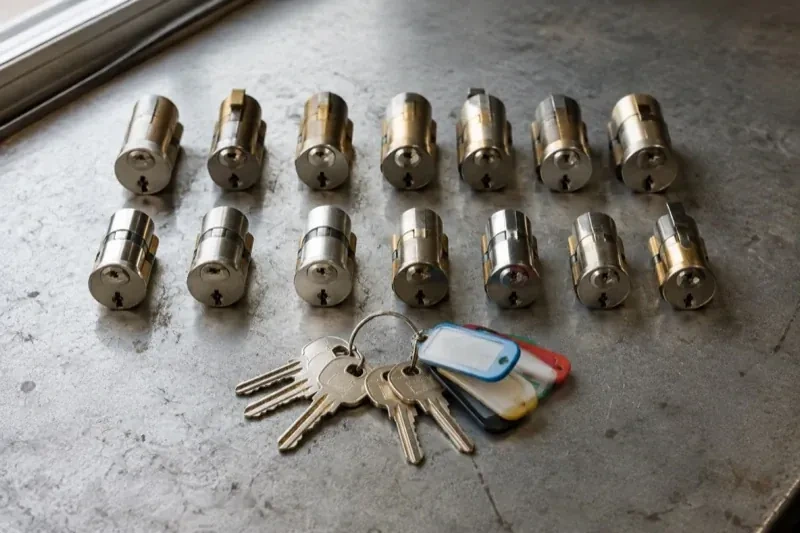
Rekeying keeps the lock you already own and changes which key opens it, which makes it the tidy answer to a lost key, a departed roommate or a staff change. Across Stouffville we rekey single doors, whole houses and small commercial buildings, and cut the new keys on the spot. Nearby, we also work in Bloomington and Lincolnville.
Rekeying keeps the lock you already own and changes which key opens it, which makes it the tidy answer to a lost key, a departed roommate or a staff change. Across Stouffville we rekey single doors, whole houses and small commercial buildings, and cut the new keys on the spot. Nearby, we also work in Bloomington and Lincolnville.
A locksmith you would recommend to a neighbour.
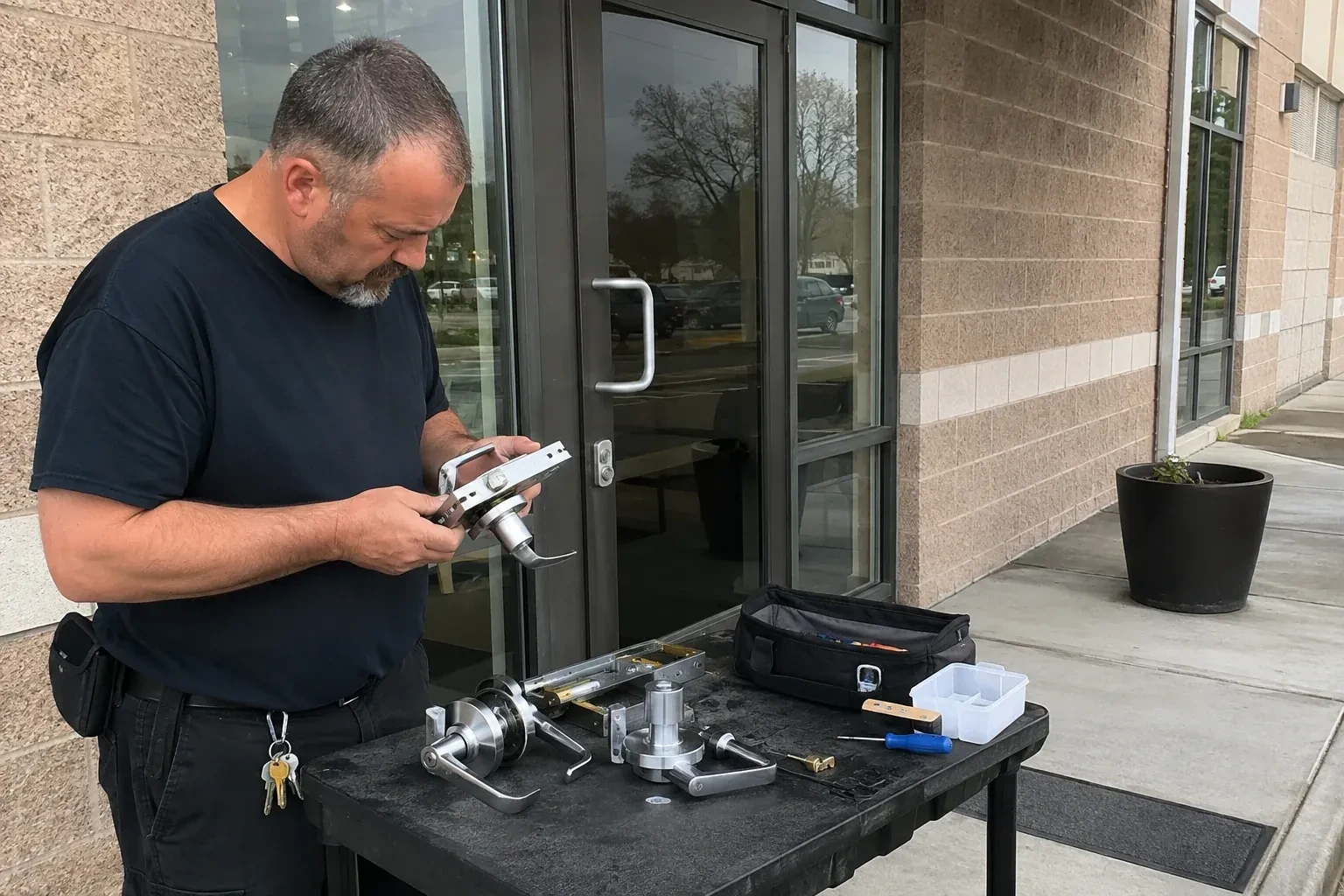
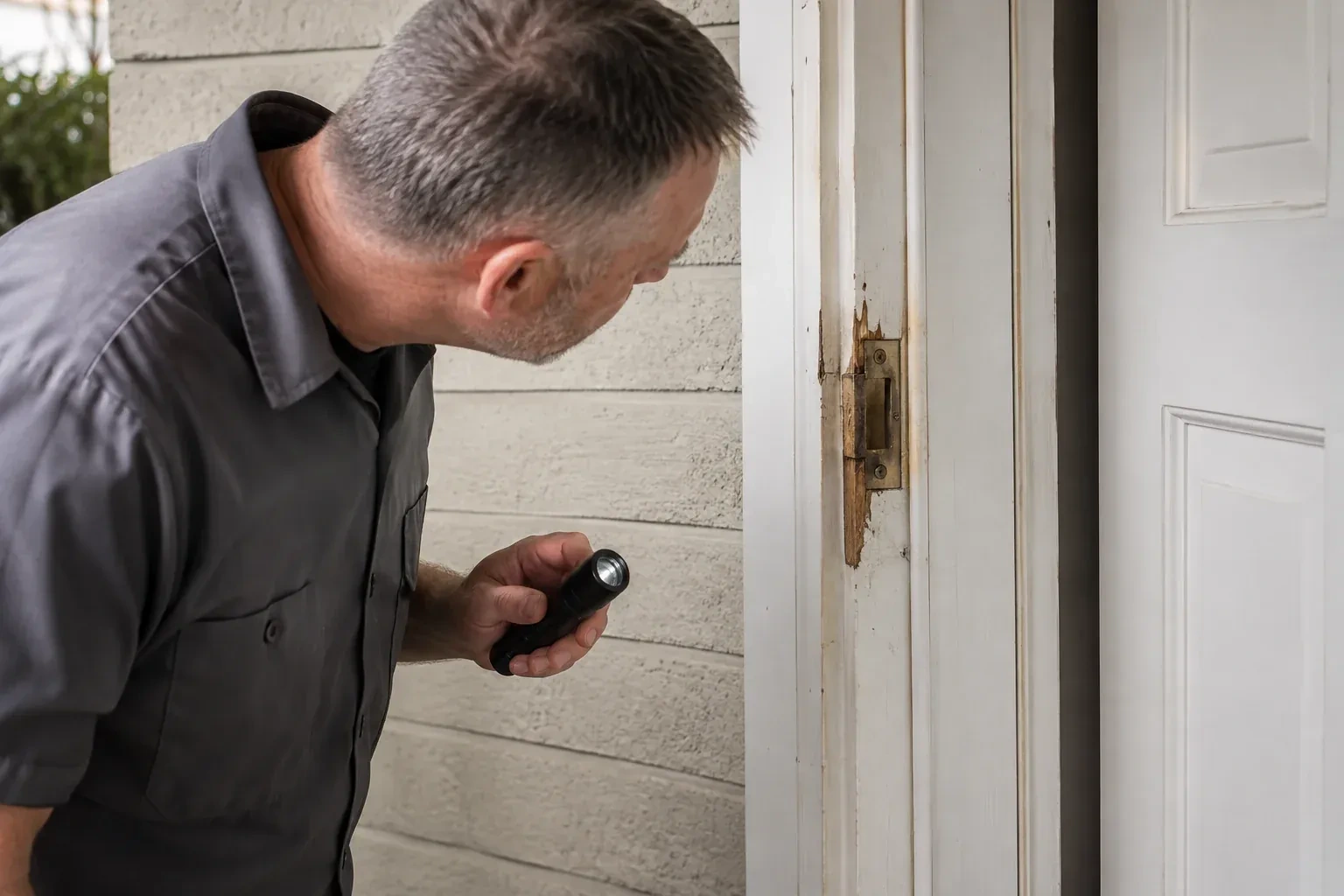
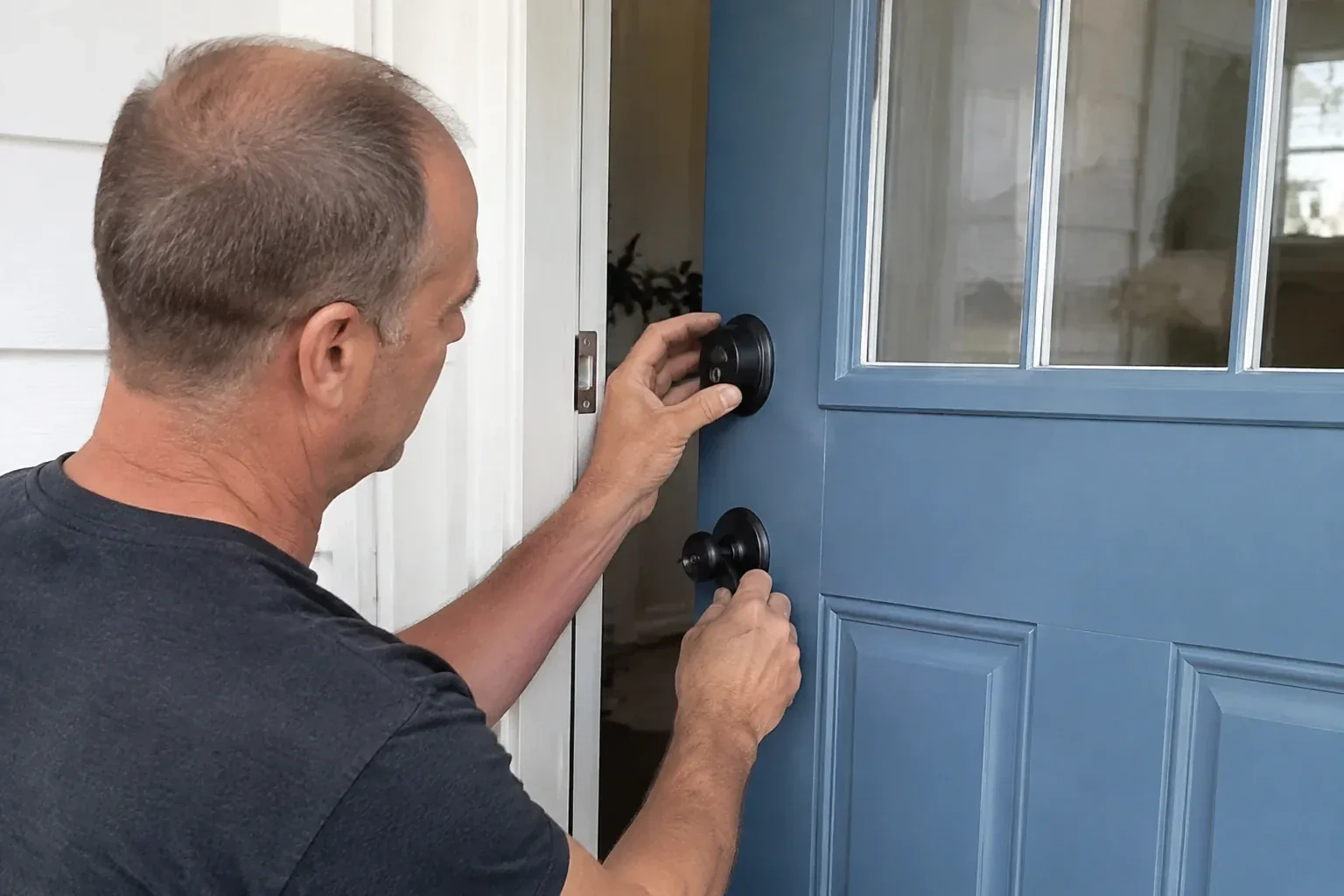
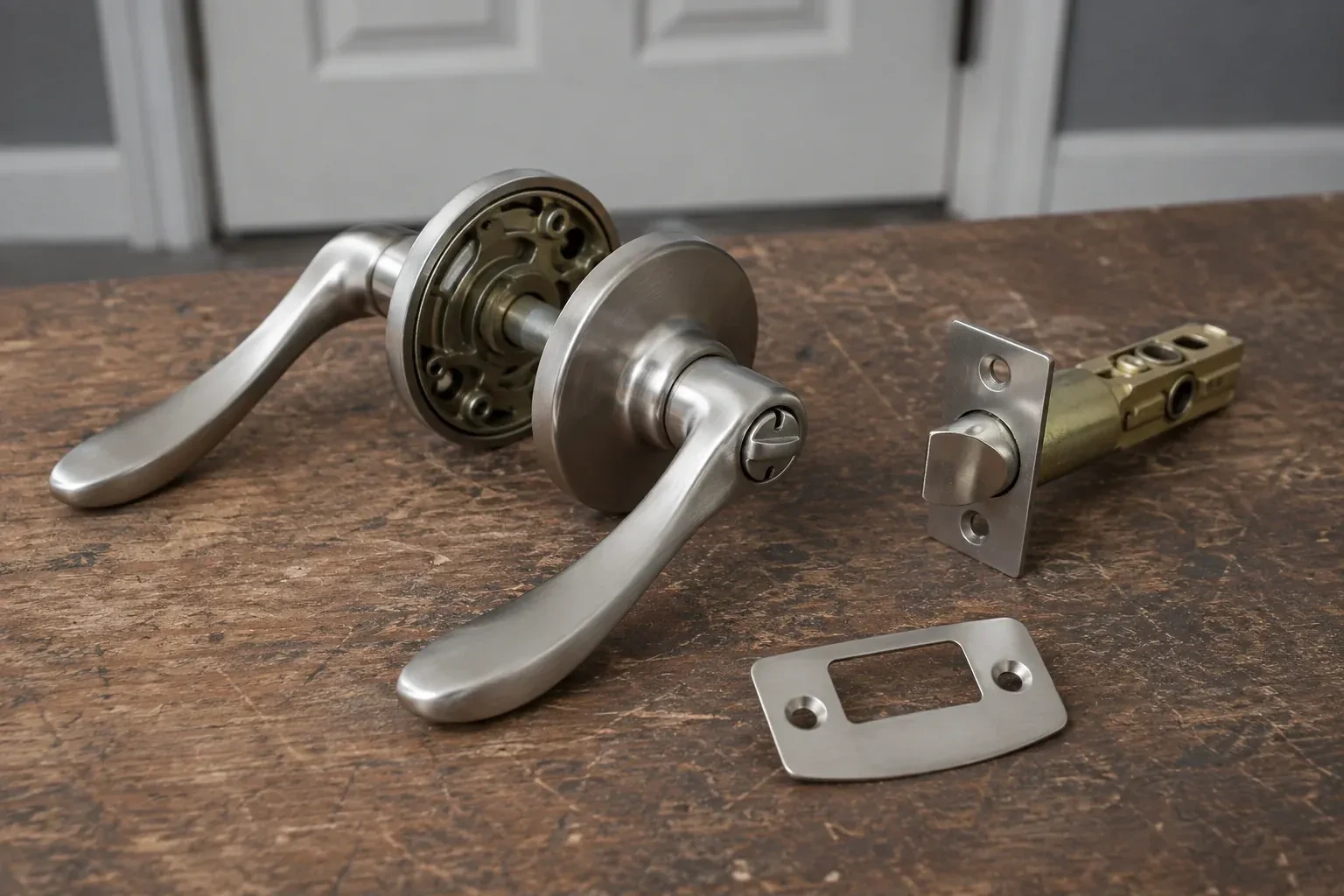
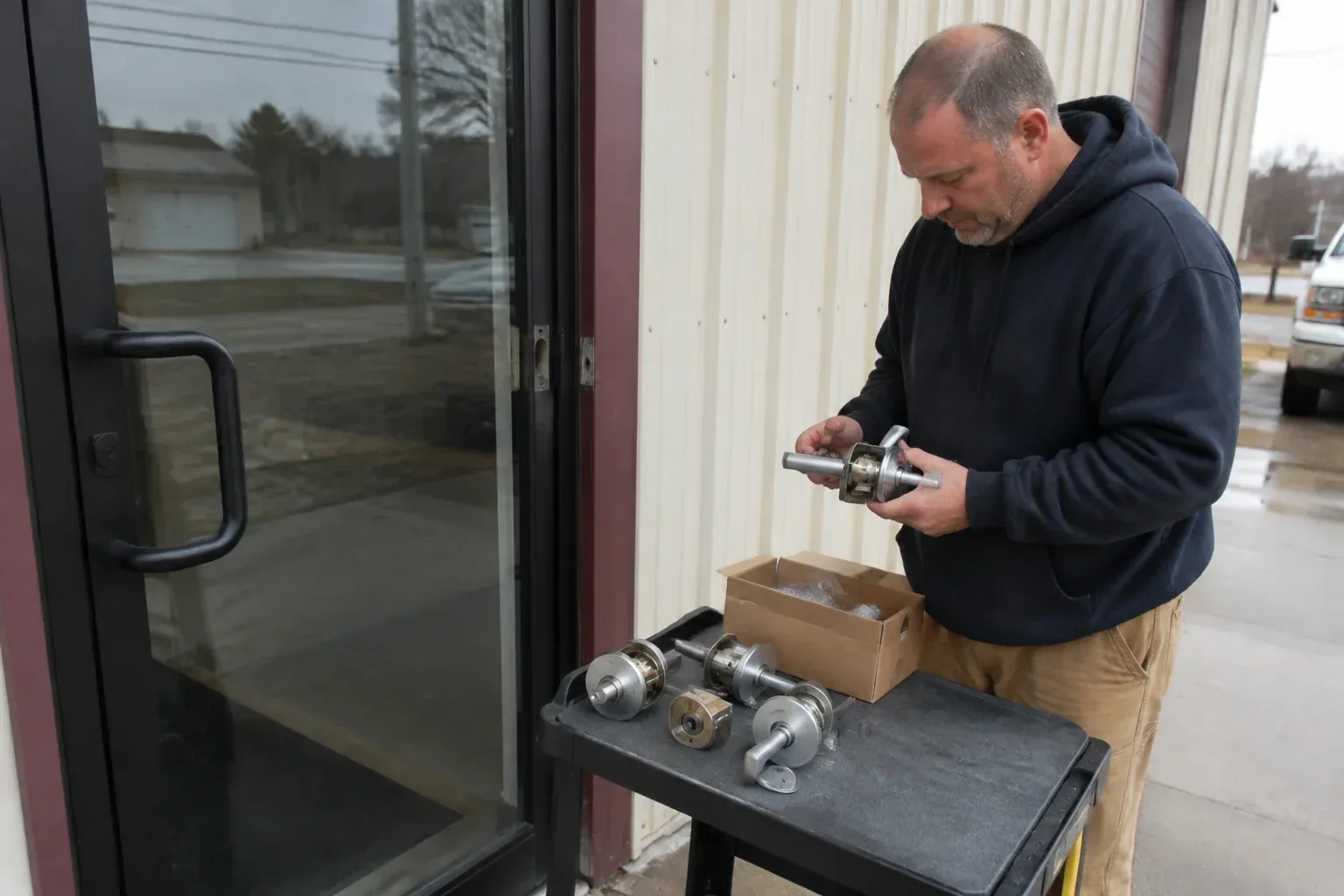
We treat the whole door in Stouffville, not just the cylinder. Hinges that have sagged, a strike plate held by short screws, a frame that has moved with the seasons: these decide whether a lock holds, and they are checked on every visit. Sometimes the right advice is a longer screw and a shim rather than a new lock, and we say so.
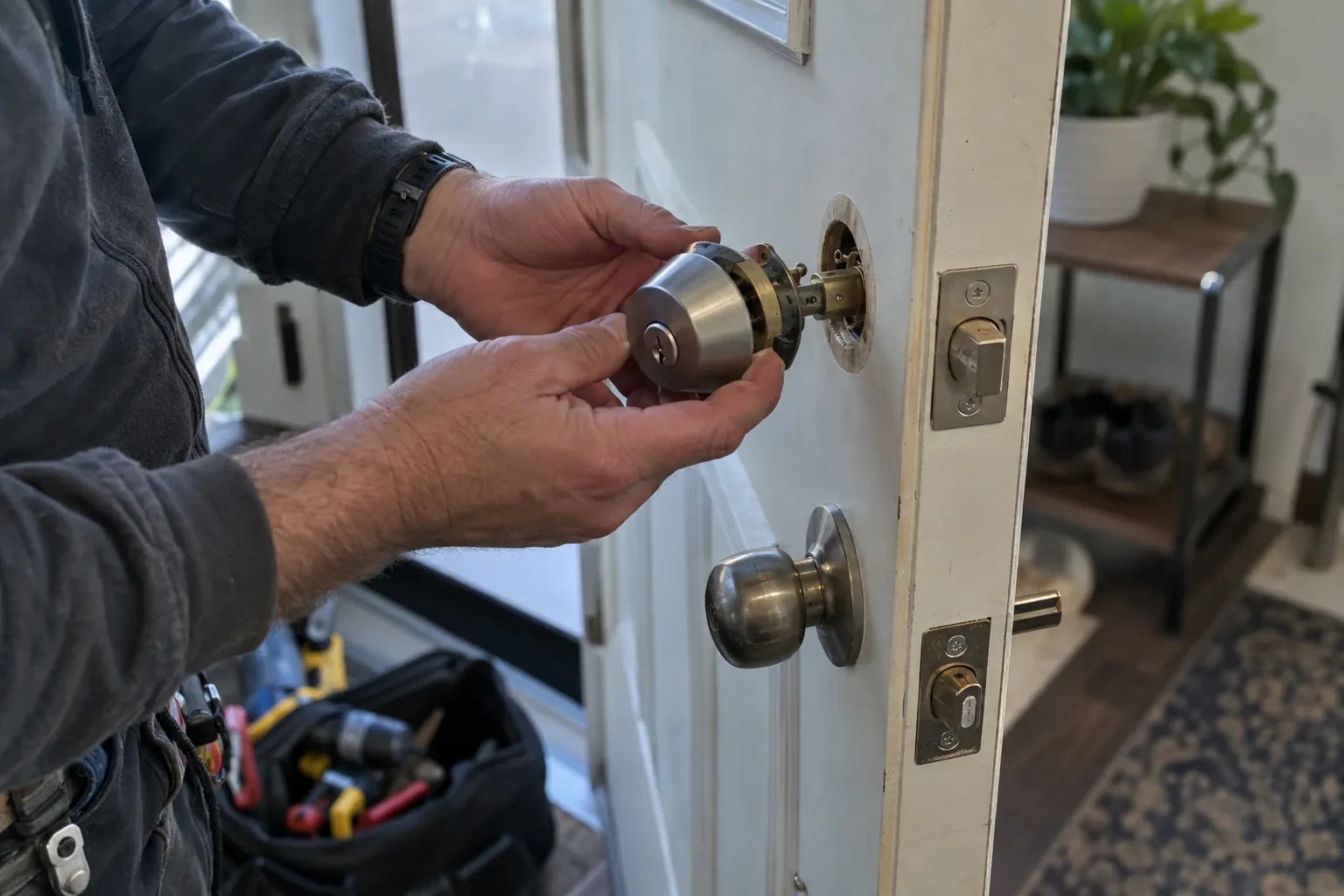
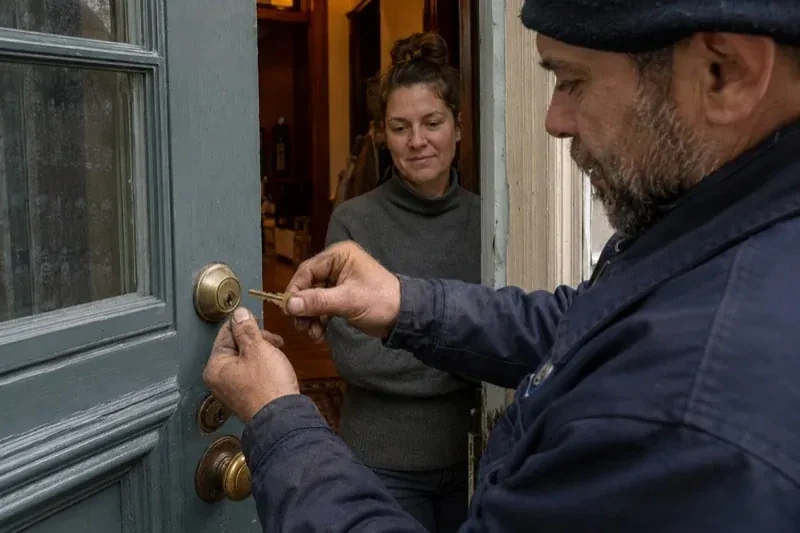
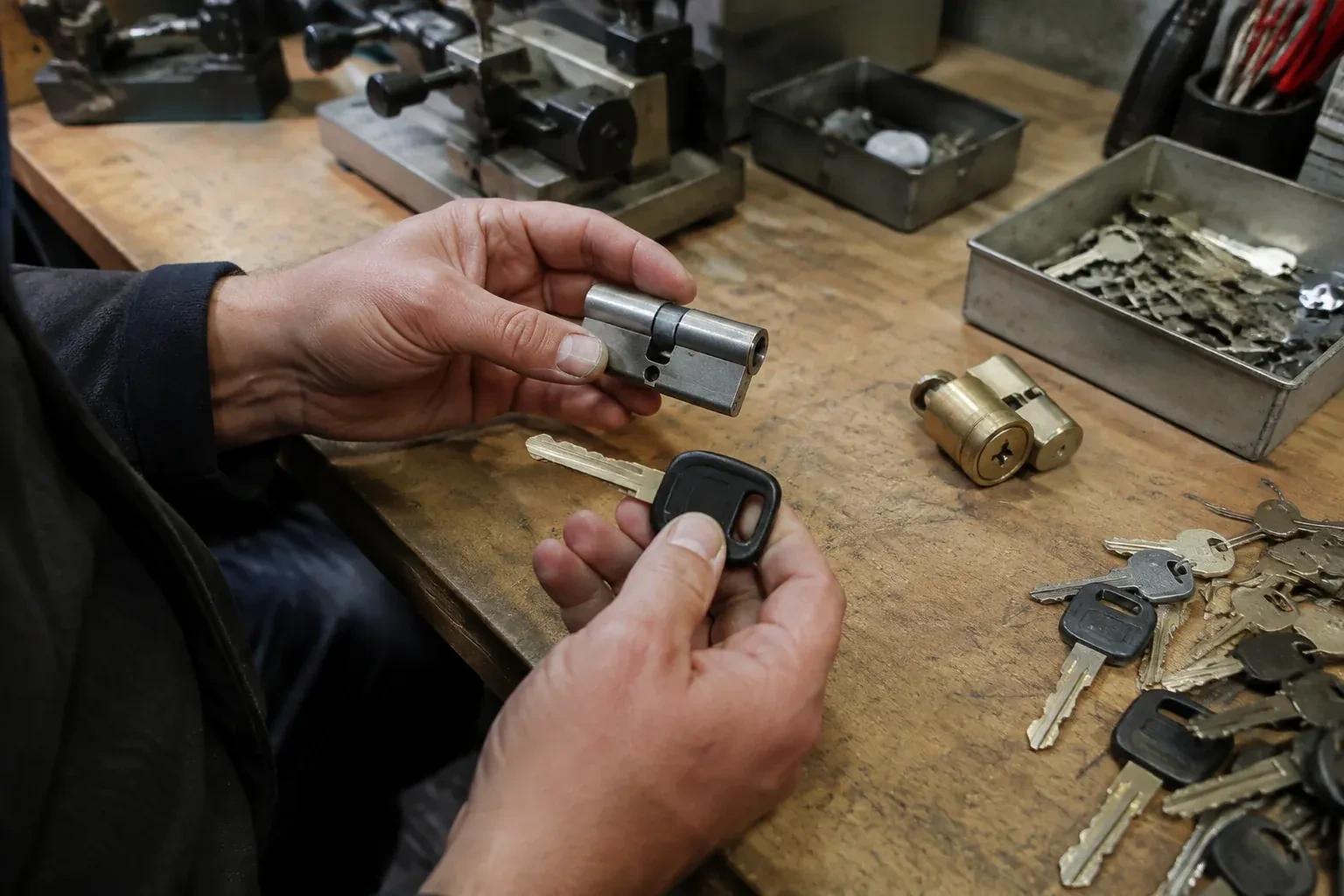
Rekeying is the service we do most in Stouffville, and for good reason. It keeps the existing hardware, changes which key works and involves less than a full replacement. We rekey homes after a move or a lost set, businesses after staff changes and rentals between tenants, then cut and test the new keys in every door before handing them over.
18years in business
24/7open every day
You set the pace. We explain, you decide, we work. If you would rather sleep on a bigger change, we do what is needed now and leave the rest for another visit.
The reasoning behind each suggestion. Every recommendation comes with the reason for it, in language that does not require you to know the trade. Ask why as often as you like.
Order restored. Tools packed, dust cleared, doors closed properly. We leave your home or business looking as it did, with the lock problem gone.
A locksmith's week in Stouffville is a mix of small fixes and bigger decisions. A cylinder rekeyed after a lost key, a deadbolt added to a door that never had one, a shop rekeyed after staff changes, a safe that finally opens. The pages below describe each service and how the visit usually goes.
About 22% of homes in Whitchurch-Stouffville were built in 1980 or earlier, according to the 2021 Census.
Newer homes
New construction settles in its first years, and a door that closed perfectly at move-in can begin to catch as the frame finds its final position. A locksmith visiting a newer home adjusts strikes and hinges so the bolt throws freely again.
Single-detached houses make up about 74% of homes in Whitchurch-Stouffville (2021 Census).
Mostly houses
Garage entry doors on detached houses are often the household's real front door, used more than the formal entry. They deserve the same quality of lock, and keying them alike with the house means one key does the whole daily routine.
The key slides in and turns all the way round, but the bolt stays put. There is no click, no resistance, just a key spinning in a lock that has stopped listening to it after years of daily use.
The apartment key snapped mid-turn, leaving the cylinder twisted halfway between locked and open. The building manager's spare is somewhere across town and nobody else has a copy. You are on the wrong side of the door.
After a winter of road spray and salt, the little lock on the mailbox door has gone stiff, then gritty, then almost immovable. Rust has crept in around the keyway, and the key barely turns anymore no matter how it is worked.
The bookkeeper who set the office safe's code retired in a hurry, and the float cash for tomorrow's registers is sitting behind a keypad nobody else in the building can operate.
The manager's key ring went missing somewhere between the bank and the car, and the master on it opened every door in the building. Until the cylinders are changed, whoever finds it is holding the run of the place.
A padlock went on the stockroom's back door years ago for security and nobody has thought about it since, until the walkthrough this week pointed out that the same door is the room's only other way out.
The engine cranks, catches for a second and dies, and a small key-shaped light keeps blinking on the dash. The blade turns the ignition and the doors perfectly well, but the car has stopped recognizing the chip inside the key.
The proximity fob has ridden in a pocket for years, the range feels shorter than it used to, and a dashboard warning mentioned a battery a while back. Nobody has sorted out what happens on the day it finally goes dark.
The car came with a single key when the sale went through, and that key is the only thing standing between the household and being stranded. A second one has been on the list for weeks, quietly moved down every time something more urgent came up.
Our high security visits start at the kitchen table with a question about what you are protecting and who you are worried about. From that we choose a level: a solid graded deadbolt for one household, a full restricted system for another.
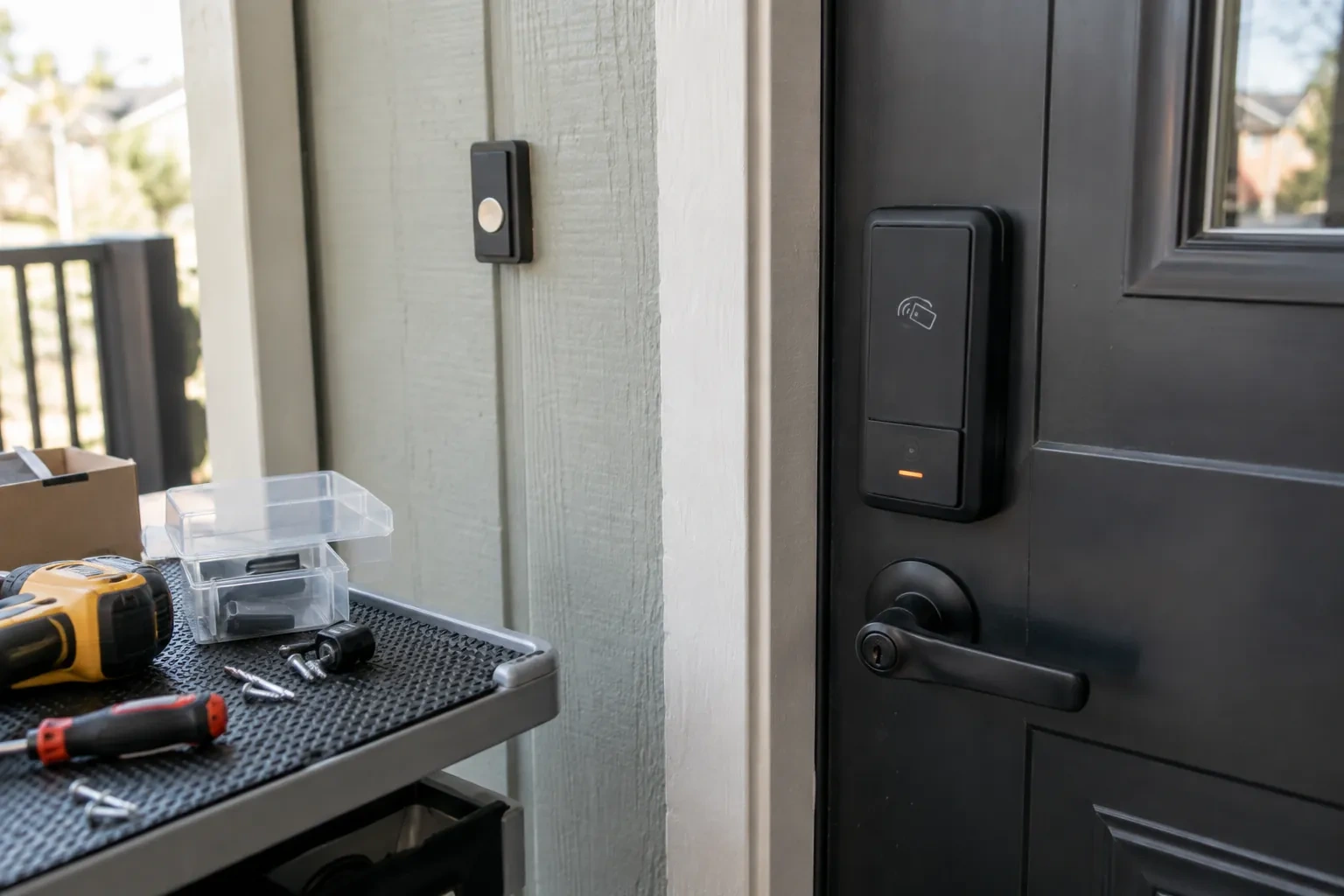
Running a business means knowing who can get in when you are not there. The commercial services are different ways of answering that: rekey to reset it, master key to organise it, access control to log it, and a safe to protect what matters most inside.
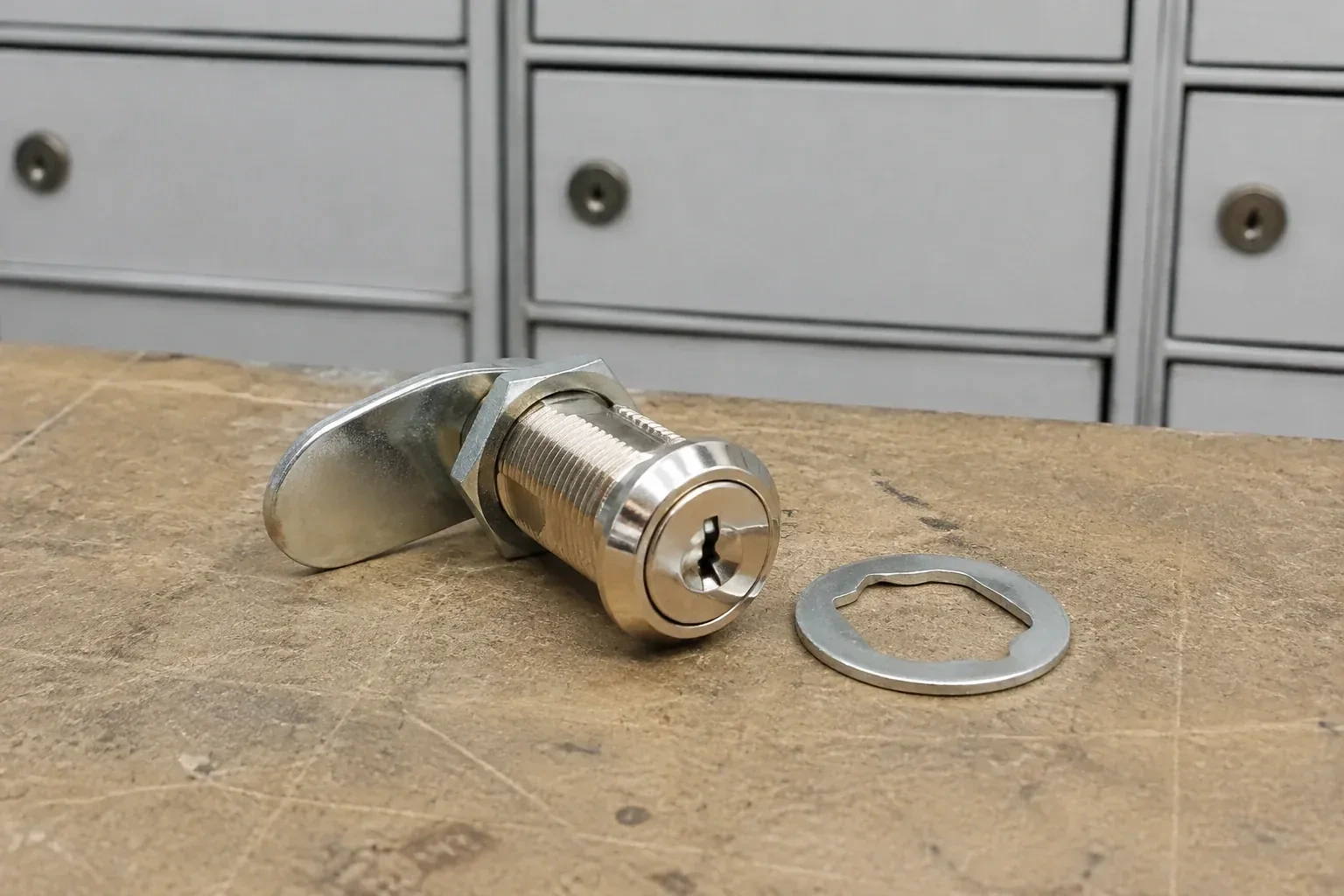
WhyA mailbox lock lives or dies by a handful of measurements: the cylinder's length, its diameter, and the reach and angle of the cam arm that actually catches the door frame when the key turns.
The bookkeeper who set the office safe's code retired in a hurry, and the float cash for tomorrow's registers is sitting behind a keypad nobody else in the building can operate.
WhyLosing a master key exposes every door it opened, and a commercial rekey brings that exposure back to zero.
A padlock went on the stockroom's back door years ago for security and nobody has thought about it since, until the walkthrough this week pointed out that the same door is the room's only other way out.
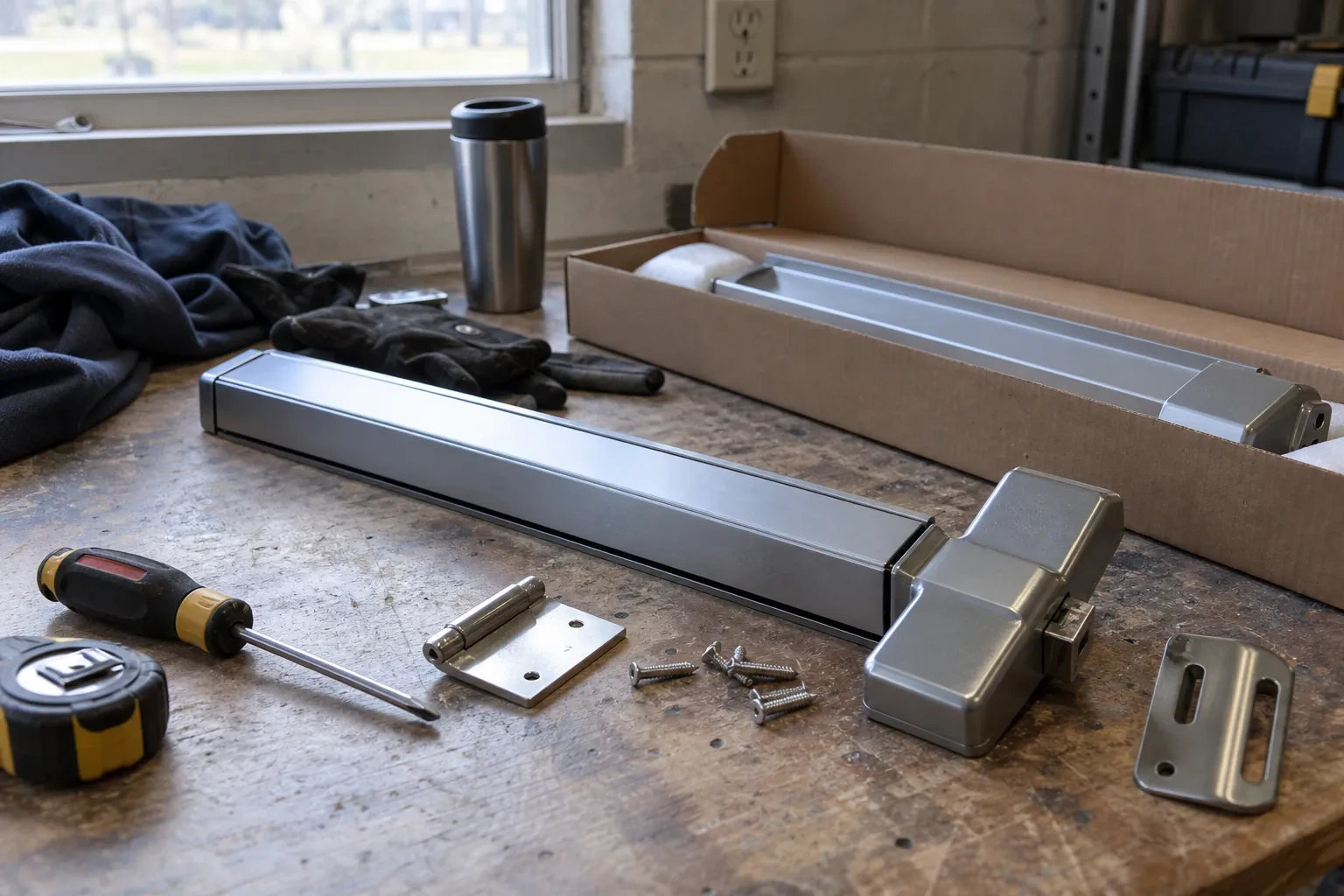
WhyA code trigger usually starts the conversation: an occupant load over a threshold, a fire inspector's note, or a new use for a room that used to hold far fewer people.
The engine cranks, catches for a second and dies, and a small key-shaped light keeps blinking on the dash.
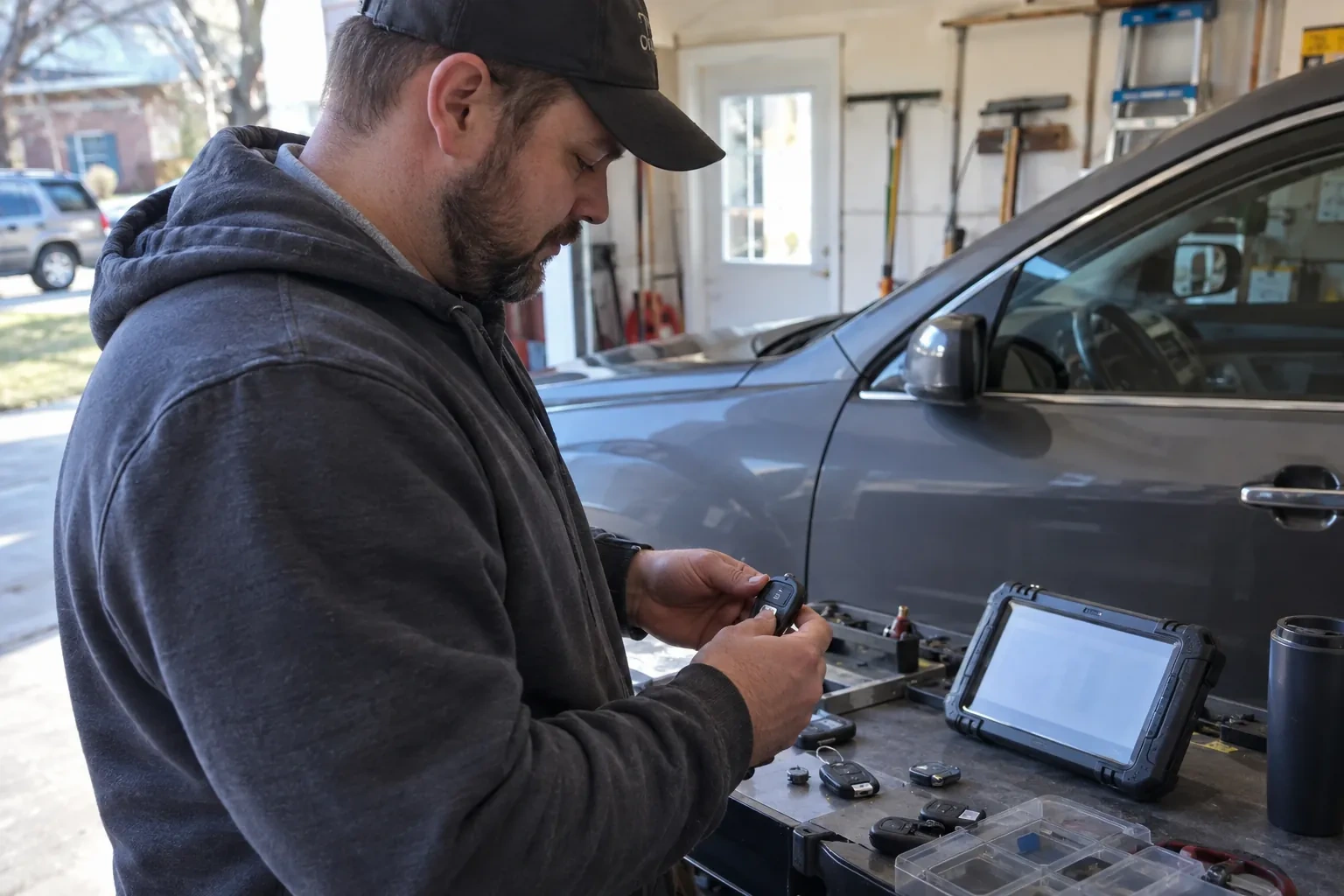
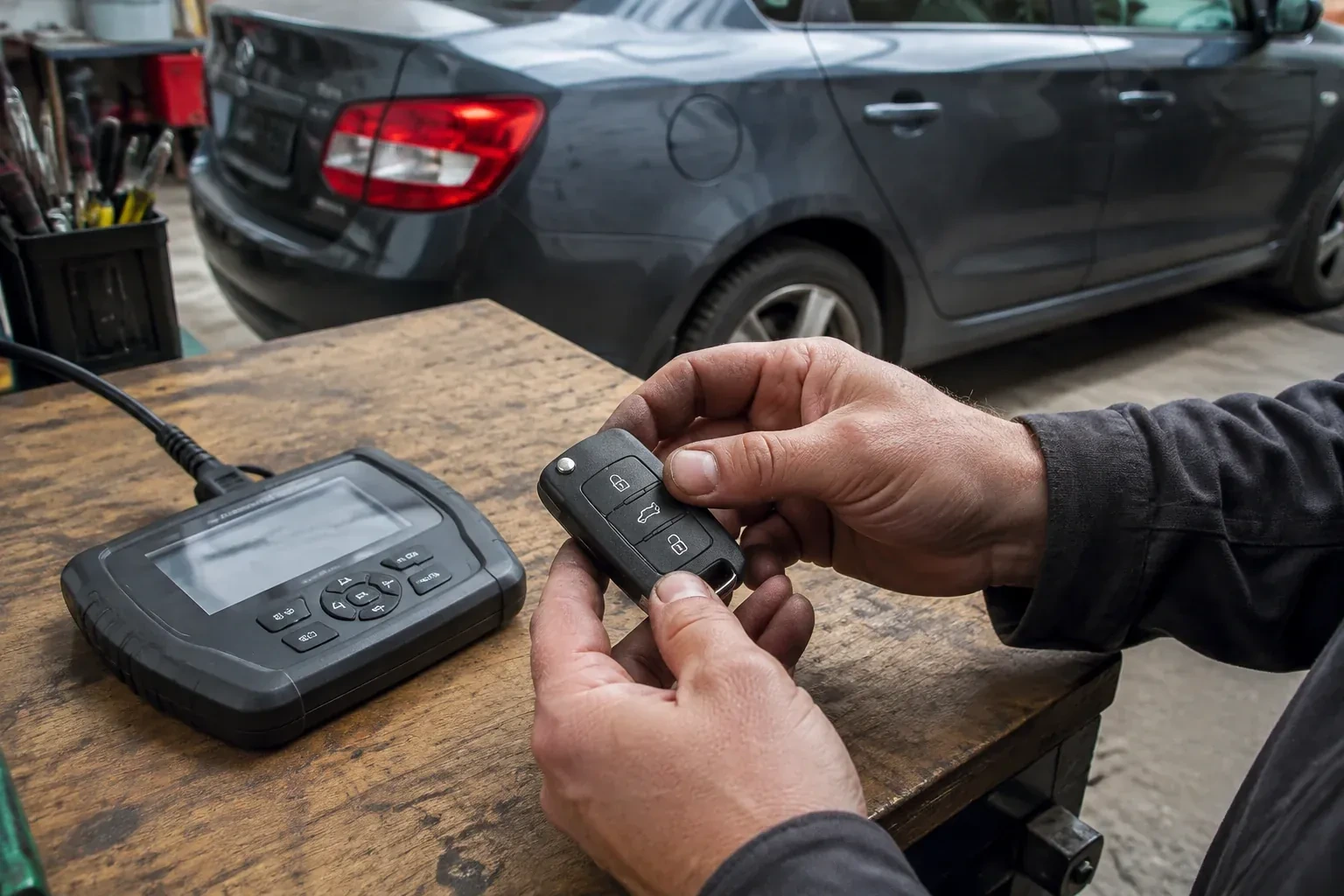
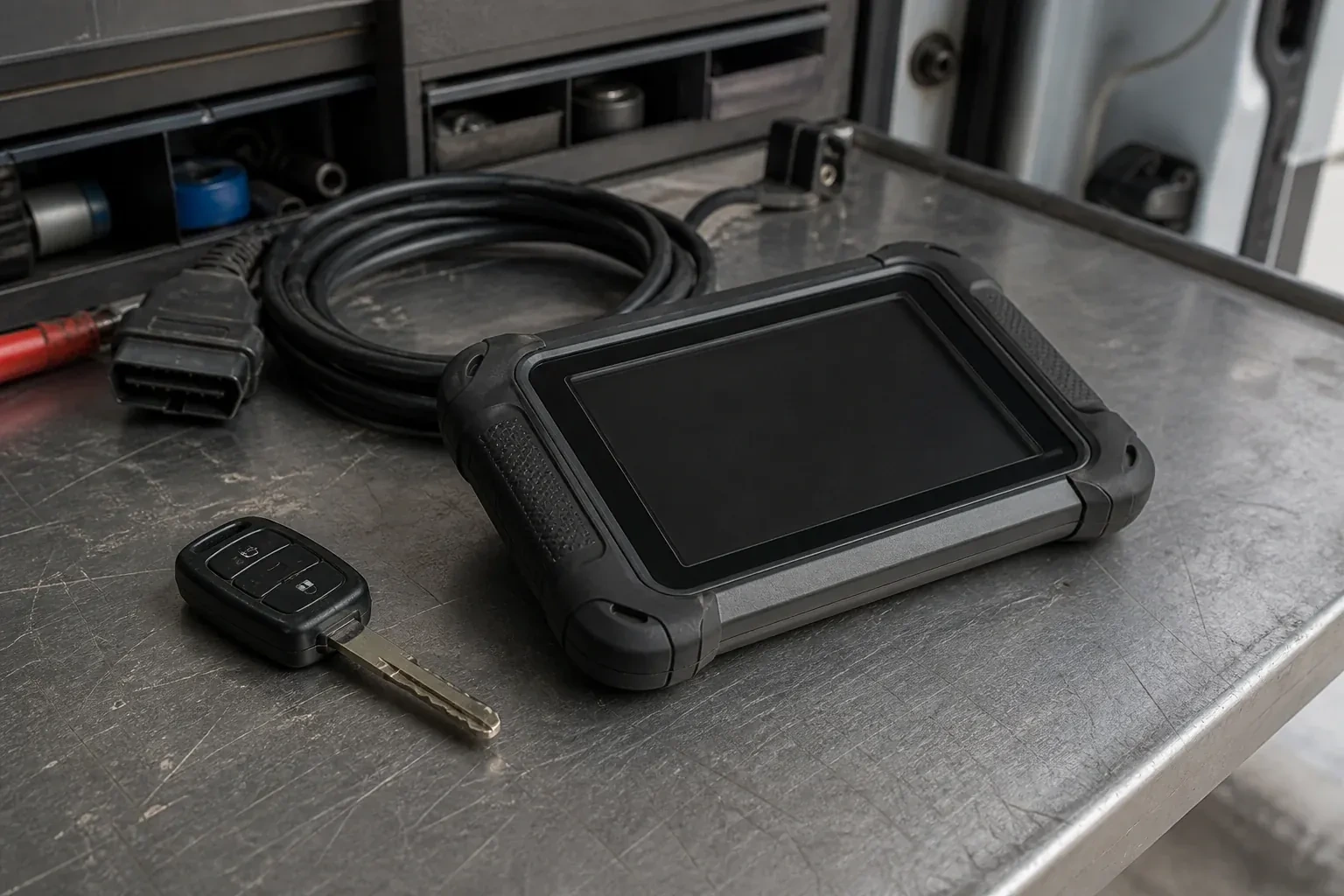
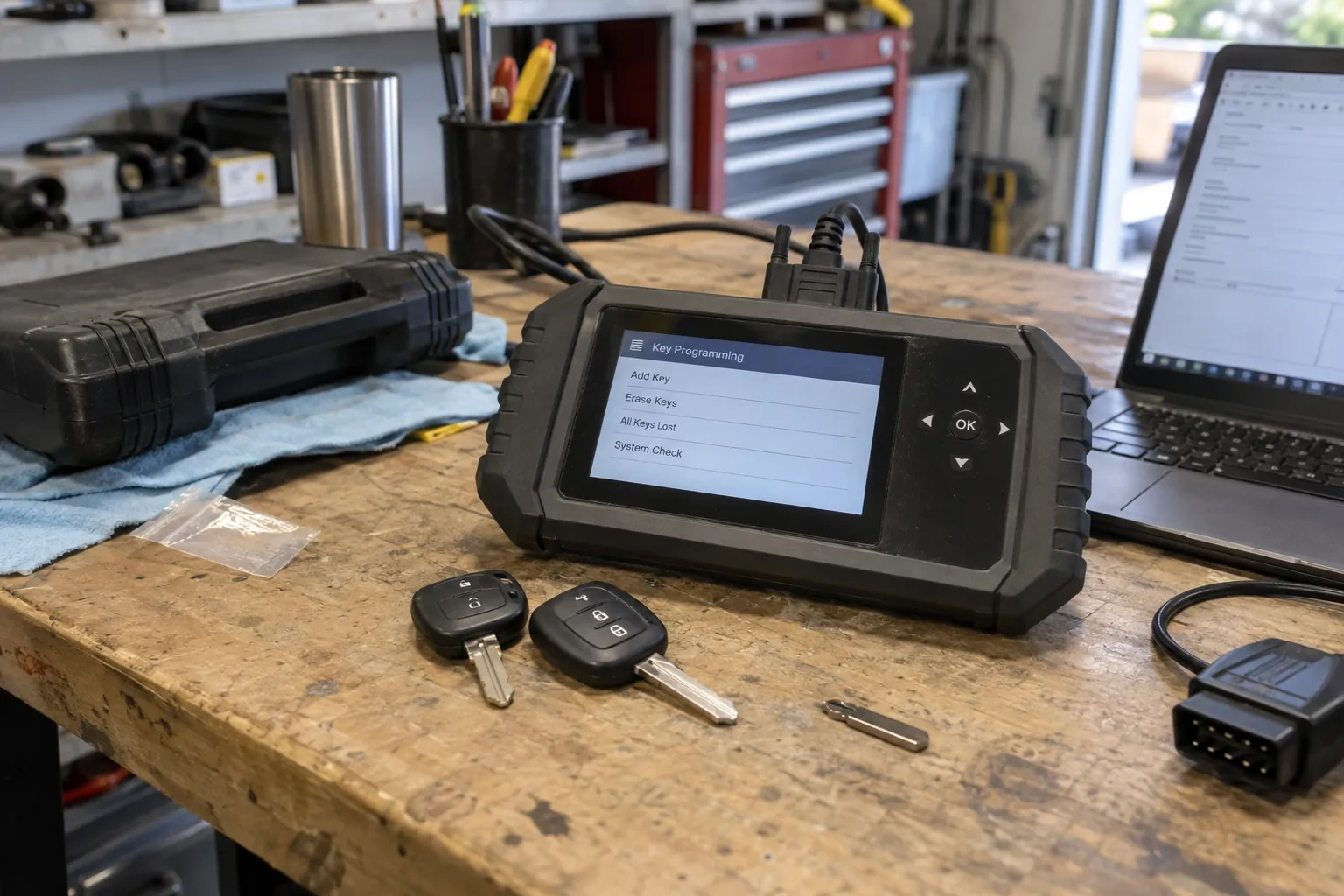
WhyTransponder key programming is the step that teaches a vehicle's immobilizer to recognize a key's chip so the engine agrees to start, separate from cutting the metal blade that opens the door.
How a visit goes
Describe the property, the hardware and what has changed, and the visit starts from what you have seen.
1
2
3
01
A short conversation first
You tell us what is happening with the door, who has keys and what you would like to be different afterwards. We ask a few questions so we arrive with the right parts.
02
A proper look at the door
We check how the door hangs, how the latch meets the strike and what the cylinder is doing before deciding anything. Then we explain what we found in plain words.
03
The work, then a walkthrough
We do the job we agreed, test every key and every position of the lock, tidy up and show you how it works before we leave.
My key turns but the door stays locked. What is going on?
A key that spins freely without moving the bolt usually means the connection between the cylinder and the bolt has failed: the tailpiece or cam at the back of the cylinder has broken or slipped, or the internal parts of an older mortise lock have worn. The good news is that this is a hardware fault rather than a lost key, so once the door is opened the fix is a repaired or replaced cylinder and your keys keep working.
Do you need my spare key?
It helps if there is one. A crisp spare is the ideal pattern for the replacement, better than the broken halves and far better than a worn copy. It also lets the locksmith test the cylinder the moment the fragment is out, which shows whether the pins and springs are sound. If the spare is itself bent or worn, mention that too; it is a candidate for retirement rather than a pattern.
Can you service a community mailbox that the postal operator installed on our street?
That particular kind of mailbox is owned and serviced directly by the postal operator, including its locks and replacement keys, so a resident with a lost key there contacts them rather than a locksmith. This service covers mailboxes that belong to a home, a business, or a condo or apartment building, such as a lobby panel or a slot built into a house door.
What is a relocker, and does it change how the safe is opened?
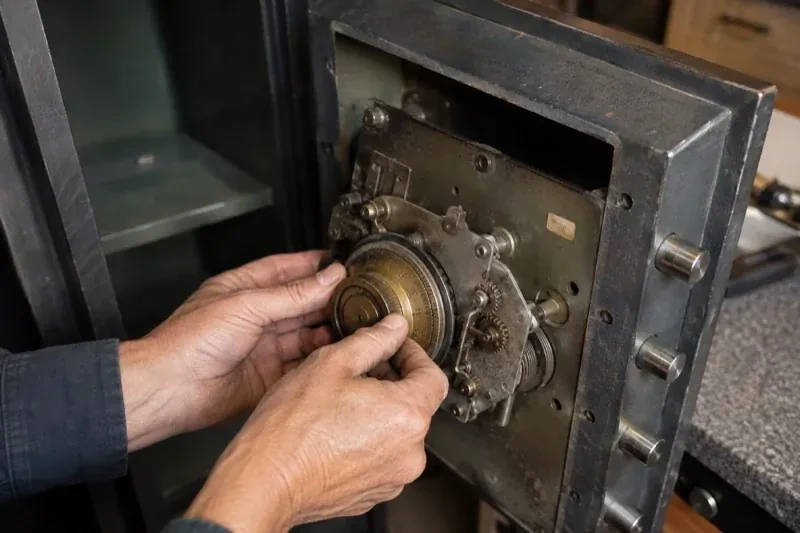
A relocker is a small device inside some safes built to jam the bolt work until a trained technician services it, if the case is drilled in the wrong spot, dropped, or exposed to fire, as a defence against forced entry. If one has tripped, the fix is mechanical: freeing or replacing the relocking mechanism, rather than another attempt at the combination. Recognizing a tripped relocker early changes the plan from the first visit rather than after several failed attempts.
We lost a master key. Does the whole building need doing?
Only the cylinders that master opened, which the keying chart identifies. If the lost key was the top master, that is every lock in the system; if it was a departmental master, it is that department's doors. Where no chart exists, the locksmith reads the cylinders first to establish what the key reached. The remaining doors, and any keys that never opened them, are left exactly as they are.
What happens with a pair of doors instead of one?
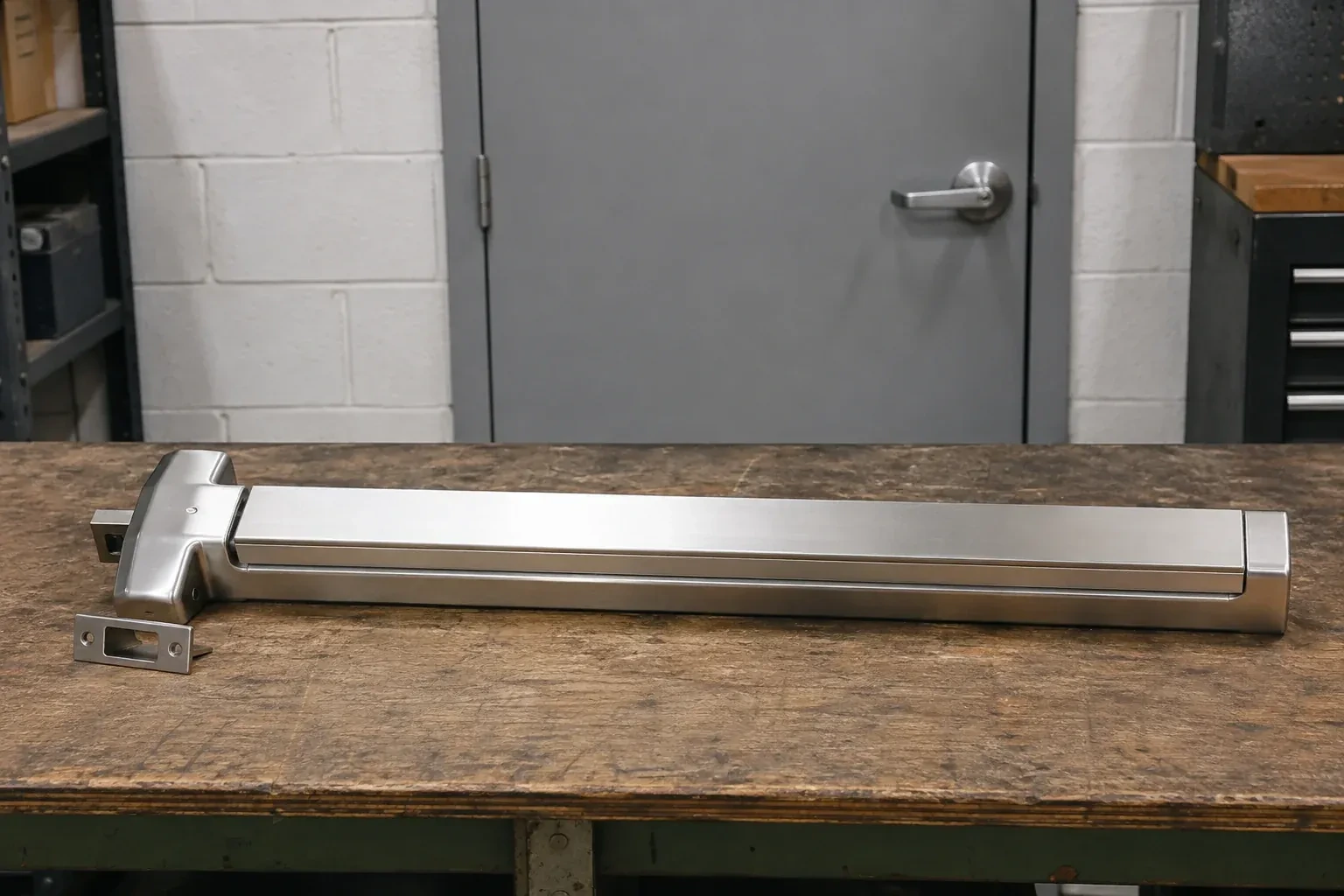
It depends on the pair. Some latch independently and need nothing extra. Where the hardware calls for a set closing order, a coordinator lets the two leaves close in the right sequence, letting the active leaf's device seat properly into a strike carried on the inactive leaf, or into an astragal. Alternatively, the centre mullion can be removed and a vertical-rod device fitted to each leaf, turning the pair into one wide exit. Whichever applies, both leaves are tested working together, not one at a time.
Can you make a key for a car with push-button start?
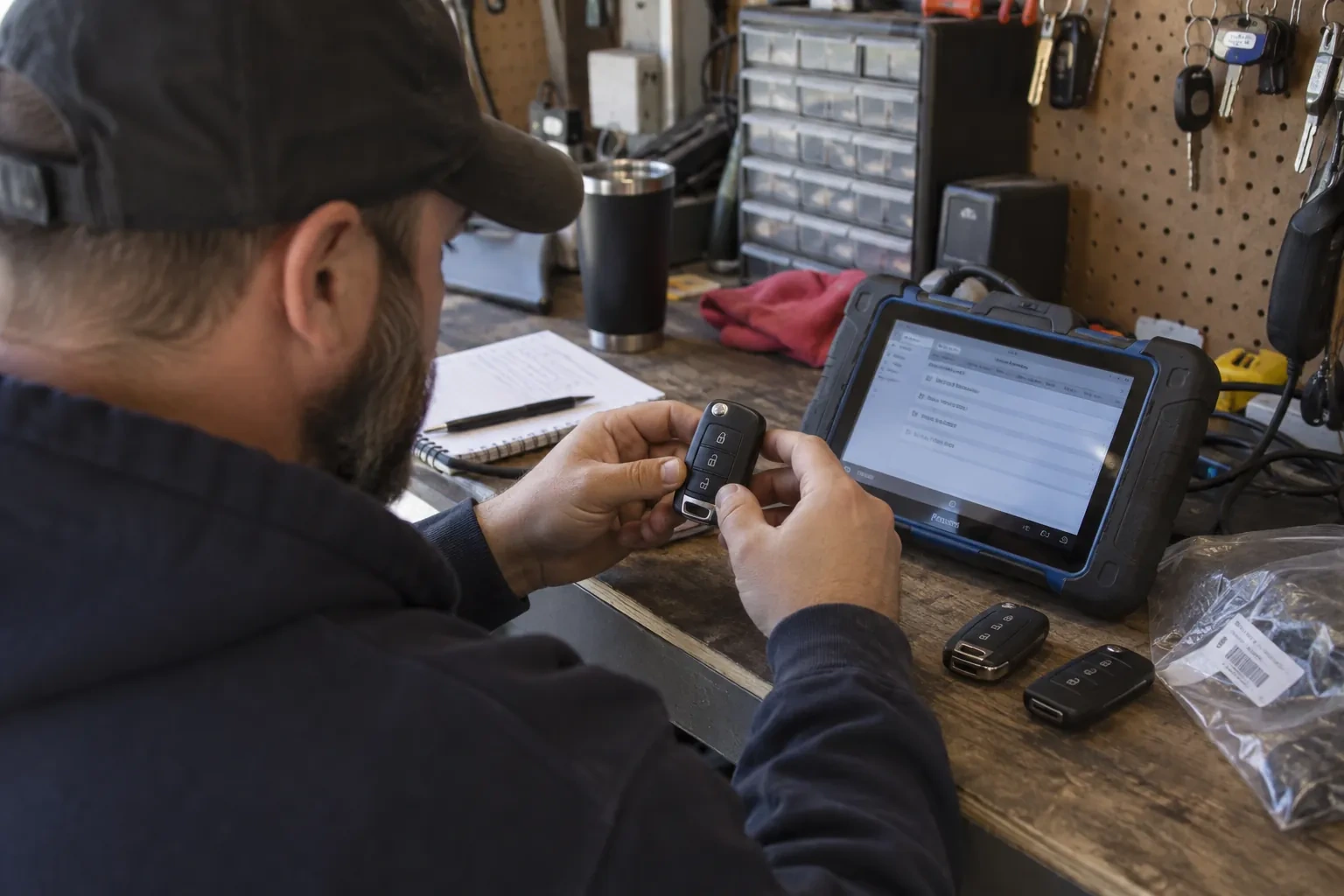
On many vehicles, yes: a proximity fob is registered to the vehicle through the diagnostic port in much the same way as a transponder key, and then tested for passive entry at the handles and for starting with the fob in a pocket. Other systems pair a proximity fob through onboard, app-based or dealer-only steps instead. The emergency blade tucked inside the fob is cut to the door lock so you have a mechanical way in, and the VIN check reveals in advance which route a given vehicle needs.
What testing happens before I leave with the new key?
Every door lock, the trunk or hatch, the ignition or start button, and any remote functions are checked with the new key on its own, apart from the original, so neither key is quietly helped along by the other's signal. The vehicle is started more than once to rule out an intermittent issue, and only once both keys pass independently is the visit considered finished.
Does cold weather affect a key or its fob?
The metal blade and the passive chip inside it are not affected by cold. The fob's battery is a different story: cold weather reduces a battery's effective output, which can turn a marginally weak battery into one that suddenly stops responding on a cold morning. Testing a fob's battery before winter sets in catches this early.
Request a visit
We treat the whole door in Stouffville, not just the cylinder. Hinges that have sagged, a strike plate held by short screws, a frame that has moved with the seasons: these decide whether a lock holds, and they are checked on every visit. Sometimes the right advice is a longer screw and a shim rather than a new lock, and we say so.