Lockouts · Whitchurch-Stouffville
Break-In Damage Lock Repair
The back door looks closed until you touch it.
In plain words
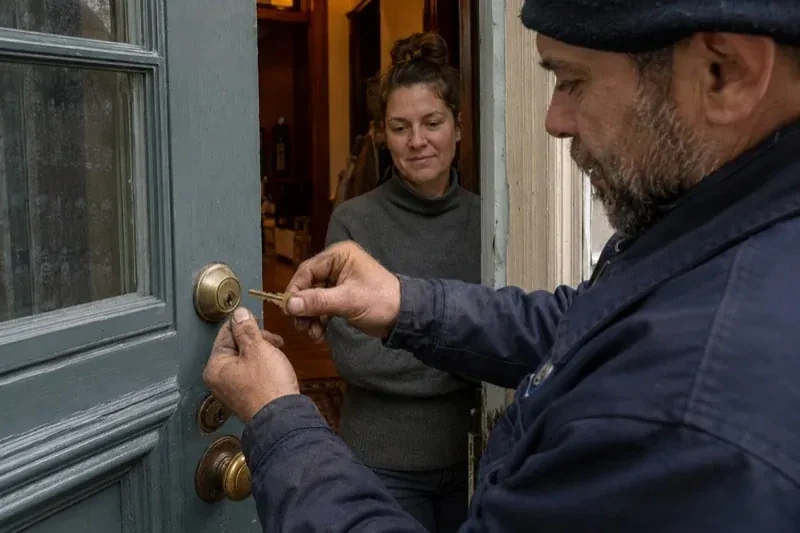
Break-in damage lock repair is the visit that turns a forced door back into a locked one. The locksmith first confirms you own, rent or manage the property, then looks at everything the attack touched: the lock, the bolt, the strike plate and wood behind it, the door edge, the hinges and any glass beside the door. The opening is secured before the visit ends, and the parts that gave way are replaced with stronger hardware and longer fasteners set into the framing. Any lock a taken key could open is rekeyed or replaced, so the house is closed on your terms again.
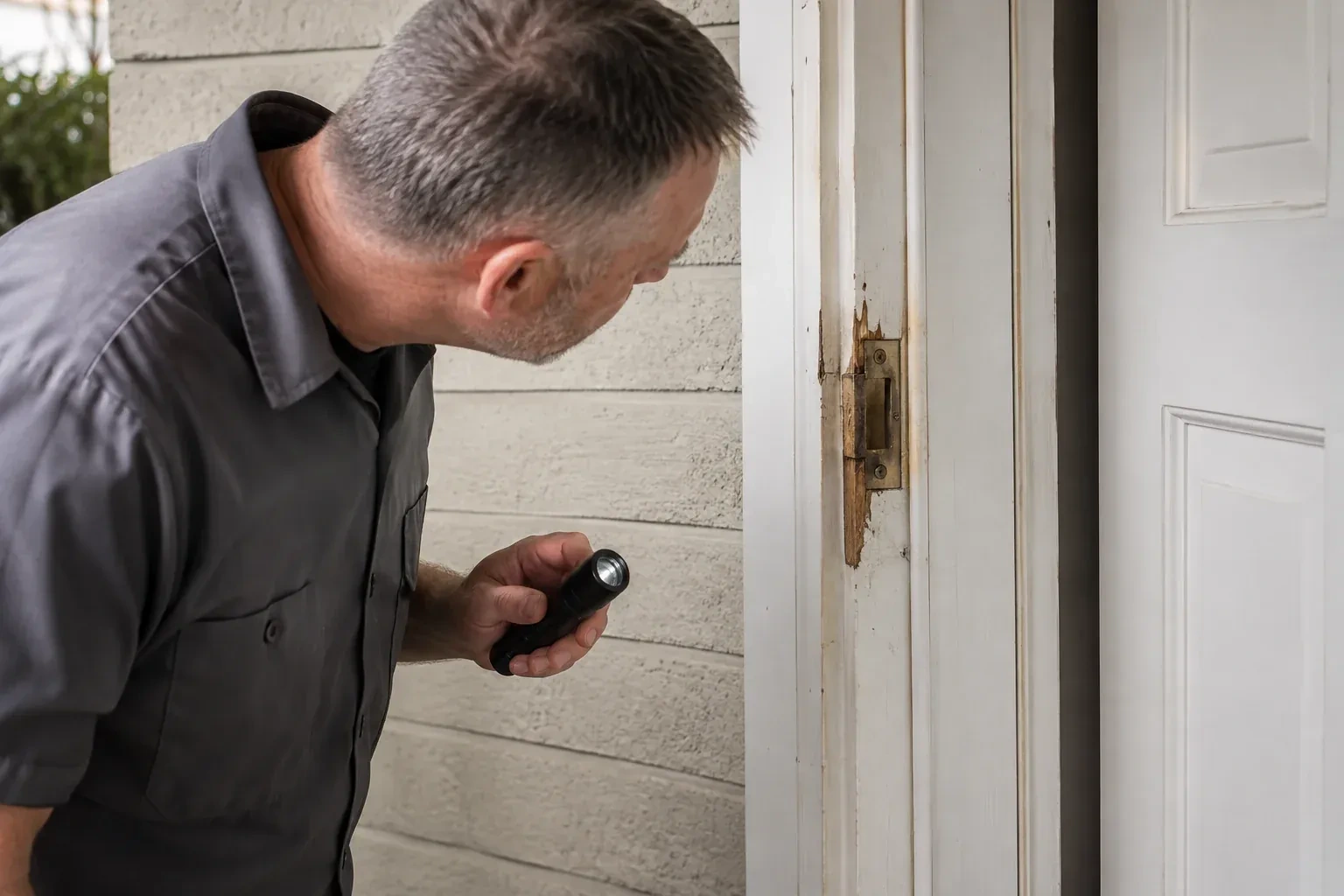
How the visit goesThe back door looks closed until you touch it. The edge is crushed where a bar went in, the latch is bent sideways, and the door swings free with a gentle push no matter how you turn the key.
Break-In Damage Lock Repair
How the visit goes
Photographs before parts move
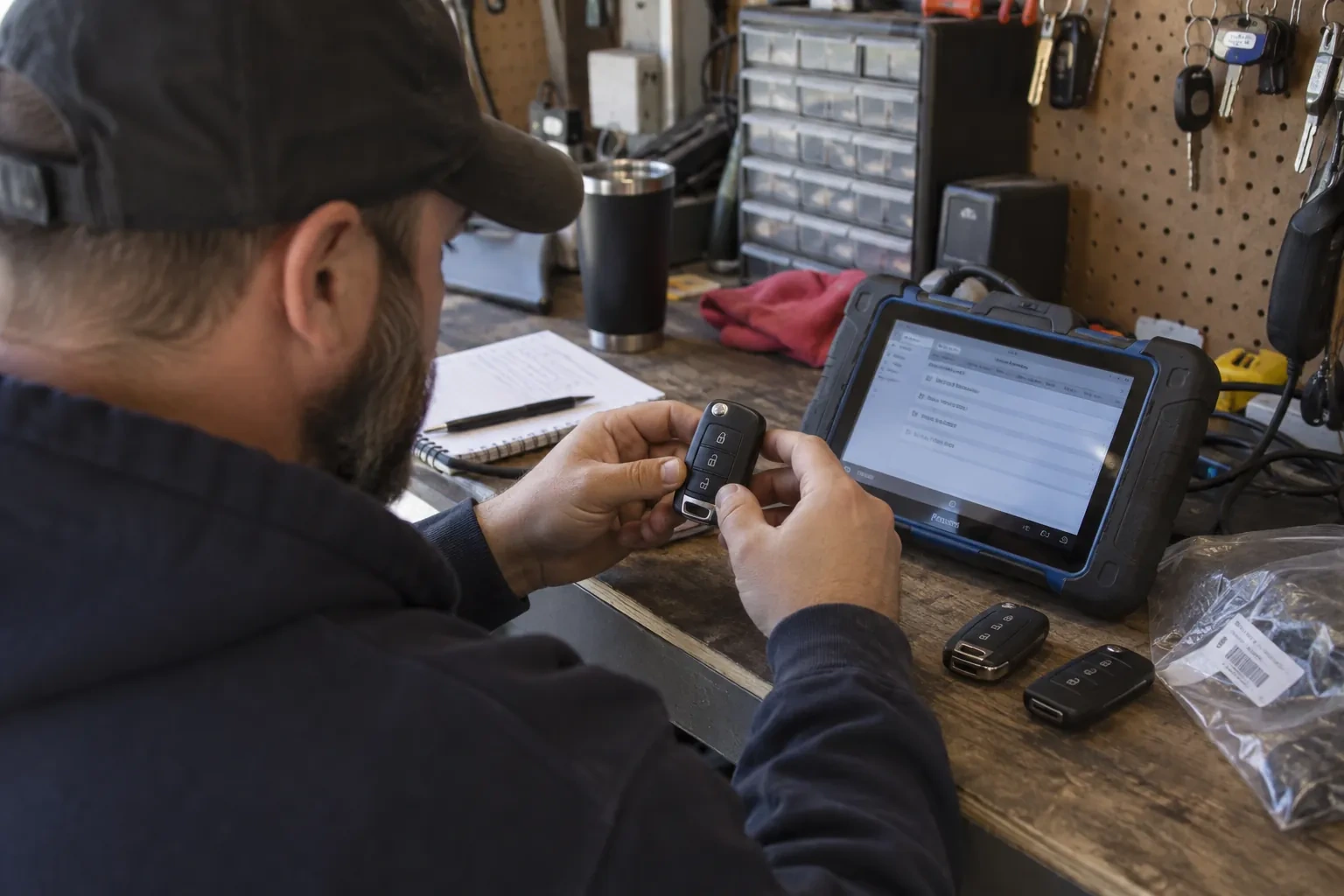
Nothing on the door is touched until it has been photographed as found. The locksmith records the door face and edge, the lock and cylinder, the strike and the wood around it, the hinges, the jamb and any broken glass, plus the tool marks that show how entry was made. These images serve the police occurrence file and the insurance claim, where insurers ask for damage to be documented and damaged property kept. You are encouraged to take your own set too. Once the record exists, hardware can come off and the repair can start without anyone later wondering what the door looked like at the beginning.
Strengthening the door edge and hinges
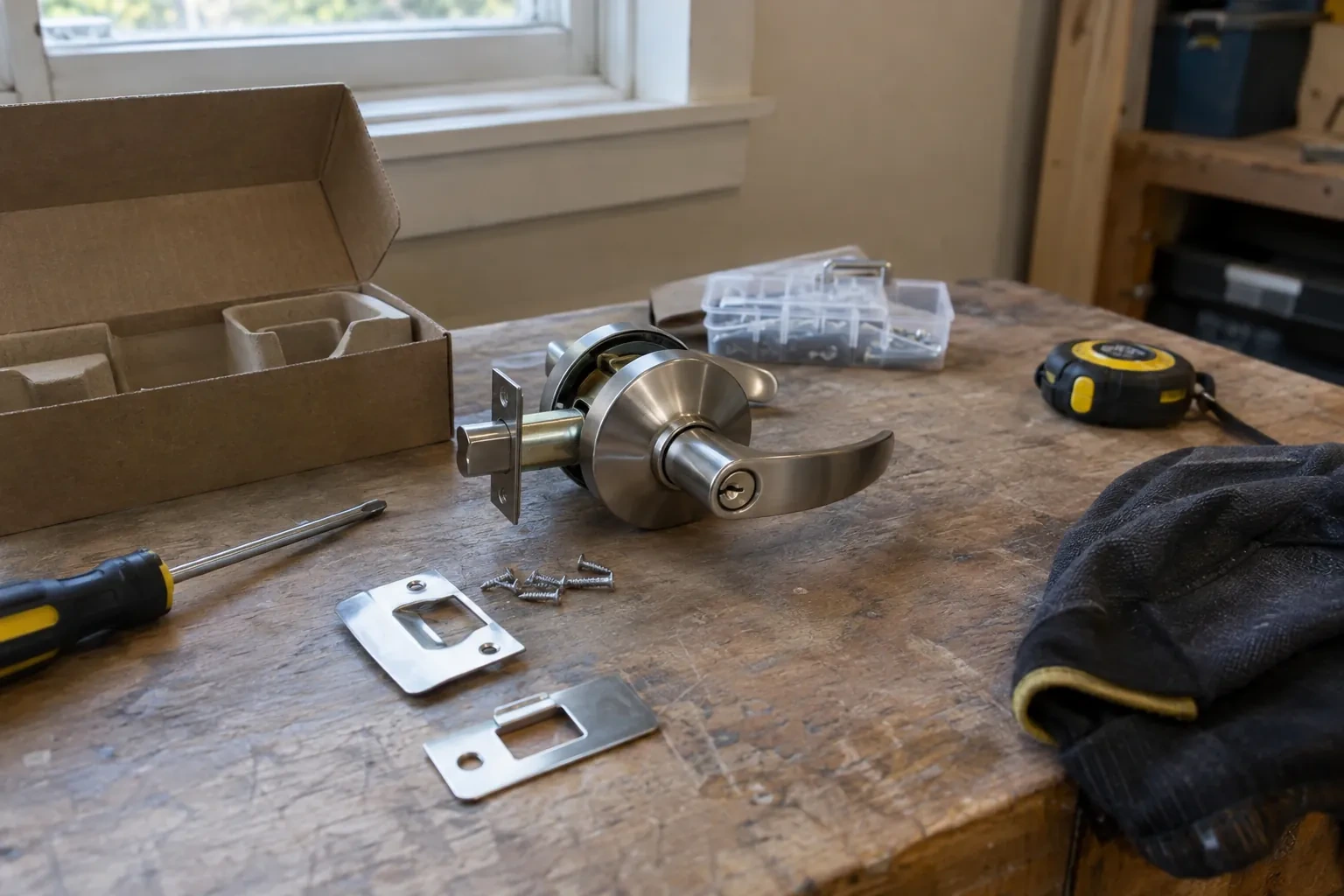
Where a pry bar crushed the edge or the wood split around the lock bore, a wrap-around reinforcer is fitted: a steel channel that sleeves the door edge at the lock, ties the two faces together and gives the bolt and latch a solid seat. On the hinge side, the short factory screws are swapped for three-inch screws that reach the framing, and a bent hinge is replaced. Doors that were kicked hard sometimes need a hinge reinforcement plate across the jamb to spread the load. With both edges strengthened, the door no longer has a soft side, and a future kick meets steel and stud at every point that matters.
Stronger than it was before
A repaired door is usually the strongest door in the house, because the parts that failed have been replaced with the parts that should have been there. The bolt now sits in a boxed strike anchored to the stud by long screws, the hinge side is fixed to framing rather than trim, the door edge is sleeved in steel where it was soft, and a full-throw deadbolt with a hardened insert has replaced the light one. None of this shows from the street. What changes is that a repeat attempt meets resistance at every point the first one found weak, and the noise and time that demands is exactly what intruders avoid.
Break-In Damage Lock Repair
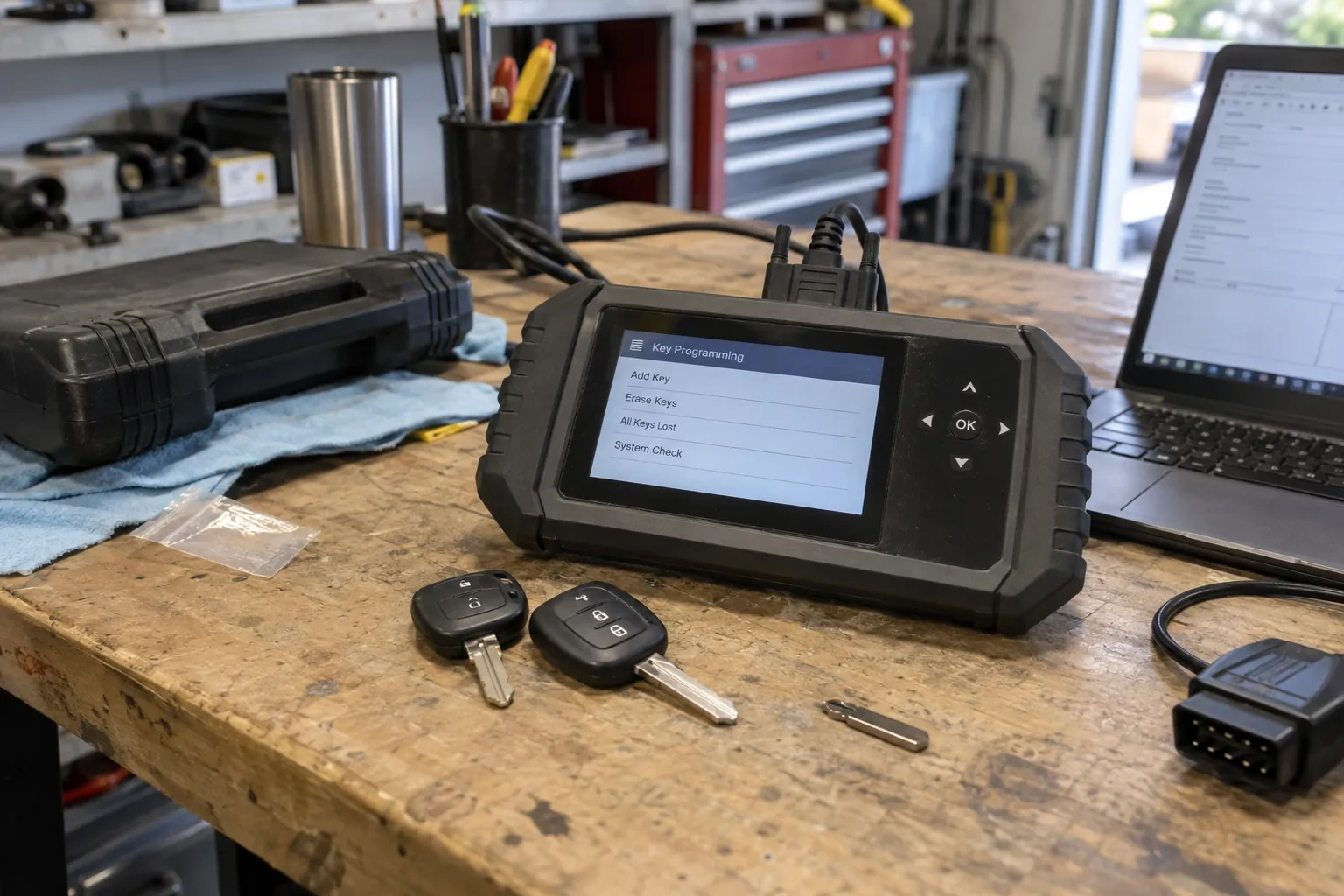
In the van
Plywood and cleats for boarding
Grade 1 deadbolt with one-inch throw
Security strike box
Hinge reinforcement plate
Three-inch strike and hinge screws
Break-In Damage Lock Repair
What affects the quote
Commercial and storefront hardware
Narrow-stile deadbolts, hookbolts, latch guards, anti-pry astragals and interchangeable cores are commercial parts with commercial fitting time, and a shop's quote reflects them.
Lock failure or frame failure
Replacing a lock is hardware and fitting time. Rebuilding a strike side with a boxed strike, epoxy and long screws into the stud is carpentry as well, and is quoted as its own line.
Strike and hinge reinforcement
A security strike box, hinge reinforcement plates and three-inch screws on both sides of the door are listed as their own items, so you can see what strengthens the frame beyond replacing what broke.
What to have ready
- Have the police been called, and do you have an occurrence number?
- What kind of lock was on the door: knob, lever, deadbolt, mortise or keypad?
- Would you like stronger hardware fitted while the door is being repaired?
Break-In Damage Lock Repair: questions
QuestionsShould I keep the broken lock and strike?
Yes, unless the insurer has already said they are not needed. Insurers generally ask policyholders to retain damaged property until the claim is settled, and a bag holding the twisted cylinder, torn strike and split wood answers an adjuster's questions more clearly than any description. The locksmith hands them over at the end of the visit along with a written note of what was replaced. Photographs of the parts in place, before removal, complete the record.
Will my insurer want to see the damage before it is repaired?
Insurers ask policyholders to document the loss, keep damaged property and hold on to receipts, and a securing visit is expected rather than discouraged, because an open door invites more loss. Photograph everything as found, keep the broken hardware in a bag, keep the invoice, and call your insurer as soon as the house is safe. The adjuster can see the old parts and the photos; the door itself need not stay open.
Can the locksmith start before the police have finished?
The door is left as found until the police have seen it or said they will not attend. What can happen in the meantime is planning: the locksmith can look at the damage, photograph it, measure for hardware and prepare the temporary securing so that the moment the scene is released the work begins. Nothing is removed or moved before then, because the marks on the door are part of the report.
Related services
- Business Lockout ServiceA cook stepped into the alley with the recycling and the rear door swung shut behind him.
- Broken Key ExtractionThe key went in like any other morning, you turned it, and something gave with a small metallic click.
- Seized & Jammed Lock OpeningThe key turns a full circle without any resistance and the deadbolt stays exactly where it is.