
Commercial · Whitchurch-Stouffville
Master Key System Design
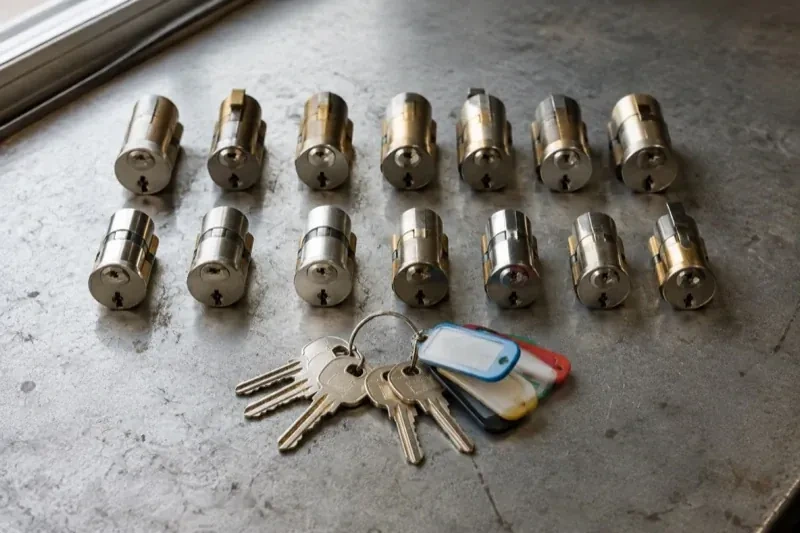
The new wing was built with its own brand of cylinder, so the two-year-old keys from the original building do not open a single door in the addition.
In plain words
Beyond convenience, master key system design is a security decision. It sets out who can duplicate a key, how many levels of access exist, and what scope the chart assigns to a lost key at each level, from one door up to the whole property for a top master. A restricted or patented keyway is often part of the answer, since it cuts down on copies being made anywhere other than through the record the owner controls. The result is a system where access matches role, duplication is tracked, and every missing key's designed scope is already known rather than guessed at afterward.
How the visit goesA new hire at the shop gets handed whatever spare key happens to be in the drawer, and it turns out to open the stockroom, the back office and the safe room all at once. The owner realizes nobody actually decided who should open what.
Master Key System Design
How the visit goes


What is already on the doors
Every door on the property is walked and logged: the cylinder brand or keyway, whether it is a knob, lever, deadbolt or mortise case, its condition, and which doors currently share a key by accident rather than by design. This inventory decides how much of the existing hardware can join a new hierarchy without modification and how much needs replacing to fit cleanly into the planned levels. Skipping this step is how master key projects end up half-finished, with some doors on the new system and others quietly left on whatever key they always had.
Bringing electronic and mechanical access into one plan
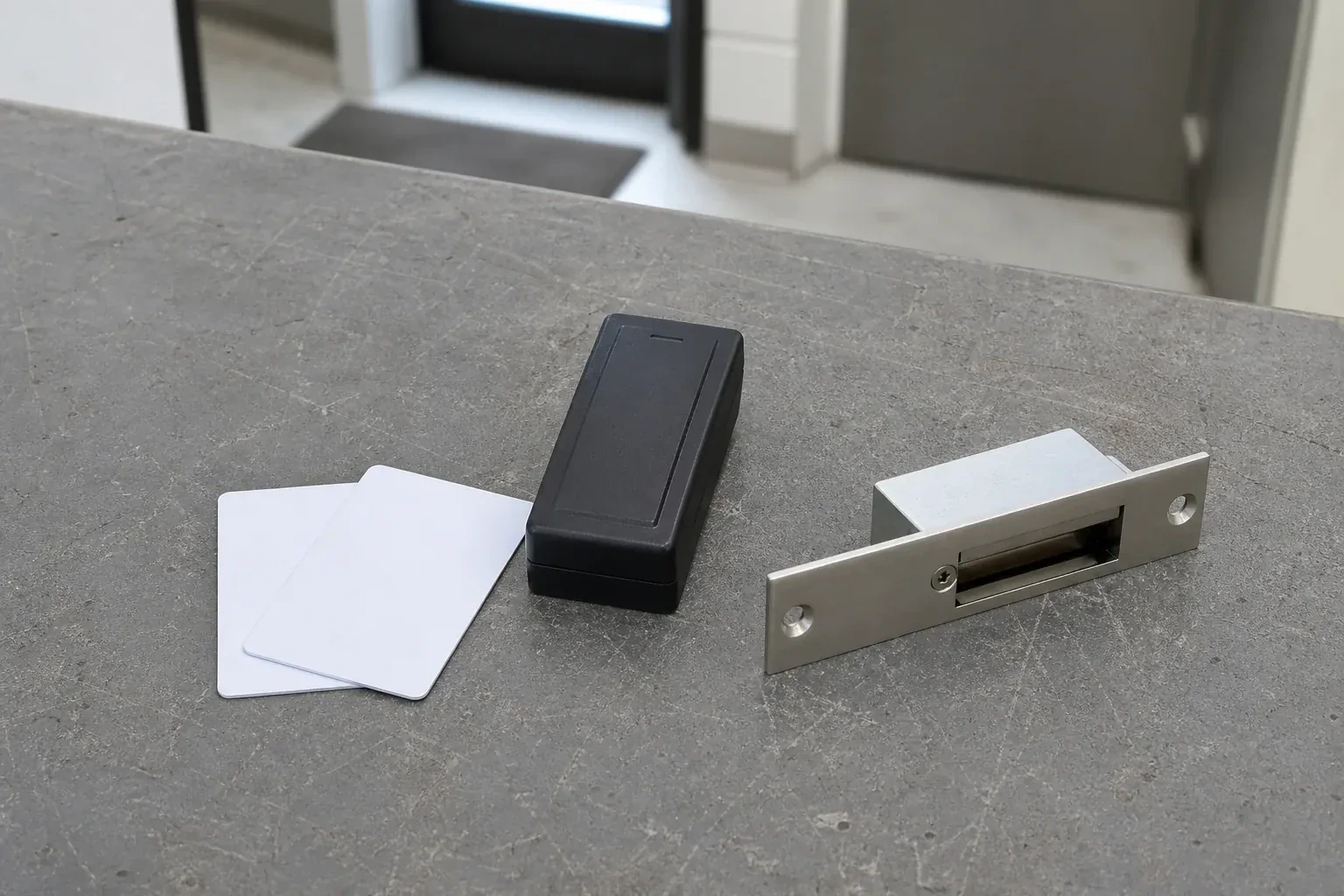
Where a property mixes mechanical cylinders with keypad or card-based doors, the mechanical hierarchy is designed to line up with the electronic access groups rather than run as a separate, unrelated system. A department that sits at one sub-master level on the mechanical side is kept at a matching level on any electronic doors it also uses, and any mechanical override cylinders behind an electronic lock are pinned into the same chart as every other door, so one document still describes the whole property.
A building that finally matches its own org chart
The most visible change is often the simplest one: the level of key someone carries now matches the role they actually hold, instead of matching whatever happened to be handed down or copied over the years. Walking the building afterward, each door answers to keys that were deliberately assigned to it, and the chart in the office explains every one of those decisions to anyone who asks about it.
Master Key System Design
In the van
Compatible replacement cylinders
Change and master keys
Locking chart storage cabinet
Key cutting machine
Restricted or standard key blanks
Master Key System Design
What affects the quote
Electronic locks alongside mechanical keys
Where keypad or card doors need to line up with the mechanical hierarchy, the quote includes the extra coordination of matching access levels across both systems and pinning any mechanical override cylinders into the same chart as the rest of the property.
Number of keys cut and marked
Each key cut and marked for a holder is counted individually in the quote, whether it is a change key for one door or a top-level master for an owner. More staff at the same level naturally means more keys cut than a business with only a handful of holders.
Number of doors and levels involved
A single office with one change key and no sub-master is a simpler project than a multi-floor property with several departments and a top-level master. The quote reflects how many doors are assessed, how many levels are designed, and how many cylinders are pinned to match those levels.
What to have ready
- Roughly how many doors need to be part of the system?
- Are there any doors you want left outside the master system entirely?
- Do any existing keys already open more than one door?
Master Key System Design: questions
QuestionsWhat happens if a master-level key goes missing?
The current chart shows exactly which doors that level was designed to reach, which for a lost top-level master can mean the whole property rather than one group. Depending on how the key was lost and who else already holds that level, the usual options are repinning the affected cylinders and reissuing keys to the remaining holders; a restricted keyway lowers the odds of an unauthorized copy being cut but is not proof that one has not been made. Without a current chart, the first task is reconstructing that scope.
Do all the doors on my property need to be part of the master system?
No. Some doors, such as a private office or a room with a single regular user, can reasonably stay on their own key outside the hierarchy if there is no real benefit to including them. The assessment is partly about deciding which doors belong in the system and which are simpler left alone, rather than assuming every lock has to join.
What should I have ready before the assessment visit?
A rough list of who currently has access to which doors, any existing keys or cylinders you can point to, and a sense of upcoming changes such as new hires, a department split, or a unit due to open. None of this needs to be exact; the assessment is partly built around confirming or correcting whatever the business already assumes about its own access.
Related services
- Access Control InstallationSomething went missing from the storeroom over a weekend, and when you ask who was in the building, the honest answer is anyone with a key.
- Panic & Exit HardwareAfter the fit-out, the gym floor now holds more people than the old office space ever did, and the exit door at the back still has the same turn-lock it had when the room held desks.
- Commercial-Grade Lock ReplacementHead office wants every branch keyed alike under one system, and half the locations are still running whatever lockset the original contractor happened to install years ago.