Change or rekey · Whitchurch-Stouffville
Vintage Mortise Lock Service
The knob flops loose on its spindle and never springs back to level.
In plain words
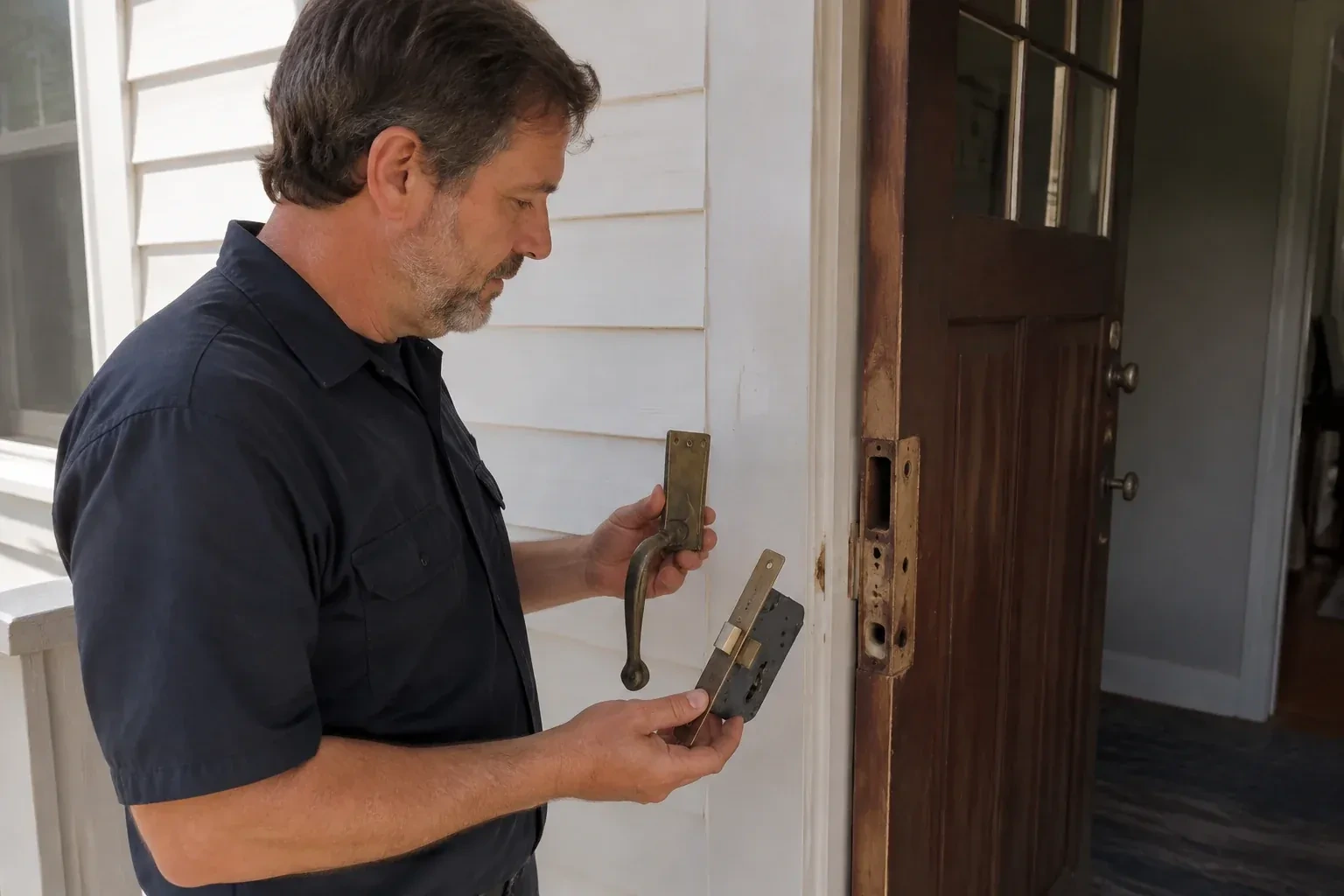
Where the door has moved, the lock gets blamed. Solid wood doors in older houses swell in humid weather, shrink in winter and settle on their hinges, and a mortise lock that was set decades ago ends up with its latch and bolt aiming a little below the strike. Part of every vintage lock service is reading how the door hangs, tightening or packing the hinges, and moving or filing the strike so the latch catches and the bolt throws without lifting the handle. Often that alignment work, plus a clean and new springs, is the entire repair, and the customer gets back a door that closes with one hand.
How the visit goesYou bought a house with its original hardware and a bag of loose keys. Some open interior doors, some fit nothing, and the front door lock has a keyhole shaped for a key you do not have. You would like the original lock kept and made to work.
Vintage Mortise Lock Service
How the visit goes
Repair, replacement cylinder or replacement case
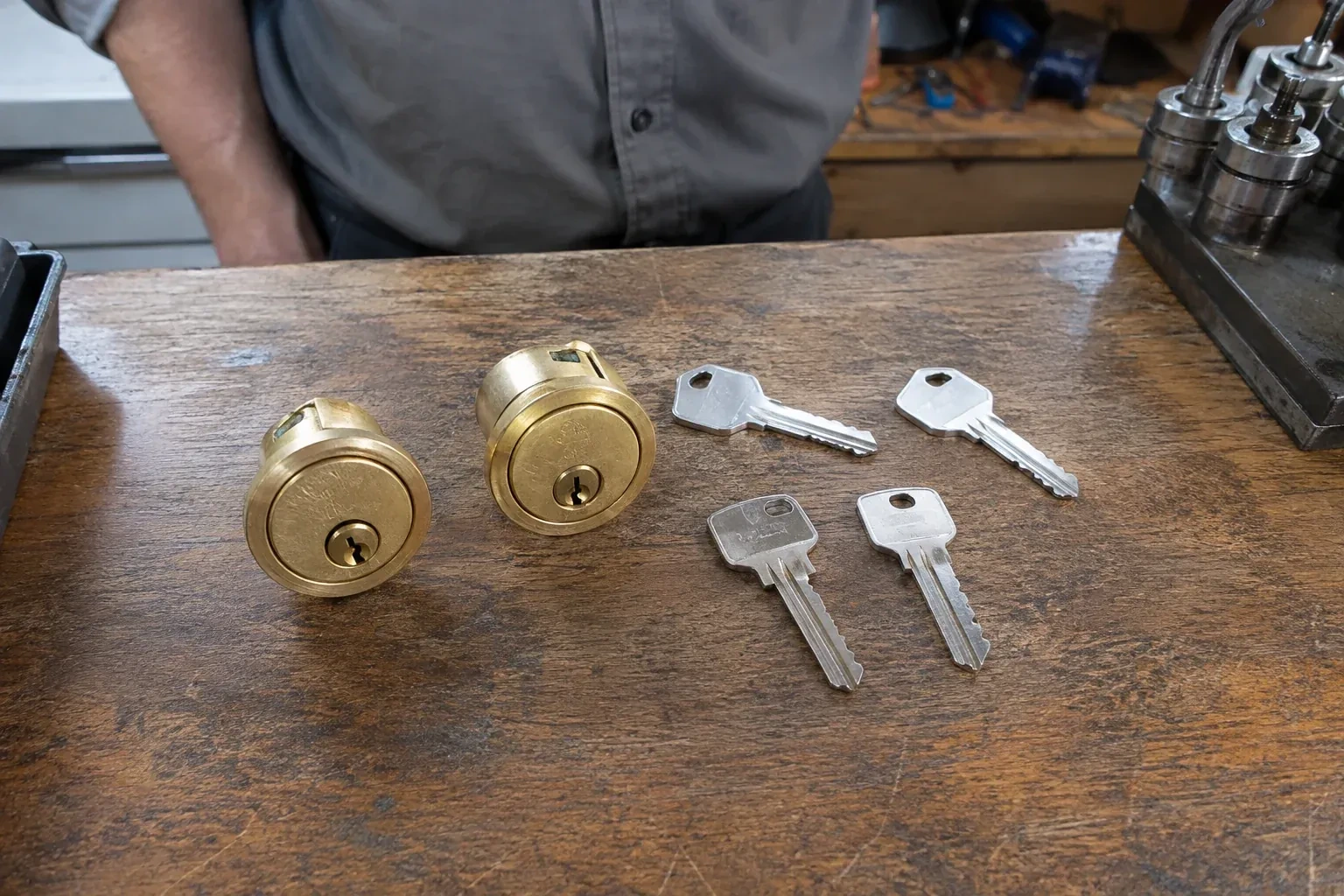
The last step of the check is deciding what the lock needs, in plain terms, before any of it is done. Most cases need cleaning, springs and adjustment, and that is the recommendation. A cylinder lock with a worn plug may be better served by a new mortise cylinder of the same thread and cam, keeping the case. A cracked case, a bolt worn thin or a hub broken through calls for a replacement case in the same pocket, and the locksmith measures for it on the spot. You hear which of these applies and why, and if the answer is a replacement case, the choice between a reproduction and a modern case is yours to make.
Cutting a bit key to the lock
For a bit-key lock, keys are made to the case rather than copied from a pattern. A blank with the right bow, shank and bit size is chosen, then the bit is filed by hand to clear the wards inside the case and to lift each lever to the correct height. The key is tried, marked, filed again and tried again until it turns the bolt cleanly from both sides. A second key is made to match while the first is fresh. Where a working original exists, it is used as a guide and the new key is cut to it, and a worn original can itself be gently restored if the customer wants to keep using it.
Looking after the finish
The brass or bronze knobs and escutcheons on an old door have earned their patina, left alone unless you ask otherwise. Paint cleaned from a faceplate or strike leaves the bare metal as found, not polished bright. If you would rather see them shine, check the finish first: unlacquered brass takes a gentle polish well, kept off the keyhole and spindle; polishing a lacquered piece can scratch through it and start tarnish underneath. Lacquered reproduction parts resist tarnishing rather than darken to match; an unlacquered reproduction is built to age and blend in over a season or two. A light wipe when dusting is all the upkeep the trim needs; wet cleaners find their way into the case.
Vintage Mortise Lock Service
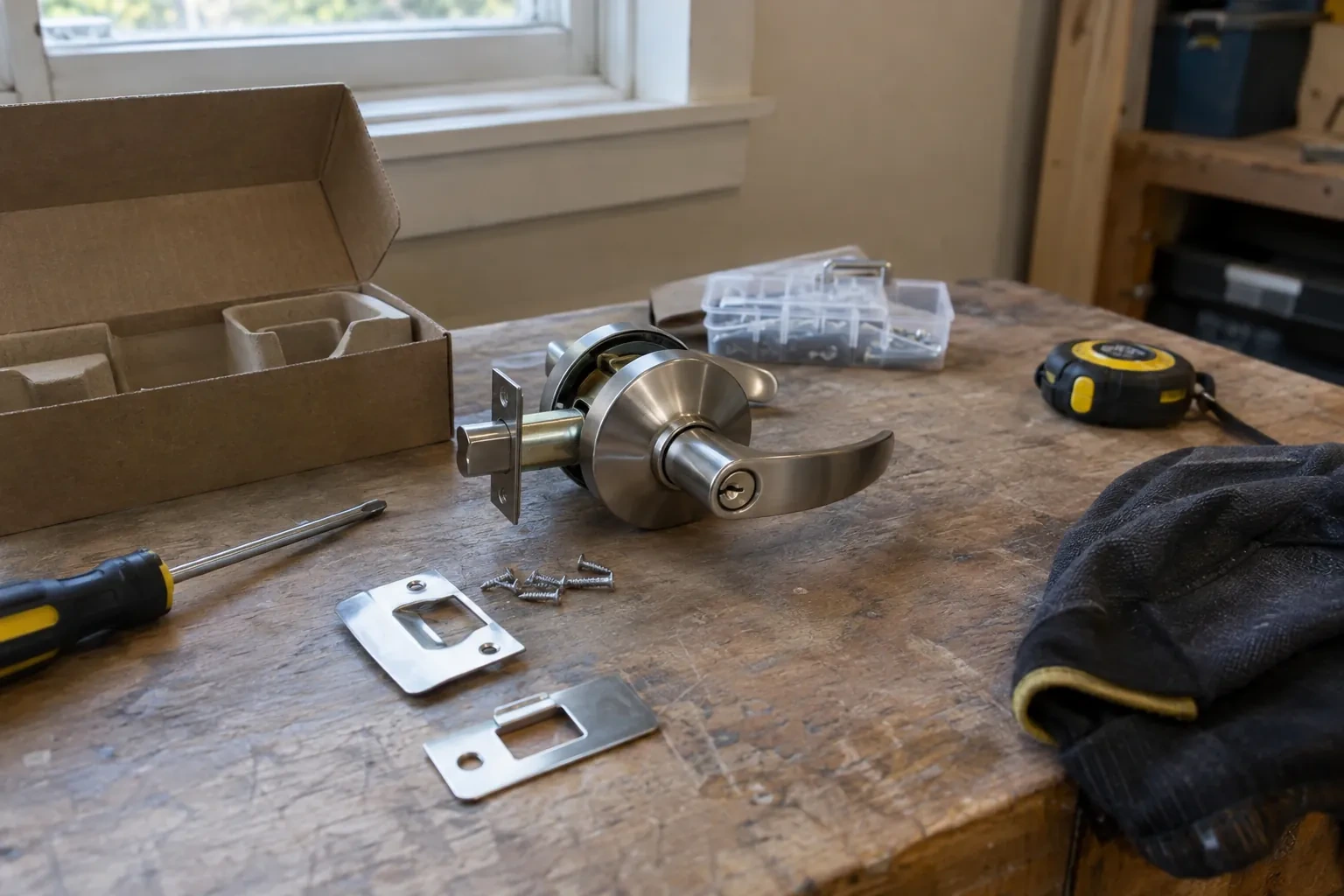
In the van
Cylinder set screw
Mortise cylinder and cam
Light lock oil
Reproduction mortise case
Bit key blanks
Vintage Mortise Lock Service
What affects the quote
What is actually broken inside
A clean and new springs is the lightest job. A worn hub, a cracked lever or a part that has to be fabricated to match the original adds bench time, and the assessment names which applies before any of it starts.
Parts that must be ordered
A reproduction case or an unusual cylinder size may have to be ordered to measurement, which means a second visit to fit it. The quote separates the first visit from the return.
Strike and hinge work
Where the door has dropped or swelled, adjusting or moving the strike and tightening or packing hinges is part of the fix. It is small work but it is listed, so you see what was done to the door.
What to have ready
- Do you own the home or rent it, and who should receive the keys?
- Is the property designated as a heritage building?
- Roughly when was the house built, and is the door original to it?
Vintage Mortise Lock Service: questions
QuestionsWhat information helps before you come out?
Whether the door takes a skeleton-style bit key or a flat key in a round cylinder, roughly when the house was built, what the knob and bolt are doing, and whether the trouble is worse with the door closed. A photo of the faceplate in the door edge and one of the keyhole side is worth a great deal. Mention how many doors are involved and how many keys you would like afterwards.
What do I get at the end of the visit?
A lock you have tested yourself from both sides, keys counted into your hand with a spare, any parts that were removed if you want them, and a short written note of what was done: case type, parts replaced, keys made, strike adjusted. For a bit-key lock the locksmith keeps the details needed to cut further keys later. You also get shown where the yearly drop of oil goes.
Why does my knob turn without moving the latch?
Most often the square hole in the hub inside the case has rounded with age, or the spindle has worn, so the knob turns a good way before it grips. Loose knob set screws produce the same slack. Less often a latch spring has broken and the latch is simply sitting inside the door. All of these are corrected during service by replacing the spindle and screws, bushing or replacing the hub, or fitting a new spring.
Related services
- Deadbolt InstallationThe bolt on the front door is keyed on both sides.
- Lock Replacement & UpgradeThe century home's original mortise lock takes a key the size of a spoon, sticks in humid weather and has worn its strike to a groove.
- Smart Lock InstallationYou have just taken possession of the house and the previous owners handed over a keypad deadbolt with a code nobody wrote down and an app account you cannot get into.