Commercial · Whitchurch-Stouffville
Commercial-Grade Lock Replacement
Head office wants every branch keyed alike under one system, and half the locations are still running whatever lockset the original contractor happened to install years ago.
In plain words
Fire separations and exit routes add a layer that a house entry door never has, and this service is where that layer gets handled properly. A door that forms part of a fire separation needs hardware listed for that door's rating, and a door on a required exit may need to open with a single motion and no key once the building's occupant load crosses a threshold. The locksmith checks whether either condition applies to this specific opening, selects hardware that satisfies it, and installs the new lock so the door still closes and latches the way a fire-rated or exit door is required to.
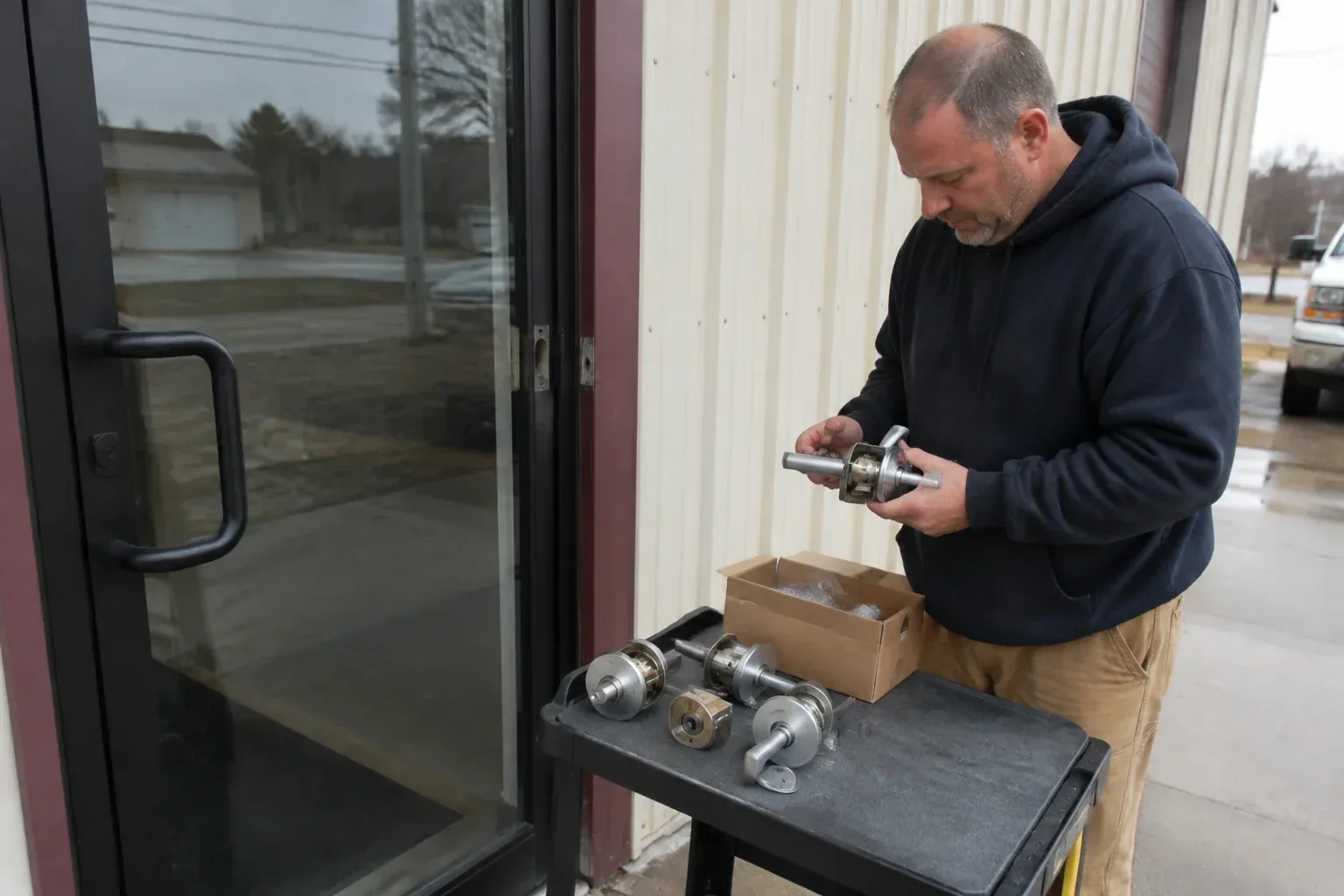
How the visit goesThe kitchen delivery door gets shouldered open more than a hundred times a shift, and lately the latch slips past the strike plate instead of catching it on the first push.
Commercial-Grade Lock Replacement
How the visit goes
Looking at how the opening is actually used
A door's traffic shapes which hardware belongs on it. A staff entrance opened a handful of times a day tolerates lighter-duty hardware than a delivery door shouldered open on every shift, and a customer-facing storefront door needs a finish and function that hold up under public use. The locksmith asks how often the door opens, who uses it, and whether it is propped, wedged or held open in daily practice, since a door habitually held open needs hardware and a closer arrangement that account for that use rather than fighting it.
Fitting the new lock body or lockset
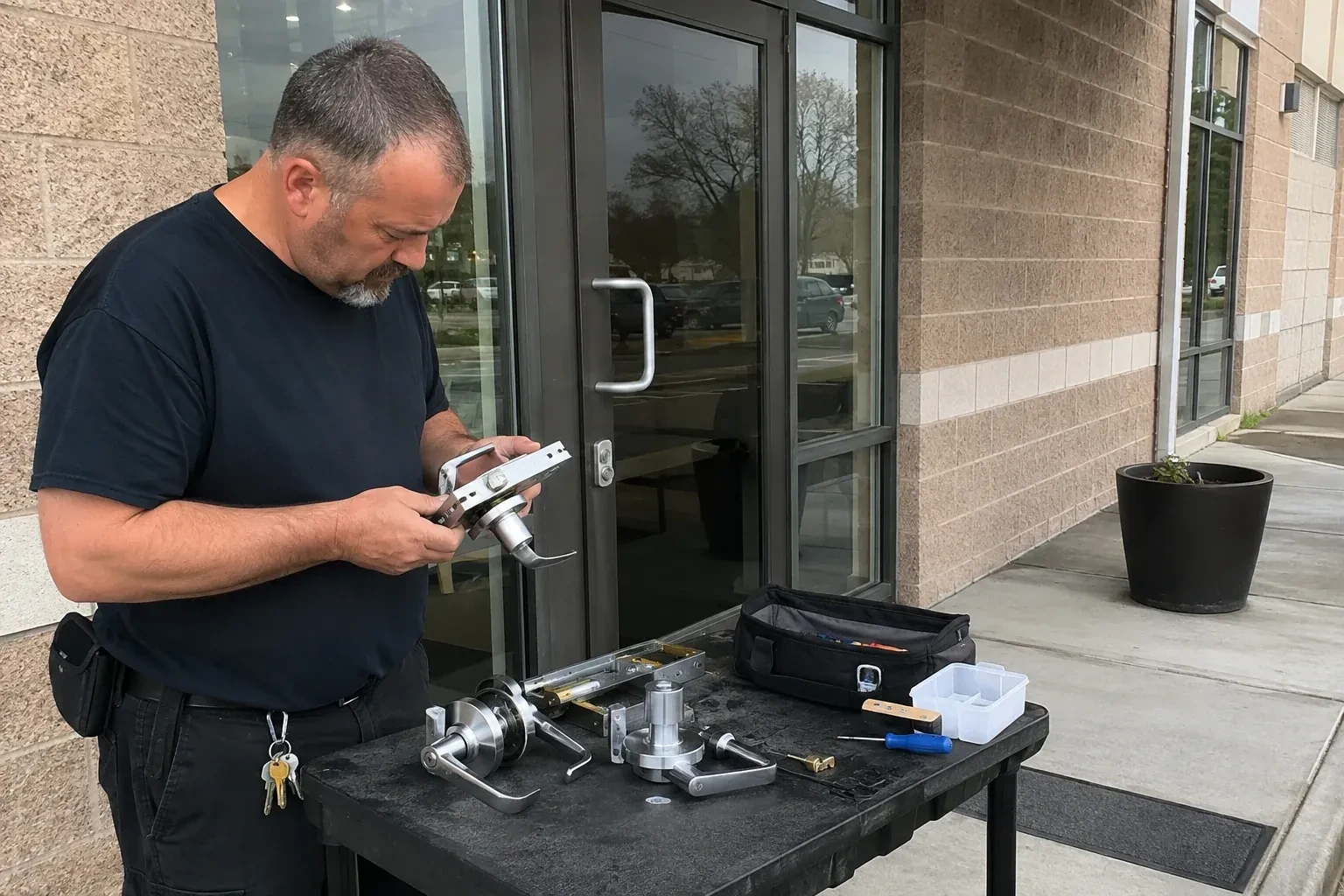
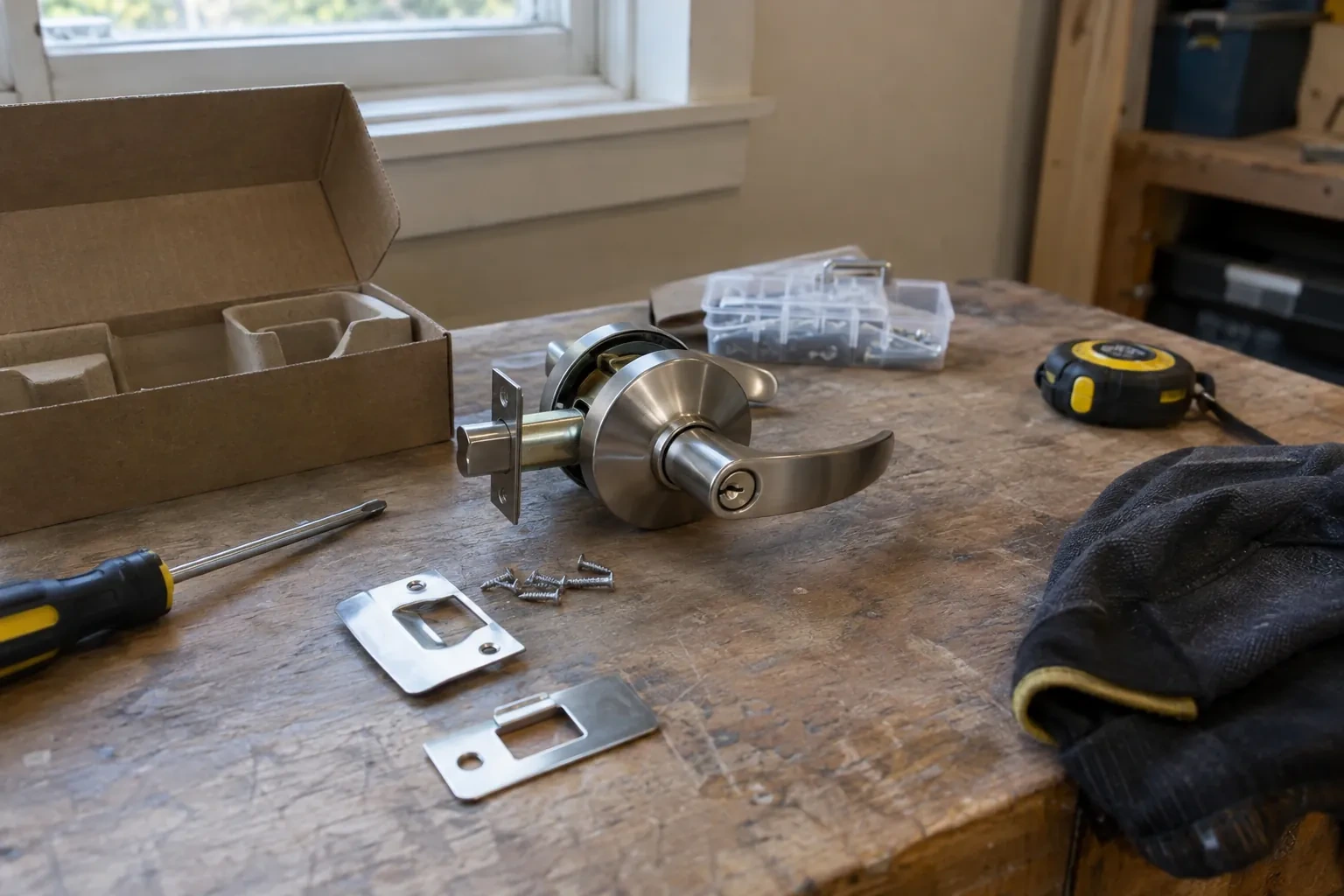
The new hardware is installed into the existing prep, with the lock body or lockset, strike and any reinforcing plate seated so the door closes without binding. On a narrow-stile storefront door, the hookbolt or deadlatch is aligned so it engages the keeper across its full travel rather than catching on one edge. On a mortise-prepped door, the case is fitted so the trim sits flush and the spindle and cylinder line up with the existing holes cut for them.
Confidence after a break-in or a security scare
Where the visit followed a forced door or a lost key that worried the business, the finished hardware answers that concern directly: the damaged cylinder or strike is gone, any compromised key no longer operates the cylinders that were rekeyed or replaced, and the new lock has been cycled and tested rather than simply swapped in and assumed to work. The business can tell staff, tenants or an insurer exactly what changed and why, with a working lock and a written record standing behind that answer rather than a guess about whether the problem was actually solved.
Commercial-Grade Lock Replacement
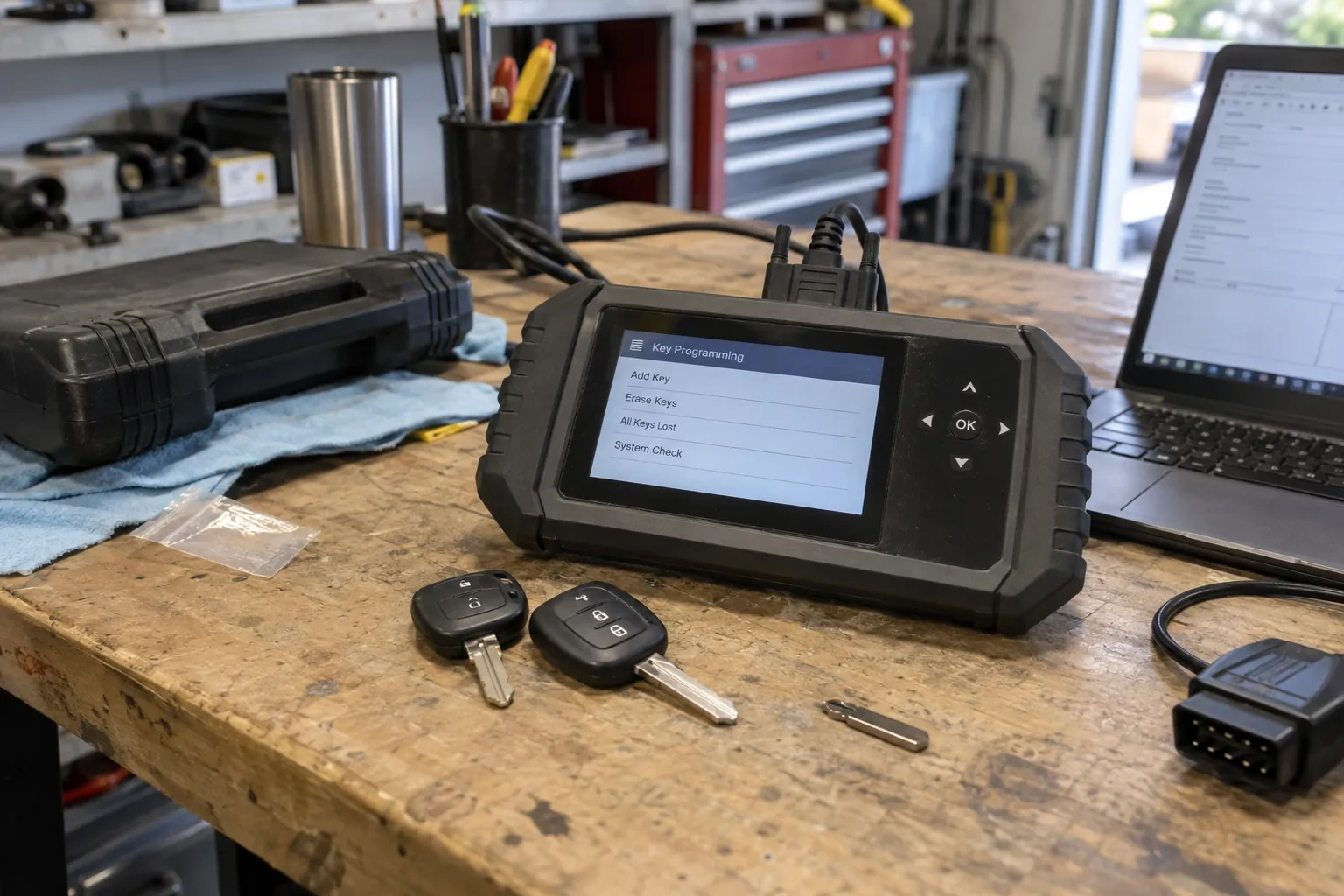
In the van
Interchangeable-core cylinder
Restricted keyway cylinder
Electric strike
Mortise prep and installation tools
Hookbolt and deadlatch hardware
Commercial-Grade Lock Replacement
What affects the quote
Timing relative to a lease or renovation
Work scheduled around a tenant turnover, a renovation, or a building-wide upgrade across several units can be planned and quoted as a coordinated project rather than a series of separate calls.
Key-control documentation
Setting up or updating a written key-control log, recording who holds which key and which doors share a system, is a small but distinct task the quote can name separately from the physical hardware work.
Fire-rated or listed hardware requirements
A door that is part of a fire separation needs hardware listed for that specific rating, which is a narrower and typically costlier category than general-purpose commercial hardware, and the quote reflects that requirement rather than a standard substitute.
What to have ready
- Who can authorize the work and sign for new keys?
- Is there an electric strike, maglock or card reader already on this door?
- Is this one door, or part of a wider multi-door or multi-branch project?
Commercial-Grade Lock Replacement: questions
QuestionsWhat is a grand-master key system, and does a small business need one?
A grand-master system adds a layer above a standard master key, useful for a business with several buildings or departments where one senior key should open everything and mid-level keys should open only their own area. A single-location business with a handful of doors usually only needs a straightforward master and change-key structure, without the extra layer.
Will replacing the lock affect my alarm or access-control system?
It can, if the door already carries a door position switch, an electric strike or a card reader, so the locksmith checks for that wiring before starting and reconnects and tests it alongside the new mechanical hardware. The goal is a door where the mechanical lock and the electronic system agree with each other rather than one working around the other.
What happens to keys held by former employees or contractors?
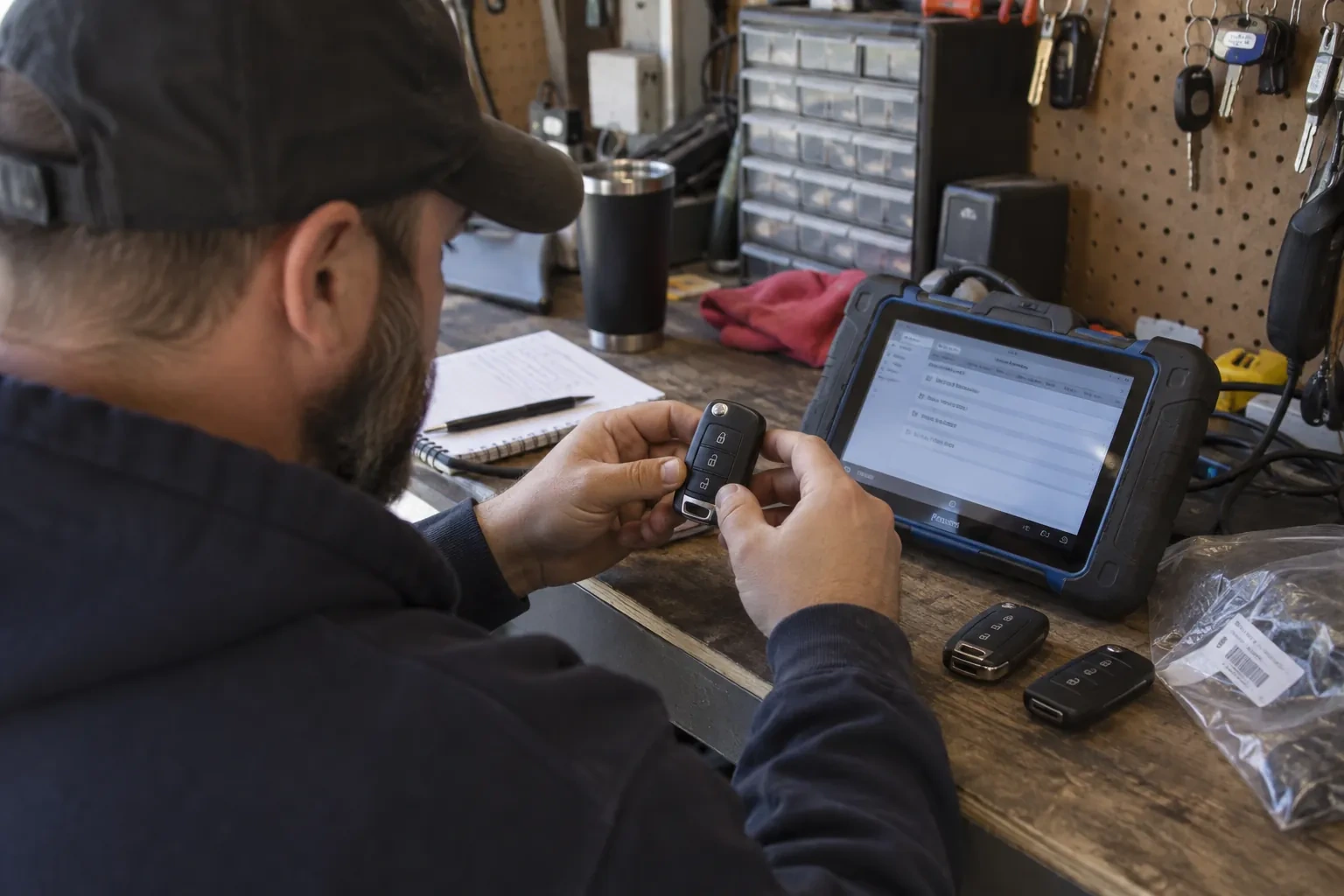
Once a cylinder is replaced or rekeyed, any key that was not reissued for the new combination simply stops working on that door. This is the direct answer to a key that walked out with someone who left the business, and it is worth doing across every door that key used to open, not only the one that prompted the call.
Related services
- Master Key System DesignThe new wing was built with its own brand of cylinder, so the two-year-old keys from the original building do not open a single door in the addition.
- Access Control InstallationSomething went missing from the storeroom over a weekend, and when you ask who was in the building, the honest answer is anyone with a key.
- Panic & Exit HardwareAfter the fit-out, the gym floor now holds more people than the old office space ever did, and the exit door at the back still has the same turn-lock it had when the room held desks.