Car keys · Stouffville
Transponder Key Programming in Stouffville
The new key slides into the ignition and turns exactly the way the old one did, but the engine only cranks.
In plain words
Transponder key programming is the step that teaches a vehicle's immobilizer to recognize a key's chip so the engine agrees to start, separate from cutting the metal blade that opens the door. A locksmith identifies the vehicle's own security system, connects programming equipment to it, and writes the new key's identity into its memory. Whether the job is a single spare, a replacement for a lost key, or every key gone at once, the visit ends the same way: the engine is started with the finished key, not just tested on a screen.
How the visit goesThe car came with a single key when the sale went through, and that key is the only thing standing between the household and being stranded. A second one has been on the list for weeks, quietly moved down every time something more urgent came up.
Transponder Key Programming
How the visit goes
Counting the keys that still work
The next question is not about the lock but about the keys: how many currently work, whether one was lost or stolen, and whether every key for the vehicle is genuinely gone. A single missing key changes little beyond adding a spare and clearing its old identity. All keys lost changes the whole visit, since there is nothing left to prove the system already trusts, and the work has to start by re-establishing that trust before a single new key can be written.
Reading the vehicle before writing anything to it
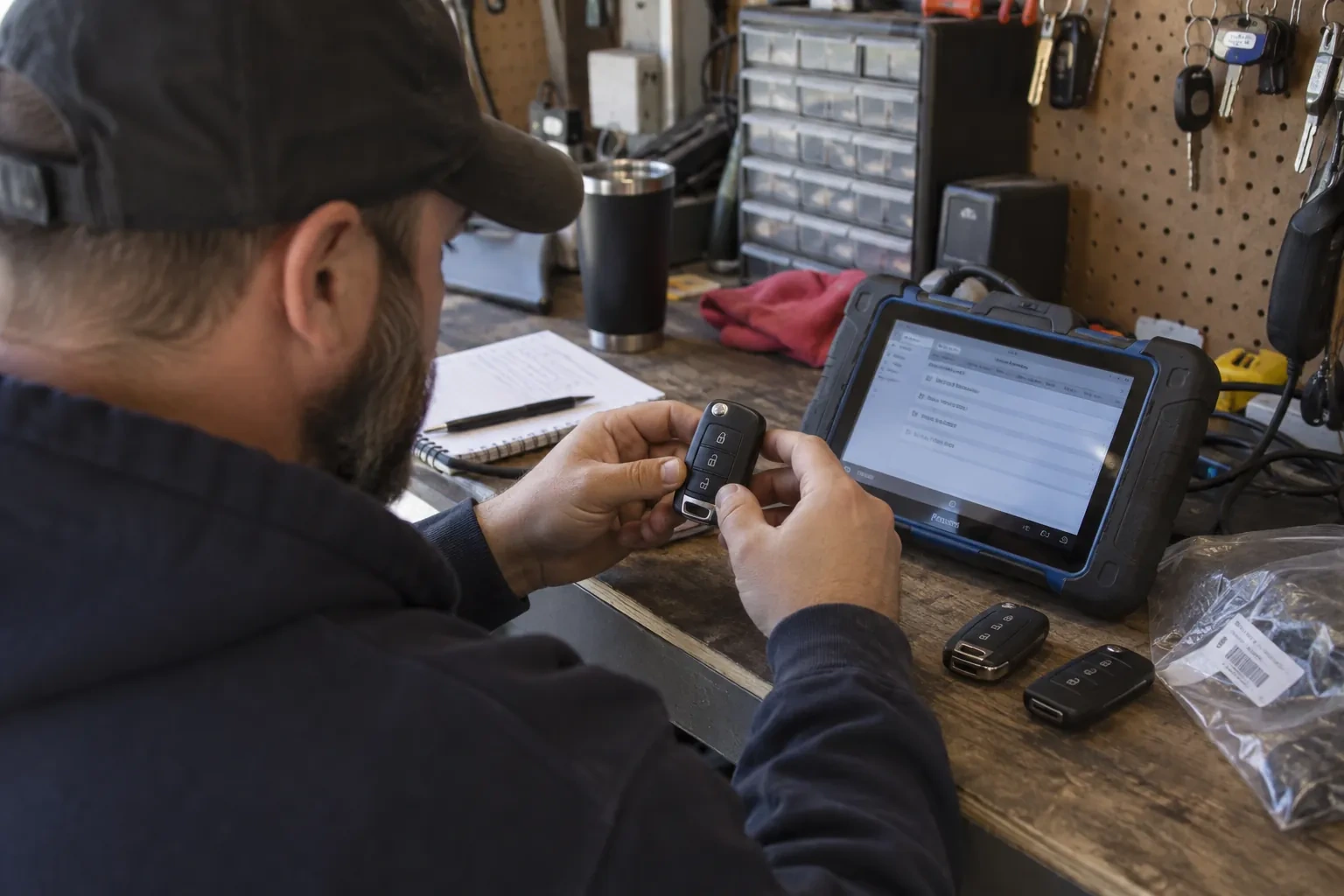
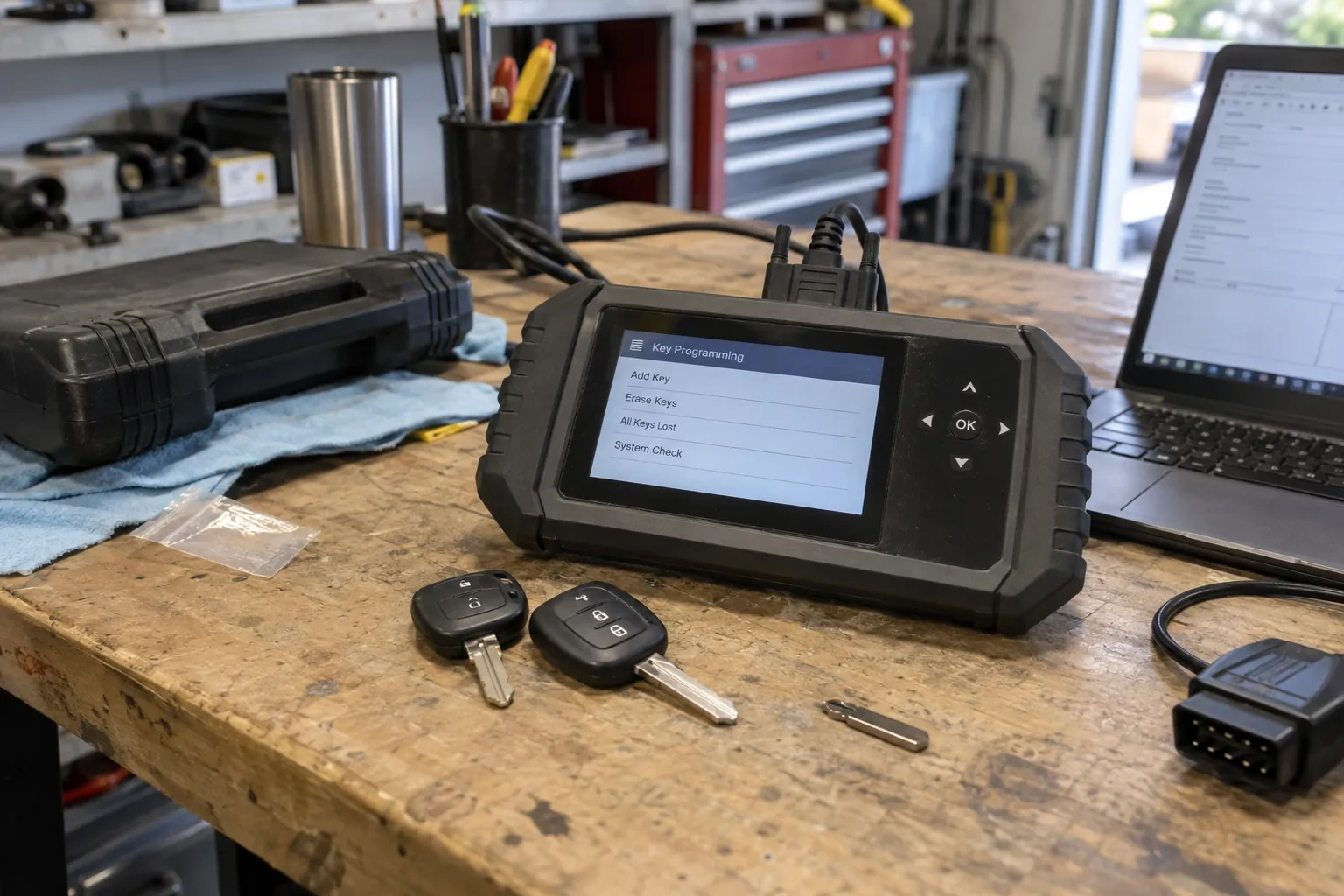
A diagnostic tool connects to the vehicle before any new information goes into it, and the current key list is read first so nothing already stored is disturbed by accident. This step also confirms the exact immobilizer and chip generation in front of the locksmith, since guessing wrong at this stage wastes an attempt on a system that will simply reject it. Only once the vehicle's own data is understood does the visit move toward adding, clearing, or replacing an entry in that list.
Leaving with a full set of working keys
The visit ends with every key that should work actually tested in the driver's own hands: the new one, and any older ones that were meant to keep working. Remote functions, if the vehicle has them, are checked at a normal distance, and the emergency insert on a proximity fob is pointed out rather than left for the owner to discover later. Nothing is assumed finished on the strength of a screen reporting success; the engine and the fob both had to prove it directly.
Transponder Key Programming
In the van
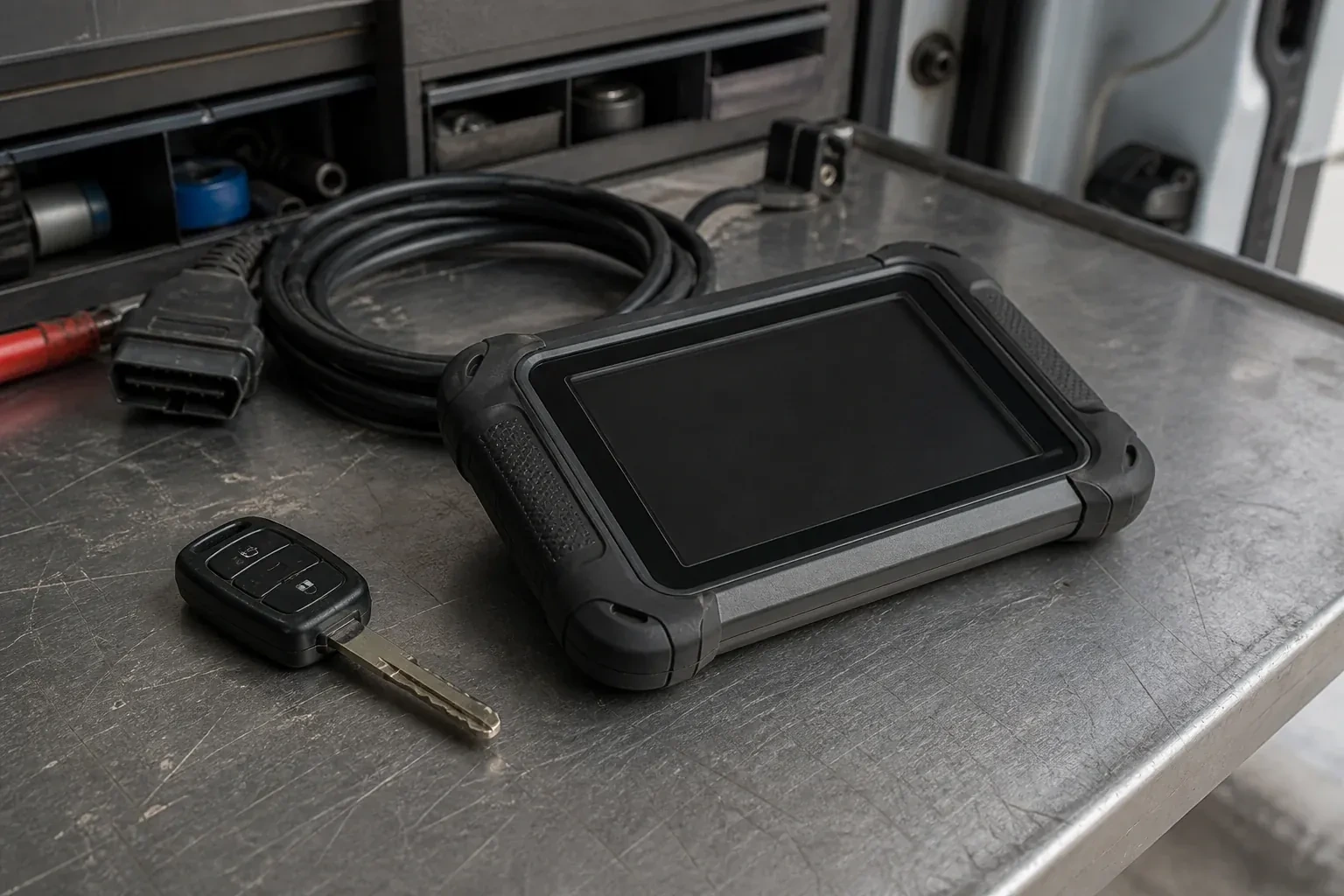
Diagnostic laptop or tablet
Chipped key blank
Emergency insert blade
Fob battery
Key cutting machine
Transponder Key Programming
What affects the quote
Whether ownership documents are ready at the visit
Having a vehicle permit or registration and photo identification ready when the locksmith arrives keeps the visit moving directly into the vehicle work, rather than pausing partway through to confirm authorization.
Whether any working key remains
Adding a spare or a driver's key with an existing key on hand is a more contained job than an all-keys-lost situation, which needs its own extended process to re-establish trust with the vehicle before anything new can be written.
Age and availability of the correct blank or chip
Older or less common vehicles sometimes use a blank or chip family that takes longer to source, particularly for a model that has been out of production for some years, which affects how the visit is scheduled.
What to have ready
- What is the year, make and model of the vehicle?
- How many keys currently work?
- Is this a lost, stolen, damaged or spare-key situation?
Transponder Key Programming: questions
QuestionsMy key turns and the engine cranks, but it won't start. Is that this?
That pattern, the starter turning the engine over without it catching, often points to the key or immobilizer rather than a fuel or ignition-timing fault. A flashing security light on the dashboard while this happens adds to that picture. A diagnosis, checking whether the vehicle actually recognizes the key's chip, is what confirms which one it is before any programming begins.
Does cold weather affect a key or its fob?
The metal blade and the passive chip inside it are not affected by cold. The fob's battery is a different story: cold weather reduces a battery's effective output, which can turn a marginally weak battery into one that suddenly stops responding on a cold morning. Testing a fob's battery before winter sets in catches this early.
Are some vehicles only able to have keys programmed by a dealer?
Many recent models, particularly ones with additional security layers, require a manufacturer-level session that only certain equipment can reach. Older and simpler systems more often allow direct programming without that extra step. The locksmith can usually confirm which situation applies to a specific vehicle from its year, make and model before the visit.
Related services
- Car Key ReplacementThe only key to the car went into the lake with the kayak.
- Spare Car Key DuplicationOne key opens the car, starts the car, and rides in one pocket every day.
- Key Fob ProgrammingThe remote clicks the way it always has, but the vehicle no longer locks, unlocks or answers with its usual chirp.